Claude read Gödel's 1,009 pages of shorthand notebooks in days and found 663 theorems
Helsinki's Jan von Plato says the AI turned Kurt Gödel's 1940s notebooks into a 650-page explanation, including a proof Gödel claimed but never showed. About 50 of the theorems turned out to be false.
In brief
Claude listed 663 theorems from Gödel's notebooks, and about 50 turned out to be false
Logician Jan von Plato of Helsinki, whose team was decoding Kurt Gödel's 1940s shorthand notebooks at about a page a week, gave all 1,009 pages to Claude. In days it produced a 650-page explanation and listed 663 theorems. Machine checks confirmed about 400, and about 50 were false.
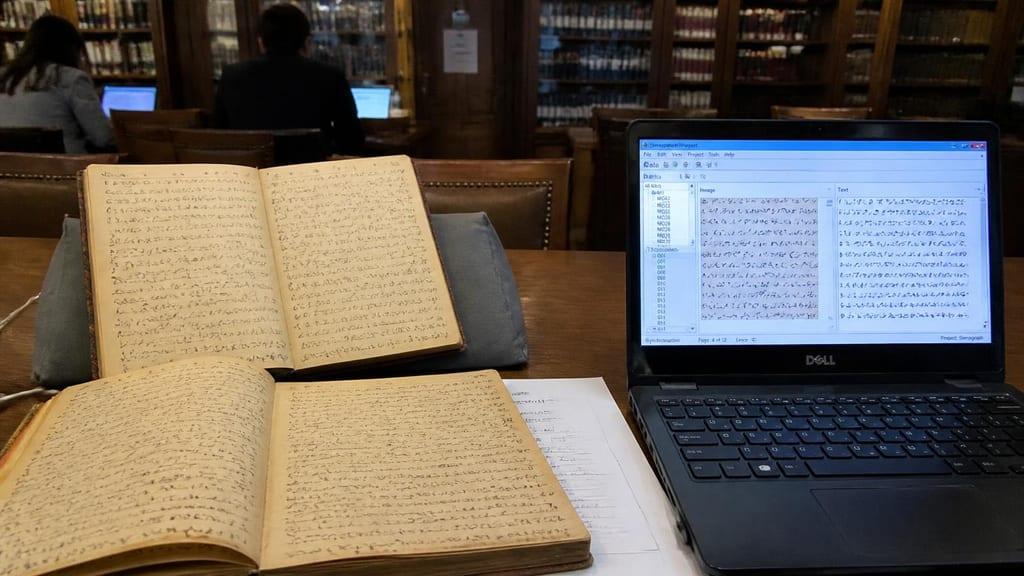
Kurt Gödel is one of the most important thinkers of the 20th century. His incompleteness theorems of 1931 changed mathematics and inspired Alan Turing's work that led to modern computers. But after the 1930s he published very little, and much of his private work sits in notebooks written in Gabelsberger, a German shorthand that was already obsolete when he used it.
Since 2017, Finnish logician Jan von Plato has led a project at the University of Helsinki to decode 16 of those notebooks from the early 1940s: 1,009 pages of dense maths and logic. He taught himself the shorthand ("I am one of only six people who can read it in the world," he told The Guardian), yet progress was about one page a week.
The AI can connect all the pieces in a thousand pages.
Then came Claude
In September, after computer scientists at a conference suggested it, von Plato gave Anthropic's AI model Claude his transcriptions of the notebooks, six of his own books on Gödel and other research. "In a couple of days, I got to see a 650-page explanation of the workbooks," he said. "It had to be controlled page for page, but it's basically a work that is impossible to do for human beings."
His explanation is simple: "The AI can connect all the pieces in a thousand pages. It can see all of Gödel's writings as one piece."
What it found
The first question was about an old mystery. In 1966, Paul Cohen won the Fields Medal, the top prize in maths, for proving the independence of the axiom of choice. Gödel said he had proved it back in the 1940s but couldn't rebuild the proof from his notes. Claude found the proof in the notebooks, with one wrong definition (Gödel had written the right one two years earlier). Von Plato checked the rebuilt proof in Coq, a program that verifies proofs by machine, and it passed.
Then von Plato asked Claude to list every theorem Gödel had proved, sketched or had an idea for. It found 663. In Coq, about 400 checked out as written, about 200 needed fixing, such as a more precise statement or an extra assumption, and about 50 were false. Von Plato says that is no surprise: Gödel sometimes scribbled "falsch!" (wrong) in his own margins.
The caution
Joel David Hamkins, a logic professor at the University of Notre Dame who has not seen the reconstruction, said that if it holds up, "it is remarkable and historically interesting", but that how much is Claude and how much is Gödel "is a job for the historians". He added: "You don't get credit for work you don't tell anyone about."
The story shows where AI helps researchers most today: reading huge, messy archives that no human has time for, with a human expert checking every page.
Sources
In this story
Source: theguardian.com