UAE approves a plan to run half of government work through AI agents
Its AI concierge, Mira, opens to everyone who uses federal services in March 2027, and ministers have already shown it renewing a passport in one chat.
In brief
The UAE approved a plan to run half of its government work through AI agents
On November 25 the UAE Cabinet approved a strategy to move 50% of federal operations and services to AI agents and train 80,000 government employees. Its AI concierge, Mira, opens to everyone using federal services in March 2027 and can renew a passport in one conversation, ministers say.
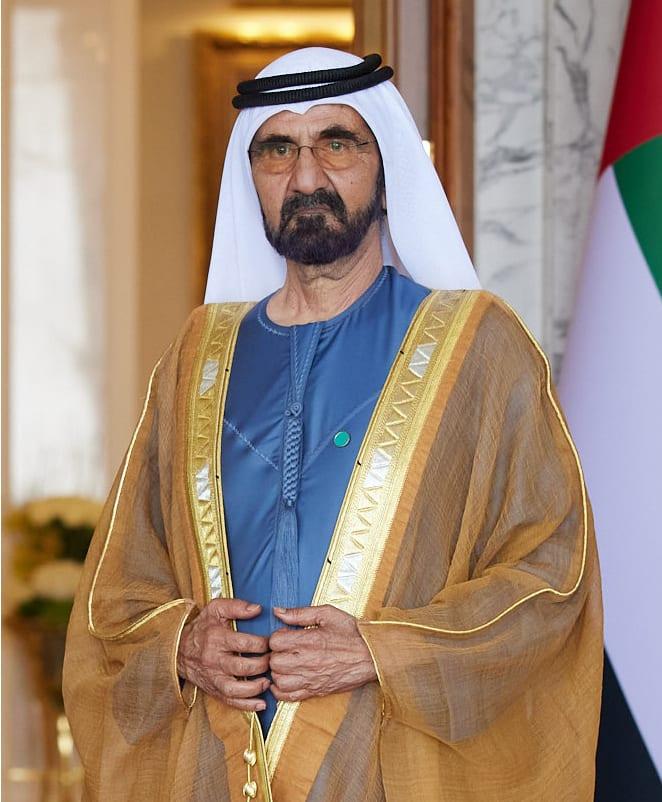
The United Arab Emirates wants AI agents involved in half of its federal government's work within two years. On November 25, the UAE Cabinet, chaired by Prime Minister Sheikh Mohammed bin Rashid Al Maktoum, approved what it calls the world's first government strategy for agentic AI, and confirmed that its AI concierge, Mira, will open to everyone who uses federal services from March 2027.
Agentic AI is software that carries out the steps of a task for you, such as filling in a form or paying a fee, instead of only answering questions. That is the difference between Mira and the government chatbots many countries already run.
People will be able to speak to the government in their own language and get the services they need in their own words
What the Cabinet signed off
According to the Cabinet's announcement, carried by the state news agency WAM and published by Gulf News, the strategy sets these targets:
| Target | Figure |
|---|---|
| Government operations, services and procedures moved to models supported by agentic AI | 50% |
| Federal employees to be trained | 80,000 |
| Agentic AI models and systems run inside secure government infrastructure | at least 90% |
| Cut in the time needed to carry out operations and write strategies | at least 50% |
| Improvement in the quality and accuracy of government outputs | 90% |
| Mira open to everyone using federal services | March 2027 |
The Cabinet also approved FedAI, a shared government platform on which federal bodies will build and run their agents, with a single "National AI Gateway" as the way in. Sheikh Mohammed said every federal entity has been told to connect its services to Mira within deadlines the Cabinet has set.
"People will be able to speak to the government in their own language and get the services they need in their own words," he said.
What Mira did on stage
Two days earlier, on November 23, ministers demonstrated Mira at Expo City Dubai, WAM reported. You describe what you need in your own words, and Mira finds the right service and completes the transaction in the same conversation.
Ali Mohammed Al Shamsi, who chairs the federal authority for identity, citizenship and customs, said people will be able to renew a passport or Emirates ID in one conversation. Abdulrahman Al Awar, the minister of human resources, showed a business owner reviewing an expiring employment contract, paying the fee and receiving the renewed work permit without leaving the chat. Health minister Ahmed Al Sayegh showed patients describing their symptoms to Mira on a video call, after which it prepares a summary for the doctor to read before the appointment. Education minister Sarah Al Amiri showed parents checking grades, exam dates and their children's behaviour at school, and tracking the school bus.
"They no longer need to search for a service or know the steps involved," said Mohammad Al Gergawi, the Cabinet affairs minister who chairs the national committee behind the project. Anyone who has spent a morning moving between three government apps to renew one permit will understand the pitch.
What the announcement leaves out
"World's first" is the government's own description, and the targets are hard to check from outside. The announcement does not say what the 90% improvement in quality and accuracy is measured against.
The bigger gap is trust. Mira is meant to hold, in one place, a person's identity documents, work contracts, health symptoms and children's school records. The announcements published so far do not explain how that data is kept apart, who can see it, what happens when the agent gets something wrong, or whether people can still choose to deal with a human. The same Cabinet meeting approved a National Zero Trust Security Policy, a National Cyber Crisis Management Framework and a new section on buying AI in the federal government's financial rules, but their contents were not published with the announcement.
Our read: the plan is more specific than most national AI strategies, with hard numbers and a launch date. The real test comes in March 2027, when residents start renewing real documents through it.
Why does it matter outside the UAE?
Dubai already runs a government assistant, Rammas, which a recent report said saved 344,231 work hours in 2025 (our story). Mira is designed to go further and finish the job, not only point you to the right form. If it works at national scale, other governments will copy the model. If it fails on something as personal as a visa or a doctor's booking, it will become the example everyone cites.
What it means for you
If you live in the UAE or deal with its federal services, nothing changes today: the first Mira services are due in March 2027, with more to follow. Everywhere else, this is the model to watch as governments move from chatbots that answer to agents that act. Two questions are worth asking of any such system, including your own government's: where does my data go, and can I still reach a person?
Sources
- WAM: Mohammed bin Rashid witnesses launch of new UAE Government services model, AI concierge agent 'Mira' (November 23, 2026) (wam.ae)
- Gulf News (WAM): UAE Cabinet approves the UAE Government Concierge Agent 'Mira' and the Agentic AI strategy (November 25, 2026) (gulfnews.com)
- Gulf Business: UAE Cabinet approves Agentic AI strategy, sets March 2027 launch for Mira (November 26, 2026) (gulfbusiness.com)
Source: wam.ae