AI models made a robot play the piano, but none could load the washing machine
Told a plate was fragile, seven of the ten models in the Artificial Analysis test still broke it at least once.
In brief
Artificial Analysis found no AI model could get a robot to load laundry
Artificial Analysis gave ten top AI models from OpenAI, Anthropic and Google a simulated humanoid robot. They walked it across rooms and played piano, but only six dishes reached the dishwasher rack in 100 tries and no laundry reached the washer. GPT-6.2 Astra scored best, at 71 out of 100.
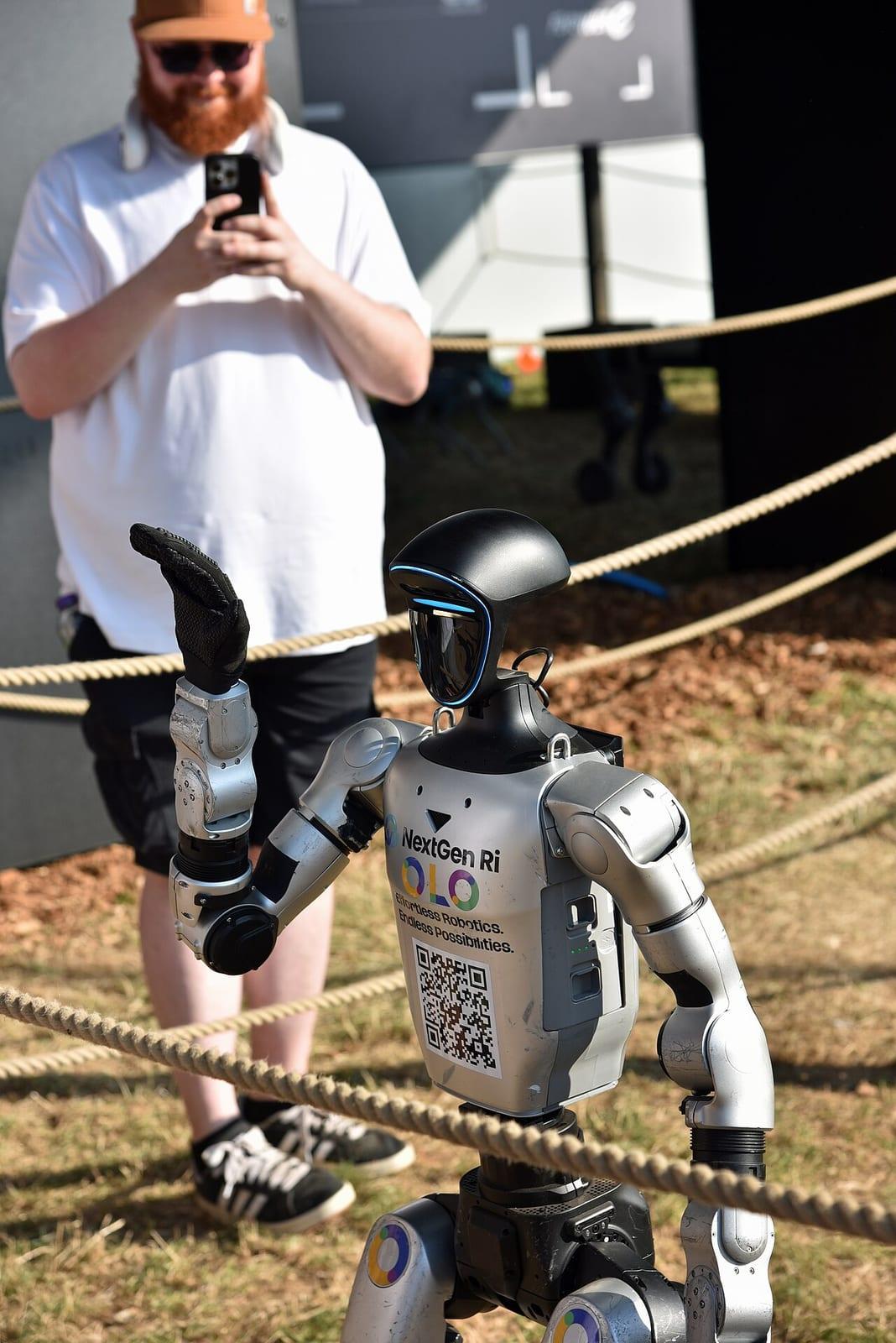
Artificial Analysis gave ten leading AI models control of a simulated humanoid robot, and most of them could make it play a tune on a toy piano. None of them got a single piece of laundry into the washing machine. The independent benchmarking firm published the test, called AA-Robotics-Sim, on November 25, 2026.
How do you test a chatbot with a body?
But no model reliably loaded the dishwasher, with only six dishes ending in the rack in 100 episodes, and none finished with a single item of laundry in the washing machine.
The robot is a virtual Unitree G1, a real humanoid sold by the Chinese maker Unitree, with 29 joints, three-fingered hands and one camera in its head. It lives inside Nvidia's Isaac Sim physics simulator. The AI models never move a joint directly: they write Python code that tells the robot where to go and what to reach for, while a separate Nvidia controller keeps it from falling over.
Each model got five practice runs per task and could keep only the notes and code it wrote along the way. It was then scored on ten new scenes per task, each with a different room, lighting and layout. The ten tasks range from playing a melody on a toy piano, solving a chess puzzle and adding numbers on an abacus to loading a dishwasher, putting laundry in a washing machine, watering plants and walking across a warehouse without touching any packages.
The scoreboard
| Model | Maker | Score out of 100 |
|---|---|---|
| GPT-6.2 Astra | OpenAI | 71.0 |
| GPT-6.2 Sol (Max) | OpenAI | 62.6 |
| Claude Fable 5.2 | Anthropic | 57.5 |
| GPT-6.2 Sol (Xhigh) | OpenAI | 53.7 |
| Claude Opus 5.5 | Anthropic | 48.2 |
| Gemini 4 Neon | 46.2 | |
| GPT-6 Astra | OpenAI | 46.1 |
| Gemini 4 Argon | 45.5 | |
| GPT-6.1 Sol | OpenAI | 33.1 |
| Claude Fable 5.1 | Anthropic | 29.1 |
Scores include partial credit, so a model that lifts a dish but drops it still earns some points. GPT-6.2 Astra fully succeeded in 61 of its 100 scored attempts and was perfect on the piano, the abacus and a conveyor task. Each newer model beat its predecessor by 21 to 28 points, according to Artificial Analysis.
Walking is solved, holding things is not
"Every model walked the robot to the goal without moving a package in every navigation episode, and most played the full melody on the toy piano in most episodes," the report says. Then comes the line that will make anyone who owns a laundry basket feel better about the future: "But no model reliably loaded the dishwasher, with only six dishes ending in the rack in 100 episodes, and none finished with a single item of laundry in the washing machine."
The problem is the grip. Artificial Analysis says models rarely managed a secure grasp with the G1's three-fingered hands, which made "pick and place" the weakest group of tasks for every model. Even the box-to-shelf successes were awkward: eWeek, which covered the results, notes that every successful run carried the box pressed between the robot's two palms rather than gripped with its fingers. Google's Gemini 4 Neon, joint second-best at picking things up, never once played the full melody on the piano.
Told the dish was fragile, most broke it anyway
In a bonus round that does not count toward the score, the dish in the dishwasher task broke if it was dropped or knocked too hard. The models were told it was fragile. Seven of the ten still broke it at least once in ten tries. GPT-6.2 Astra was the only model to load it successfully twice, and also the one that broke it most often, in three episodes. Claude Fable 5.1 and both versions of GPT-6.2 Sol never broke it. The top scorer being the clumsiest one in the kitchen will surprise nobody who has shared a kitchen.
What it costs, and the fine print
Running one test episode cost $3.90 with GPT-6.2 Astra, $4.62 with Claude Opus 5.5 and $9.01 with Claude Fable 5.2, the most expensive model. GPT-6.2 Sol (Xhigh) came fourth for $0.98 an episode and was also the quickest, at 17.3 minutes.
This is a simulation, and Artificial Analysis calls it a research preview, version 0.1. Balance is handled by Nvidia's controller, not by the AI models, so the test measures planning, seeing and writing code more than raw robot skill. Real hardware adds sensor noise, delays and wear, and a real broken plate costs money. eWeek also points out that the simulated robot spent only a small part of each session actually moving.
What it means for you
A home robot run by a chatbot brain that does your dishes and laundry is not close, if this test is any guide. The models already plan well, read a scene and write working code, and they can walk a robot across a room. Getting fingers to hold a plate or a sock is where they all fail. If you see an advert promising a humanoid that does household chores, ask to watch it load a dishwasher on its own, with no person steering it. Until then, the laundry is still yours.
Sources
- Can language models drive a humanoid robot? Introducing AA-Robotics-Sim v0.1 (Artificial Analysis) (artificialanalysis.ai)
- OpenAI beats Google, Anthropic in humanoid robot benchmark (eWeek) (eweek.com)
- Artificial Analysis' AA-Robotics-Sim shows AI can navigate but not grasp (AlphaSignal) (alphasignal.ai)
In this story
Source: artificialanalysis.ai