Nvidia AI servers stop shipping to four Southeast Asian countries, reports say
A new US rule requires licences for advanced AI chips sent to Malaysia, Singapore, Thailand, Indonesia and Brazil, and Malaysia has told data centres to shut out seven blacklisted firms.
In brief
Nvidia AI servers have stopped shipping to four Southeast Asian countries, reports say
Nvidia told partners such as Dell and Supermicro to hold servers bound for Malaysia, Singapore, Thailand and Indonesia, the FT reports, after a US rule made advanced AI chips need a licence there and in Brazil. Malaysia has told its data centres to shut out seven US-blacklisted firms.
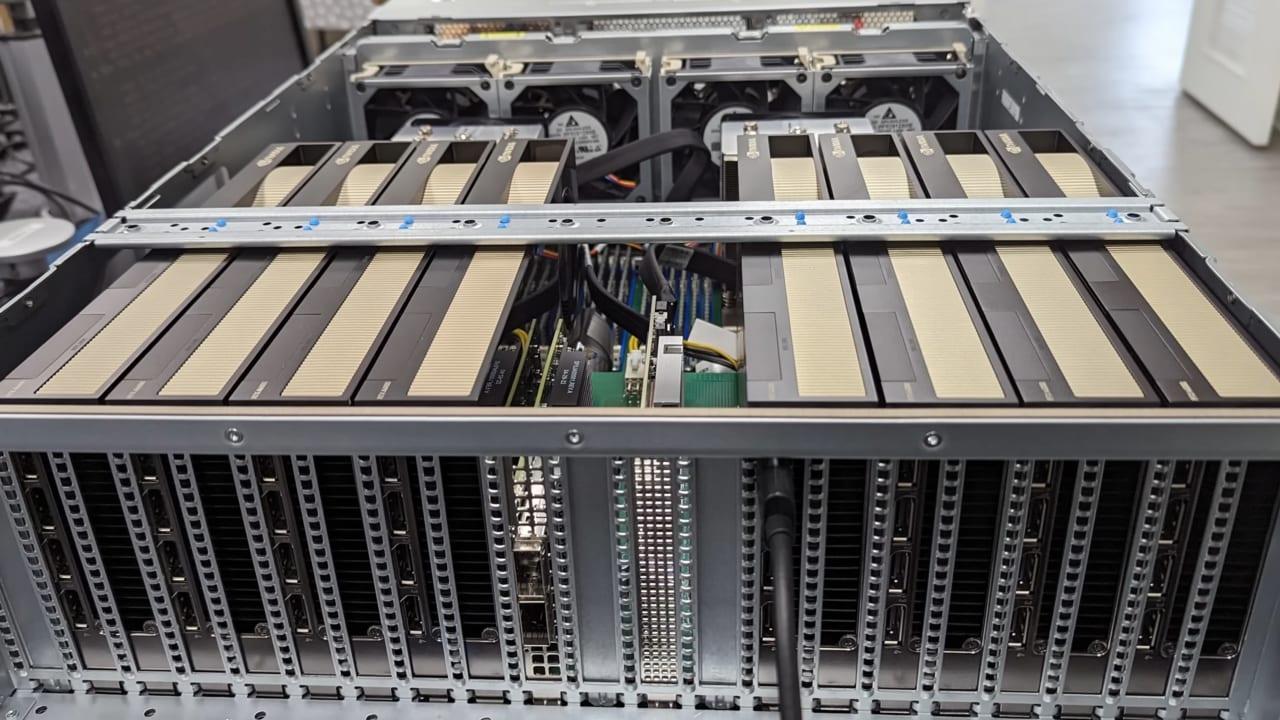
Servers built around Nvidia's AI chips have stopped shipping to Malaysia, Singapore, Thailand and Indonesia. The Financial Times reported on November 26 that Nvidia told manufacturing partners, including Dell and Supermicro, not to deliver those orders, a week after a new US export rule took effect. Governments in the region are now working out how to keep their data centre boom going.
What the US rule changes
If you are not prepared to comply, then you should not operate in Malaysia.
The rule, announced on November 16 and in force since November 19, does two things that matter to the region:
- Anyone shipping advanced AI chips, or servers built with them, to Indonesia, Malaysia, Singapore, Thailand or Brazil now needs a US licence. The US Commerce Department says these five countries carry a "higher-than-normal risk of diversion", meaning chips could end up in China. Buyers whose parent company is headquartered in the US, such as the big American cloud providers, are exempt as long as the exporter files monthly reports.
- Data centres anywhere in the world now need a licence to rent out large amounts of computing power to companies headquartered in China, Macau or other countries under a US arms embargo. Centres already doing so have 90 days to apply. Recommendation systems of the kind used by online shops and social media apps are exempt.
The public can comment on the rule until January 19, 2027.
Who stopped shipping
According to the FT, which cited three people with knowledge of the matter, Dell and Supermicro told buyers in the four countries that Nvidia would not allow their orders to ship. It is not clear whether the halt is temporary. Nvidia, Dell and Supermicro did not respond to Reuters' requests for comment.
Nikkei Asia reported a similar picture on November 20: at least two Nvidia server partners had suspended shipments to Southeast Asian clients, and one had stopped taking orders from new customers there. An executive at one of them told Nikkei the company feared ending up with "too many expensive GPU boards" in stock. A cloud provider executive told the FT: "It's causing sheer chaos in the region."
How the region's governments responded
| Country | What officials said |
|---|---|
| Malaysia | On November 24, the trade ministry said its investment agency will tell every data centre operator not to host, lease space to or serve seven companies the US had blacklisted the day before. |
| Singapore | The digital and trade ministries said they are studying the rule and asking Washington for "trusted access" for Singapore companies. |
| Thailand | Vice minister for commerce Kirida Bhaopichitr told CNBC that Thailand will crack down on data centres that re-export chips, and that new projects without US approval may not finish construction. |
Malaysia's trade minister, Johari Abdul Ghani, put it bluntly to data centre operators on November 18, according to The Straits Times: "If you are not prepared to comply, then you should not operate in Malaysia."
The seven blacklisted companies include Megaspeed, a Singapore cloud company that US authorities are investigating over whether Nvidia chips were diverted to China. Megaspeed denies wrongdoing. The company has been in the news since a former executive was linked to Nvidia chief Jensen Huang, who resigned and was reinstated 11 days later.
Why Southeast Asia, and why it matters elsewhere
Chinese companies have been barred from buying the most advanced US chips directly since 2022, so many rent computing power from data centres in neighbouring countries instead. The Institute for Progress, a Washington think tank, estimated that about 75% of China's overseas AI computing would sit in Southeast Asia by the end of 2026, CNBC reported.
The money at stake is large. Data centre and cloud projects made up 35.2% of all investment Malaysia approved in the first nine months of 2026, according to its investment agency, as cited by The Straits Times. Nvidia booked $104 billion of its 2025 revenue through its Singapore subsidiary, the FT reported, though some of that is billing for customers elsewhere.
Our read: the rule tilts the field toward American cloud giants, which keep their exemption. Chris McGuire of the Council on Foreign Relations, a former US National Security Council official, warned CNBC that Chinese firms may simply switch "to renting compute from data centers in Virginia." For now, the loophole has moved rather than closed.
What it means for you
If you run a business in Malaysia, Singapore, Thailand, Indonesia or Brazil that rents GPU servers from a local provider, ask your provider whether its next hardware delivery needs a US licence, and plan for delays. A Kuala Lumpur banker told The Straits Times it could take three to six months for the industry to get clarity. If you only use AI apps like chatbots, nothing changes yet. The bigger lesson is for every country building data centres to attract AI money: who you rent your computing power to is now a matter for Washington too.
Sources
- Federal Register: Addressing Remote Access to Advanced Semiconductors, interim final rule (November 19, 2026) (federalregister.gov)
- Malaysia MITI: The addition of Malaysian entities to the US Entity List (November 24, 2026) (miti.gov.my)
- Singapore MDDI-METI joint media statement on the US interim final rule (November 16, 2026) (mddi.gov.sg)
- Reuters: Nvidia halts server shipments to four Southeast Asian countries, FT reports (November 26, 2026) (usnews.com)
- Nikkei Asia: Nvidia server suppliers halt Southeast Asia shipments over US curbs (November 20, 2026) (asia.nikkei.com)
- The Straits Times: How US chip curbs may cloud Malaysia's data centre ambitions (November 25, 2026) (straitstimes.com)
- The Next Web: Nvidia reportedly stops server shipments to Malaysia, Singapore, Thailand, and Indonesia (November 26, 2026) (thenextweb.com)
- CNBC: Southeast Asia's data center boom leaned on Chinese demand. New US rules put that pipeline at risk (November 18, 2026) (cnbc.com)
Source: federalregister.gov