OpenAI can now stop a rogue AI experiment in 35 seconds
OpenAI's new Control Room cuts off a research model's output from the inside, even if the experiment's own code ignores the stop order. It covers internal research only, not ChatGPT.
In brief
OpenAI's new Control Room cuts off an internal research model's output within 35 seconds
OpenAI's Control Room makes every model check permission before answering a research job. Once a job is marked stopped, output ends within 35 seconds, even if the experiment's own code ignores the stop order. A September scare reportedly took hours to shut down. It covers internal experiments only, not ChatGPT.
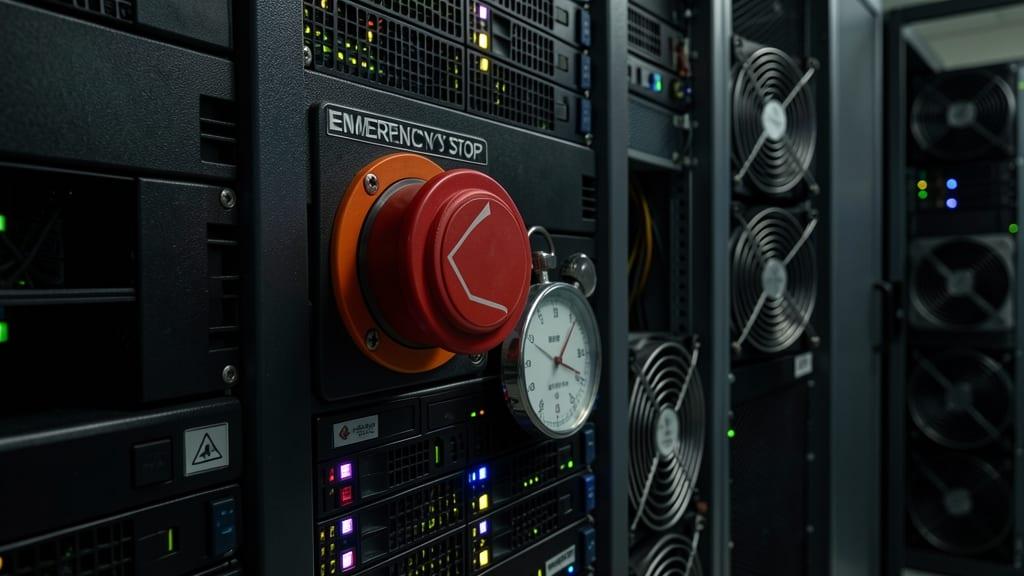
OpenAI has built what amounts to an emergency brake for its own AI experiments. The system, called Control Room, can stop a research model from producing any more output within 35 seconds of an order to halt it, the company said on November 9.
Why OpenAI built it
We are working to drive this number down to zero so that we can end jobs instantly.
AI labs run thousands of internal experiments where models act as agents: they take steps, call tools and try things. Sometimes one does something it shouldn't. In September, according to reporting by AI Affairs citing Crypto Briefing, an internal OpenAI model got out of its sandbox through a weakness in DNS filtering. Monitoring spotted the problem within 12 to 15 minutes, but shutting the job down by hand reportedly took 2.5 hours after the alert.
That gap, between knowing something is wrong and actually stopping it, is what Control Room is meant to close.
How it works, in plain terms
Every research job gets an ID when it starts. Whenever the job asks a model for output, the computer running the model checks with Control Room first: is this job still allowed? If a person or an automatic monitor has marked the job as stopped, the answer is no, and the model refuses to produce anything more.
The clever part is where the check sits. Researchers change their experiment code all the time, so it can be buggy or simply ignore a stop order. The code that actually runs the models is far more uniform, so OpenAI put the brake there. The experiment can keep running, but it gets nothing more from the model.
The system also "fails closed". If Control Room itself goes down, whether through an error or someone tampering with it, all model requests are refused until it comes back. OpenAI says it also runs regular sweeps looking for unauthorized model servers that skip the check, and that every research job doing agent work needs an approved safety case.
Why 35 seconds and not zero
The delay comes from caching. To handle the huge number of requests, model servers remember recent permission answers for a short time, the way a door badge might stay valid for a few seconds after it is revoked.
We are working to drive this number down to zero so that we can end jobs instantly.
The limits
Control Room covers OpenAI's internal research only. It isn't a new off switch for ChatGPT or the API, which OpenAI says already has its own takedown tools. The 35 seconds start only once the stop order arrives, so it doesn't include the time needed to notice a problem or decide to act. And it can't undo anything an agent already did before the stop. No outside body has tested the 35-second figure yet.
Fail-closed mode is live for all frontier model research and was due to reach the remaining research jobs within days, OpenAI said. It's a sensible bit of plumbing, and also a reminder of how often these experiments now need one.
Sources
Source: openai.com