A Nanjing hospital removed a lifelike robot that scared visitors while switched off
Standing at the top of an escalator in a white coat with its head bowed, the robot drew a complaint before it had ever gone into service.
In brief
Nanjing hospital removes its lifelike robot after it scared visitors while off
Jiangsu Province People's Hospital in Nanjing, China, took away a humanoid help-desk robot on November 26 after a viral complaint. Switched off, it stood facing the escalator with long hair, a white coat and its head bowed. Staff say that when it is on, it blinks, talks and looks fine.
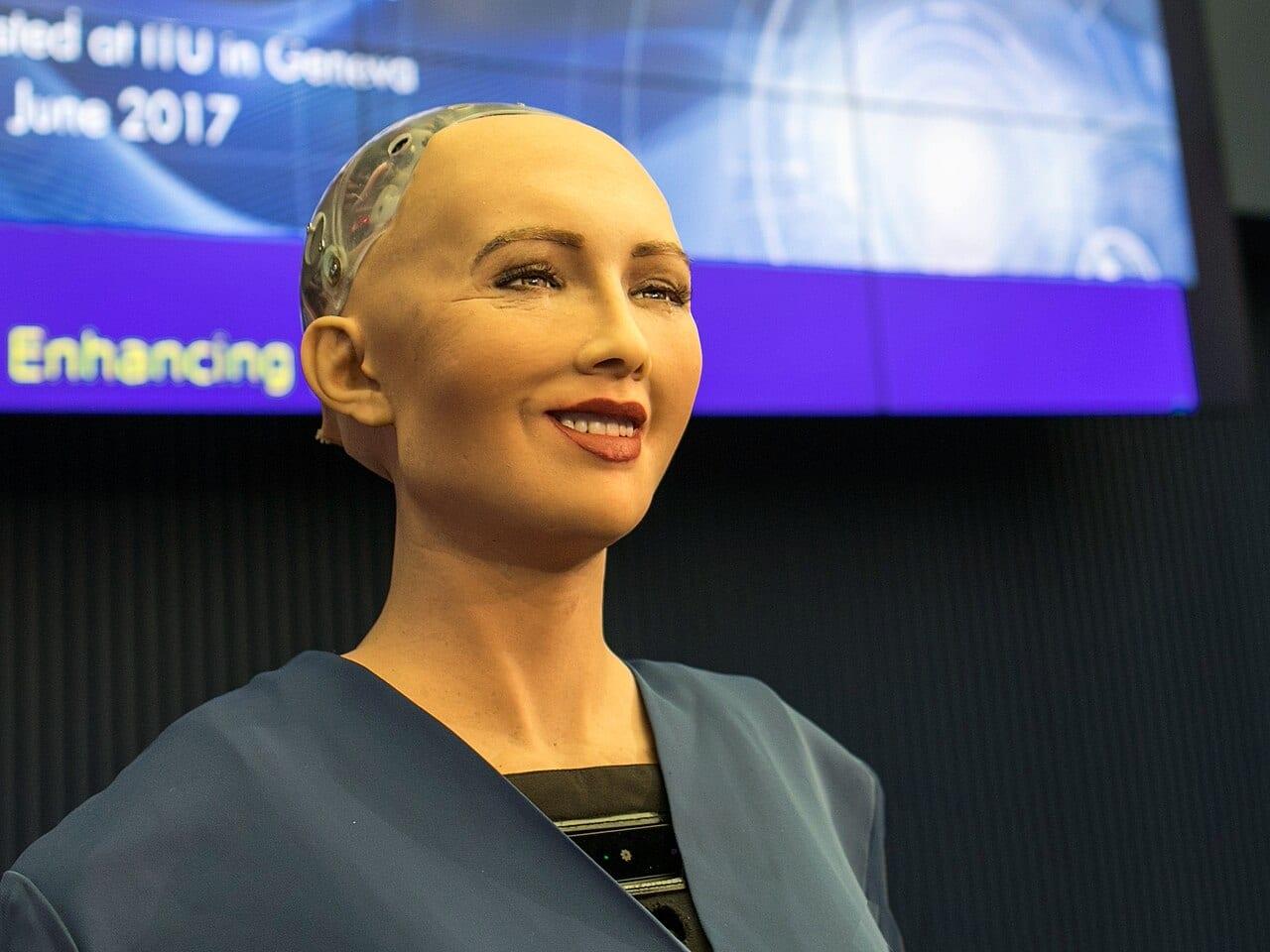
A hospital in Nanjing, China, has taken a lifelike humanoid robot away from its information desk after visitors said it frightened them. Jiangsu Province People's Hospital removed the robot on November 26, a day after a complaint, a staff member told Shangyou News. The robot looked scary, she explained, because it was switched off.
The robot has a woman's face, long dark hair and a white medical uniform. In the photos that spread online, it stands in the service centre on the second floor of the outpatient building, facing the top of the escalator, head bowed deeply, arms at its sides. Anyone riding up met it face to face.
When it's on, it blinks and talks, and it looks all right.
One post, 15,000 likes
On November 25 a Nanjing resident posted a photo with the line "Provincial People's Hospital, you scared the life out of me!" (our translation). By 3 p.m. the next day the post had 15,000 likes and 2,700 comments, Shangyou News reported. "I got a fright yesterday too," one commenter wrote. Others posted pictures of the robot switched on and came to its defence: "It's fine normally, it was just turned off."
The Beijing News and media in South Korea, including The Asia Business Daily, picked the story up on November 27.
Why was its head down?
Nothing was broken, the hospital says. "When it's switched off, its head hangs down," the staff member at the service centre told Shangyou News. "When it's on, it blinks and talks, and it looks all right."
The robot was meant to answer patients' questions and help them find their way. Engineers had not finished setting it up, so it never went into service. Its entire career at the hospital, in other words, consisted of standing very still in a white coat at the top of an escalator.
The staff member also blamed the spot. Someone coming up the escalator suddenly sees "a person" standing there, she said, and may well jump. Whether the robot returns is undecided: the hospital will weigh the real situation and opinions from all sides, she said.
A 1970 essay saw this coming
Many commenters reached for the "uncanny valley". The idea is that people warm to a robot as it looks more human, until it looks almost, but not quite, human. At that point warmth turns into unease. Masahiro Mori, then a robotics professor at the Tokyo Institute of Technology, described it in a 1970 essay that IEEE Spectrum later published in English.
Mori thought movement made things worse. His example was a craftsman woken at night, searching his workshop among a crowd of mannequins: "If the mannequins started to move, it would be like a horror story." The Nanjing robot did it the other way round. By the hospital's account, it was frightening because it did not move, and fine once it blinked and talked.
What it means for you
As more humanoid robots are tried out at reception desks, in shops and in hospitals, you are likely to meet one sooner or later. None of the reports say this one did anything wrong. The complaint was about how it looked and where it stood.
Our read: the fix is cheap. A robot that is switched off should look switched off, covered or turned to the wall, and a hospital, where many visitors are already anxious, is the last place to leave a motionless figure in a white coat facing the escalator. If you run a shop or an office and are thinking of buying one, decide where it will stand when it is not working before you decide what it will say when it is.
Sources
- Shangyou News via The Paper: Jiangsu Province People's Hospital removes lifelike robot after complaints (in Chinese) (thepaper.cn)
- The Beijing News via Sina: Jiangsu hospital's lifelike robot called too scary, hospital says it has been removed (in Chinese) (finance.sina.com.cn)
- The Asia Business Daily: What is the long-haired figure with its head bowed at a Chinese hospital? (view.asiae.co.kr)
- IEEE Spectrum: The Uncanny Valley, the original essay by Masahiro Mori (spectrum.ieee.org)
Source: thepaper.cn