SAG agent raised task success from 24.6% to 78.3% on one-third of the computing
Sungkyunkwan University's team also built VAN-Flow, a training method that avoids learning from lucky successes, tested in more than 40 robot simulations.
In brief
An AI agent that asks for help only when needed
Sungkyunkwan University's SAG agent used about one-third of the usual computing. Success in virtual tasks rose from 24.6% to 78.3%. Real-world use is not yet shown.
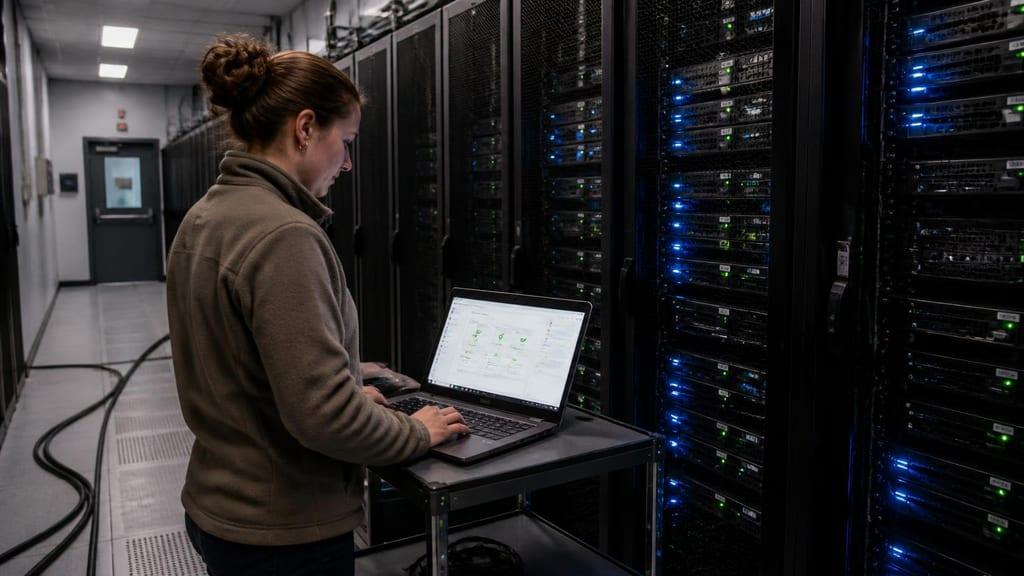
An AI agent called SAG finished far more tasks in complex virtual environments while using about one-third of the computing that conventional approaches need. Success rose from 24.6% to 78.3%. The figures come from Sungkyunkwan University's own research story, and three independent reports repeat them.
The work was led by Professor Minhae Kwon of the School of Electronic and Electrical Engineering. Doctoral student Heewon Park is first author of the SAG study.
What SAG does
Many AI agents, meaning programs that plan and carry out multi-step tasks, lean on a second powerful AI to check every step. It is like asking "Am I doing this right?" over and over. That adds server costs and slows answers.
SAG stands for Self-improving Agent with Gated critique. The agent estimates how unsure it is and asks for outside feedback only when the help seems worth the cost.
It also keeps its successful experiences and learns from them. Over time it needs less outside criticism. Think of a student who studies alone and visits the teacher only for the hard problems.
One outlet put the saving as a two-thirds cut in computing. That is the same result as one-third remaining.
The second method: VAN-Flow
The team also built VAN-Flow, led by master's student Guhyeon Kang. It targets robotics and self-driving, where real-world trial and error can cause accidents, so systems often train on previously collected data.
That data can contain risky moves that worked by luck. The AI may then treat shaky behaviour as a good strategy. VAN-Flow uses a mathematical filter to drop luck-dependent actions and favour ones that succeed consistently under changing conditions.
It beat most state-of-the-art methods across more than 40 simulated robot-control tasks, including ones with disturbances and long precision sequences.
Where it was published
Reports say both studies were accepted to NeurIPS 2026, a leading AI research conference, and are available as arXiv preprints, which are papers shared before or alongside formal publication.
The gains were measured in virtual environments. They do not show the same results for every AI assistant, task or real-world setting. VAN-Flow was tested only in simulation, and the reports say further testing is needed before anyone can judge it outside those tasks or in vehicles and physical robots.