TEM Agent let a chatbot run an electron microscope and cut experiment turnaround from hours to minutes
Berkeley Lab's assistant can only use a fixed list of pre-approved actions, and its first attempt rotated the wrong thing.
In brief
An AI now drives a lab microscope
Berkeley Lab's TEM Agent runs an electron microscope from plain instructions. The lab says turnaround fell from hours to minutes. It can only use pre-approved actions.
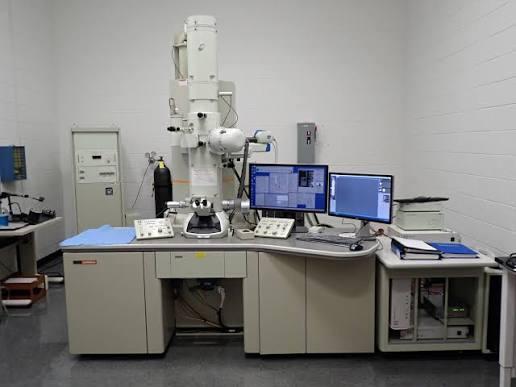
A language model can now run a transmission electron microscope when a person simply types what they want. It is called TEM Agent, and it was built at the Molecular Foundry at Berkeley Lab. The work was reported in npj Computational Materials and led by staff scientist Peter Ercius of the National Center for Electron Microscopy.
The lab says the setup links the microscope to NERSC, a Department of Energy supercomputing center, and to Crucible, a custom data platform. According to the lab's release, this cut experiment turnaround from hours to minutes. It also lets researchers recall past experiment settings instantly.
Tests included electron tomography, which builds a 3D picture from many angles, and ptychography, an imaging method that reconstructs detail by computation.
Why it matters
These microscopes can image structures roughly half the size of a hydrogen atom, according to the lab. But they are hard to use. Visiting scientists may need weeks of hands-on training, even after a semester of coursework.
The data adds to the pain. The lab says a single detector can produce roughly 700 gigabytes in 15 seconds, far too fast to handle by hand.
Ercius is quoted saying a non-expert can now do things that once needed custom code.
How it works
The assistant uses a commercial large language model, the same kind of software behind chatbots. It connects to the microscope through Model Context Protocol, an open standard. Servers expose the lab's existing automated routines as a fixed set of pre-approved actions. The assistant cannot improvise outside that list.
The lab had already built automations for repetitive jobs, such as imaging many nanoparticles. Ercius described those as working like a factory line.
The first slip
The first attempt went wrong. The assistant rotated the scanning direction instead of the sample. The team fixed it with a short written explanation of the difference.
Imagine telling a taxi to turn left and it spins the whole city instead. Same word, wrong object.
Limits
Most of the details here come from the lab's own account, so independent confirmation is limited. The excerpts give no timing figures beyond hours to minutes, no list of failures beyond the first, and no plans for wider rollout.