Treellis, a free 3D tool from Sydney, won a Best Paper Award for helping people learn while using AI
The open-source tool shows every part of a model, and users in a test learned 3D design more intuitively than those using a prompt-only AI tool.
In brief
Free tool teaches 3D design as AI builds
Sydney's Treellis shows every part of a 3D model. In a test, its users learned design more intuitively than prompt-only AI users. It is open source and runs in a browser.
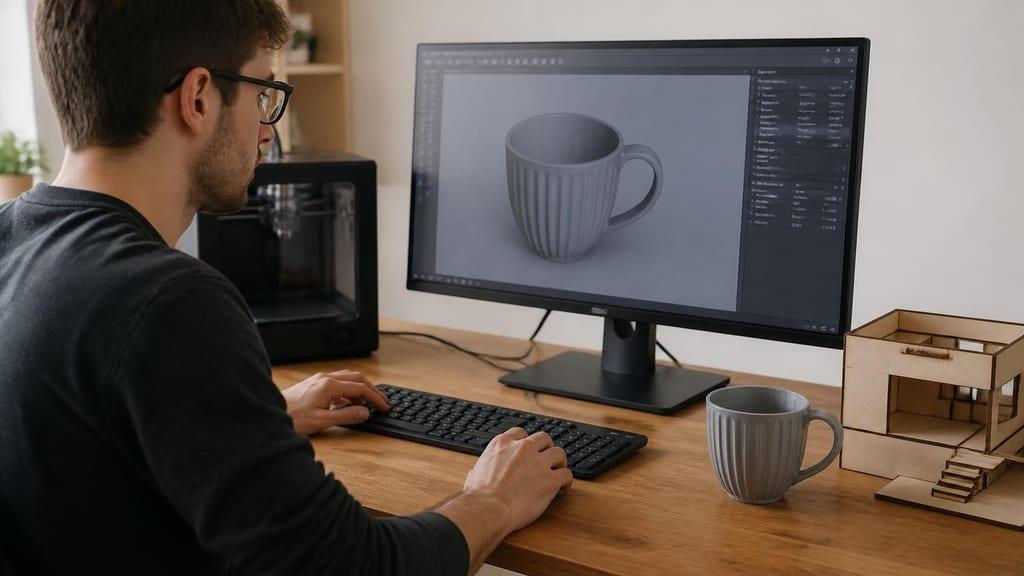
Treellis is a 3D modelling tool that lets people build with AI and still understand what they built. A paper describing it won a Best Paper Award at the ACM symposium on user interface software and technology, according to the University of Sydney.
The University of Sydney's Faculty of Engineering led the work with the University of Cambridge and Singapore Management University. Dr Anusha Withana, an associate professor in the School of Computer Science, led the tool's development. PhD student Yixiang Chen is the lead author of the paper.
The tool does not just make things for you. It shows you how things are made.
The problem it tackles
Many AI tools can turn a few typed words into a finished 3D design. The catch is that the user may have no idea how it was put together. The team says this feeds a growing worry that people hand their thinking over to AI and learn less.
How Treellis works
Treellis does not hand back a finished object in one go. It works with the user step by step, mixing manual edits and AI-assisted ones while the model is assembled.
Every part of the model, and how the parts sit relative to each other, stays visible. Users can pick a part, change its size or position through a graphical interface, and see the effect straight away.
"The tool does not just make things for you. It shows you how things are made," Chen said.
What the test found
Two groups designed three objects: a cup, a desk and a computer monitor, each harder than the last. One group used a standard prompt-based AI tool. The other used Treellis.
The Treellis group explored how their designs were assembled and tried small changes they could undo. The university says this helped them pick up 3D design ideas intuitively. Users of the prompt-only tool often did not understand how their designs were assembled.
Who can use it
The interface is open source and free in any browser. It can also be connected to other AI platforms through an API, a standard way for programs to talk to each other. Funders include the Australian Research Council and Singapore's National Research Foundation and Smart Nation office.
Withana said it could reach professionals with little 3D experience, such as medical practitioners designing personalised devices for people with disabilities. That is a stated possibility, not a rollout.
The claims come from the university's own release, which other outlets repeated. The sources give no group sizes or test scores, and no independent evaluation. Release dates differ: the university and EurekAlert say 4 November, while Scimex lists 5 November 2026.