48 AI agents 'found' a Maya pyramid that archaeologists had already mapped
A Google researcher's viral claim that AI agents found an unmapped Maya site turned out to be a rediscovery. The site was already in a 2025 paper, one his own post linked to.
In brief
A Google researcher said his AI agents found a new Maya site, then admitted it was known
A Google researcher's 48 AI agents scanned 1,200 square kilometres of NASA laser data and flagged a Maya pyramid and plaza in under 72 hours. A day later he admitted the site was already in a 2025 paper, one his own post had linked.
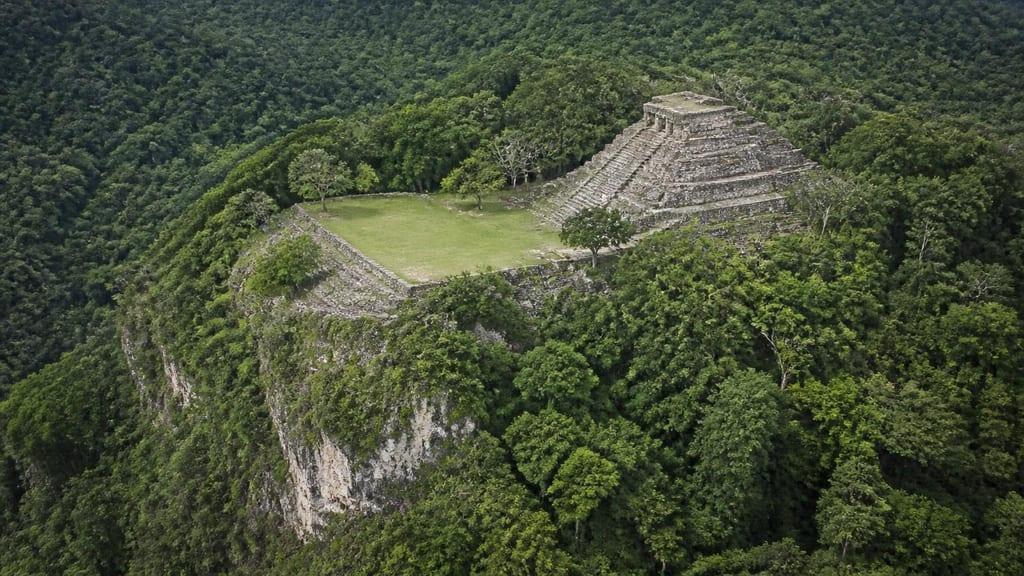
It was one of the most shared AI stories of the week. On November 10, Pietro Miotti, a Google researcher who stresses he is not an archaeologist, posted that his AI agents had found an unmapped Maya site in Mexico. The post passed a million views on X and reached the top of Hacker News. A day later he added an update: archaeologists had already mapped it.
What the agents did
There was no special model or classifier involved: the agents literally looked at the pictures, following a precise guide.
Miotti says the idea came on holiday in Peru. He brainstormed with Gemini, ChatGPT, Claude and Grok, and all pointed him to lidar, laser scans taken from aircraft that see through gaps in the jungle canopy to the ground below. Peru was poorly covered, so he switched to the Maya region, which has much more public lidar, including NASA data.
The agents turned about 1,200 square kilometres of lidar strips into images. Then 48 of them went through those images one by one, following a written guide to tell pyramids, platforms and plazas apart from natural hills, sinkholes and roads.
There was no special model or classifier involved: the agents literally looked at the pictures, following a precise guide.
They flagged many candidate structures overnight. When Miotti asked which ones had not been discovered yet, the agents settled on one hilltop at the edge of a cliff: a levelled plaza, an oval pyramid at least 8 to 12 metres tall, a raised courtyard and a hollow that may have been a water reservoir. They checked the raw laser data to make sure the shapes were on the ground and not made by trees, drafted a report and translated it into Spanish.
Mexico's National Institute of Anthropology and History (INAH) replied that "no registered archaeological site was identified at the location given in your report." The whole thing, from idea to reply, took under 72 hours.
The correction
On November 11 Miotti updated his post. The site appears in a 2025 study by Francisco Estrada-Belli and colleagues that mapped Maya settlements across 95,000 square kilometres using lidar. It just wasn't in INAH's register yet. "The agents missed it, I missed it," he wrote, and the agents "rediscovered it rather than discovered it."
The news site Sysnote found an awkward detail: an archived copy of Miotti's original post already listed that 2025 paper in its further reading. INAH's reply was only ever about its own register, not about everything scientists had published.
What it tells us
The story cuts both ways. On the plus side, general-purpose AI agents, with no special training, picked out a real structure from raw laser data, one that professional archaeologists had also found. That's a confirmed hit.
The weak spot was the part that sounds easy: checking whether anyone had found it before. The agents searched the literature and still missed a paper sitting in their own reading list. Miotti says the rest of the story still holds, and he's right that the speed is remarkable. But "my AI discovered X" claims need the same check as any human one, ideally before a million people see them.
Sources
- Pietro Miotti: My AI Agents (Re)discovered a Maya Site in 72 Hours (pietromiotti.com)
- Sysnote: The Maya site was on page 14 of a paper (sysnote.net)
- Estrada-Belli et al. 2025, Journal of Archaeological Science: Reports (doi.org)
- TechRadar: Google researcher finds Maya site with 48 AI agents (techradar.com)
Source: pietromiotti.com