A 100-year study of AI-native children began as early brain and survey evidence raised worries
A brain scan study, a survey of 319 workers and a philosophy paper point to worries, but none shows lasting harm to children yet.
In brief
A 100-year study will track AI kids
AIR launched a study to follow AI-native children for generations. Early work shows weaker brain connectivity in 6-year-olds on ChatGPT. None of it proves lasting harm yet.
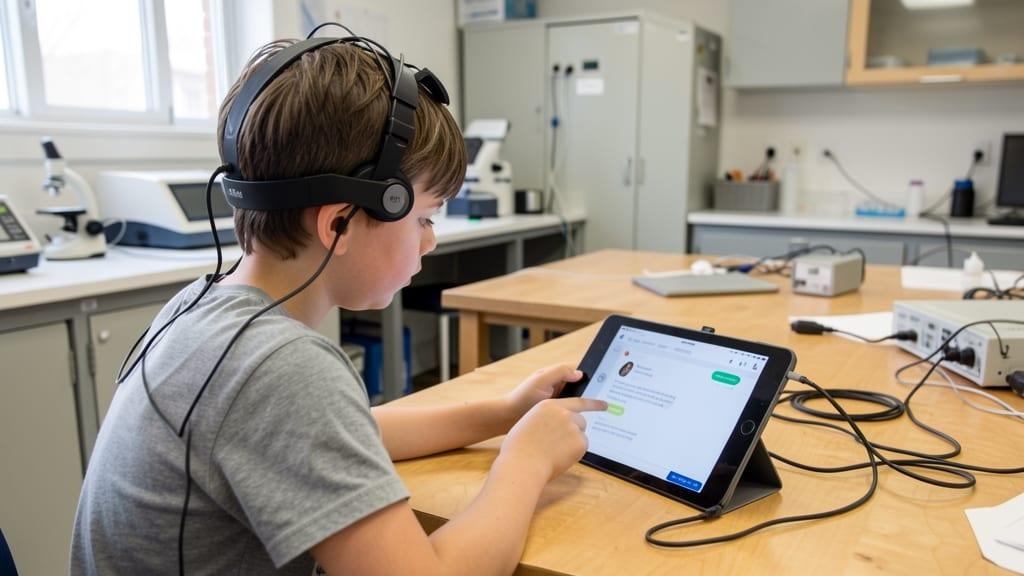
Nobody can yet say whether AI will ruin young minds. What exists is a mix of one brain-imaging study, one worker survey, one philosophy paper, one expert's warning and a new 100-year project built to find out.
The long project
Keep your brain in the game.
In March 2026 the American Institutes for Research (AIR) announced the AI Century Study. It will follow children growing up with AI in daily life, across the United States, for generations. It will track learning, health, work and civic life, and return to families at regular intervals.
AIR's lead researcher, Joseph P. Wilson, said the aim is not to push a set conclusion but to measure what changes. AIR's president, Jessica Heppen, said the deepest effects will unfold over years and decades, not months.
What the brain scan showed
A study in Cerebral Cortex by Tzipi Horowitz-Kraus and colleagues at the Technion looked at children using ChatGPT. Its title says children showed lower engagement of cognitive control, the brain's system for focus and self-management. The research notes add that 6-year-olds had weaker connectivity than adults in several brain networks during a five-minute chat. The notes say it is unclear whether this is temporary or lasting, but the excerpt we have does not cover that point.
What workers say
A CHI '25 paper from Hao-Ping Lee and colleagues surveyed 319 knowledge workers who use generative AI. People who trusted the AI more reported less critical thinking. People who trusted their own skills more reported more. The authors say the work shifts toward checking AI answers and stitching them into results.
The warnings
Neuroscientist David Rock, quoted by UN News, estimates that only five to 10 percent of workers use AI as intended, to offload routine tasks. He says most do the opposite and hand over analysis and decisions, which he fears erodes judgment. His advice: keep your brain in the game.
Hans Westerbeek, in AI & Society, goes further. He argues AI has become an infrastructure for knowledge itself. He says heavy reliance may weaken pathways tied to memory, reflection and self-monitoring. He also says the loss would be of authorship, not intelligence. He wants learning designed to keep friction and struggle.
Where the sources differ
Westerbeek and Rock describe erosion as a real risk. AIR frames the question as open and says it will measure rather than assume. The CHI authors also note that earlier tools, from writing to calculators, drew similar fears.
Imagine a child who never has to wait to know something. Does that child learn to wonder less, or just to wonder about harder things?
Limits
The brain study is a short snapshot, not proof of lasting change. The CHI results are self-reported by workers, not children. Westerbeek's paper is an argument built on philosophy and existing research, and Rock's figures are his own estimate. The AI Century Study has published no findings yet.
Sources
- AIR Launches the AI Century Study, a Landmark 100-Year Research Effort on Human Development in the Age of Artificial Intelligence | American Institutes for Research (air.org)
- How AI is rewiring the human brain: the generational transformation of cognition and knowing - AI & SOCIETY (link.springer.com)
- AI is changing the way we think. The question is whether we’ll notice in time (news.un.org)
- The Impact of Generative AI on Critical Thinking: Self-Reported Reductions in Cognitive Effort and Confidence Effects From a Survey of Knowledge Workers | Proceedings of the 2025 CHI Conference on Human Factors in Computing Systems (dl.acm.org)
- Lower engagement of cognitive control in children on ChatGPT | Cerebral Cortex | Oxford Academic (academic.oup.com)