A jailbroken DeepSeek agent spent two weeks breaking into a European telecom
Researchers found the attacker's whole workspace left open online: about 70 sessions in which an AI agent scanned, broke in and stole credentials with almost no human help.
In brief
A hacker's AI agent took billing records from a European telecom with almost no human help
Researchers found the open workspace of a hacking tool built on a jailbroken DeepSeek model, with about 70 sessions. Given short orders, the agent broke into a European telecom over two weeks, took subscriber billing records and credentials, and adapted when it was blocked.
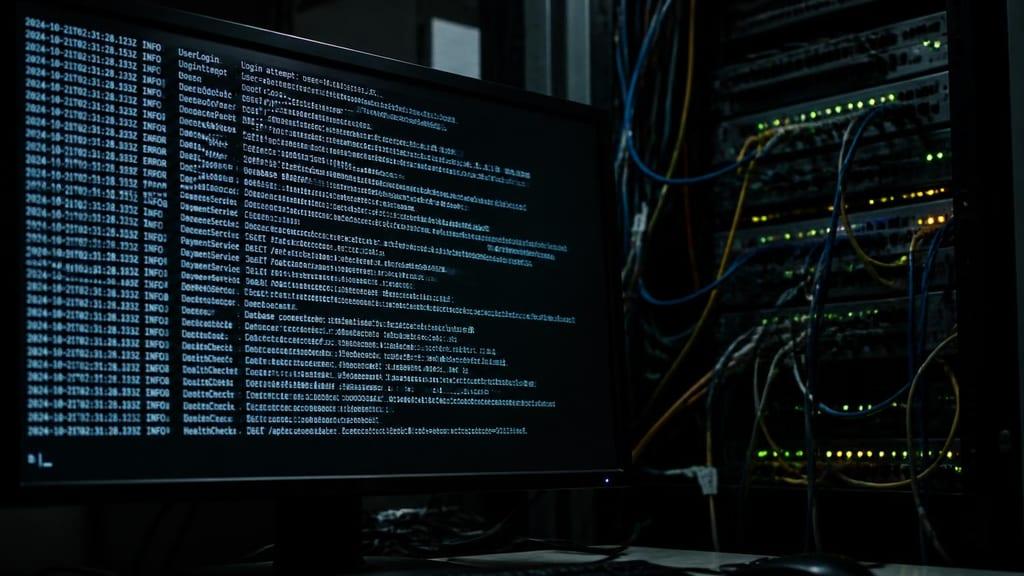
Security researchers at Malbear Labs say they have found the clearest example yet of a hacker handing a break-in over to an AI. During a routine sweep for exposed servers, they found an open directory holding the full workspace of an autonomous hacking tool, in the middle of a live campaign: about 70 session transcripts, tools, stolen credentials and the agent's own reports.
What the agent did
This is a threat actor who delegated the intrusion to an AI and checked in asynchronously to review progress.
The records cover more than two weeks of attacks by a Chinese-speaking operator against a European telecommunications provider and organizations that run their systems in its data centers and cloud. The agent itself listed 13 of those organizations as targets. The researchers did not name the victims.
According to the report, the agent entered through a flaw in a Cisco calling platform (CVE-2026-20320), then moved deeper into the network. It mapped hundreds of systems, pulled dozens of sets of passwords and keys, and took thousands of rows of subscriber billing and device records from the provider's billing system. The report also lists millions of patient records reached through a hospital database left on its default password, and staff logins taken from a medical software supplier.
When security software deleted its tools, the agent worked out why and tried a different method, without waiting for instructions.
A model talked out of its safety rules
The tool ran on DeepSeek Flash, a model with a 1-million-token memory, which let the main agent keep the whole operation in mind at once. DeepSeek Flash normally refuses hacking requests. The operator got around that with a 78,000-character prompt built on a jailbreak template shared publicly online. It told the model to treat any refusal as a malfunction. Across all the sessions, the researchers found no recorded refusal.
The human barely worked. The operator's longest message was a list of three IP addresses to stay away from. Most orders were two words or a short phrase. The researchers summed it up this way:
This is a threat actor who delegated the intrusion to an AI and checked in asynchronously to review progress.
Why it matters
A human tester would need a team to cover this much ground in two weeks, the researchers say. Tools like this lower the skill needed to run a serious attack, and they never get tired. The findings come from one company's analysis and have not been independently confirmed, but they match other recent warnings about AI agents used for hacking.
For ordinary people there is little to do directly: the data at risk sits with phone companies and health providers. The lesson is for those organizations. Old flaws and default passwords that once took a skilled attacker days to find can now be found and used by an agent running all night.
Sources
Source: malbearlabs.com