Abu Dhabi is rewriting its rules so AI can read them, starting with food imports
Abu Dhabi and OpenAI have launched Machine-Readable Government, which turns written policies into a format AI can check applications against. It starts with food import registrations, and officials keep the final say.
In brief
Abu Dhabi and OpenAI want permit checks that took days to take minutes
With OpenAI, Abu Dhabi is converting rules into a format AI can read, so routine applications get an answer tied to the exact clause. It starts with food import registrations. Officials keep the final say, and the data stays in the UAE.
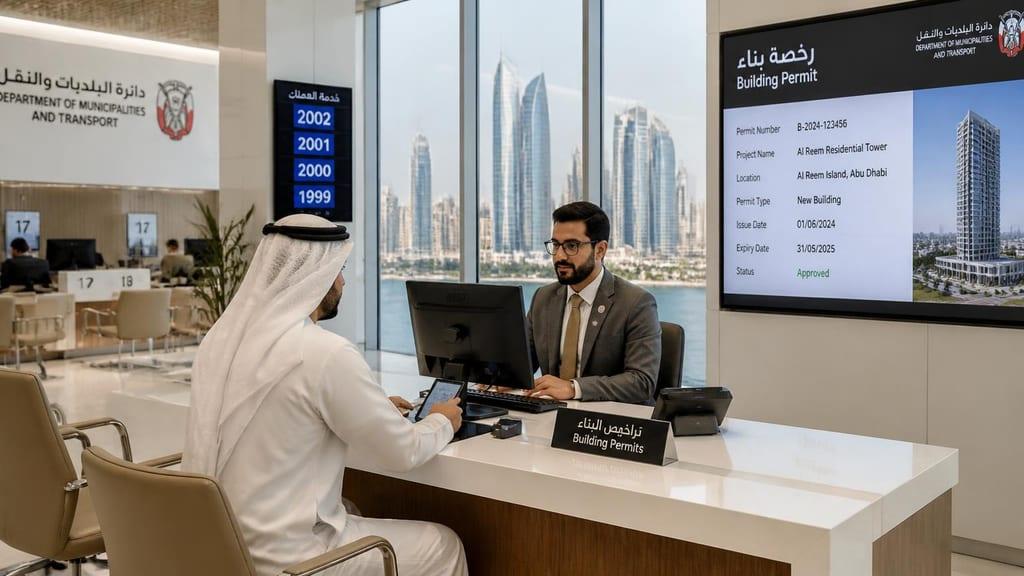
Every permit, licence or certificate depends on someone reading a pile of rules and checking an application against them. Abu Dhabi wants AI to do much of that reading.
The emirate's Department of Government Enablement (DGE) and OpenAI have launched Machine-Readable Government (MRG). Gulf News reported the announcement on Monday, November 9. The idea is to convert a defined set of laws, policies and regulations into a format AI systems can process, so routine applications can be checked in minutes rather than days.
The harder task was making policy itself intelligent, and that is what a Machine-Readable Government does
How it works
When an application comes in, the system checks it against the relevant rules and produces an outcome linked to the exact clause behind it. That creates an audit trail. Officials stay responsible for oversight and final decisions.
Routine cases can be processed around the clock. According to the partners, the framework is not meant for autonomous decisions in high-stakes areas, such as anything that affects a person's rights, eligibility or access to essential services.
"The harder task was making policy itself intelligent, and that is what a Machine-Readable Government does," said Ahmed Tamim Hisham Al Kuttab, chairman of DGE.
Where it starts
The first application is already in production at the Abu Dhabi Agriculture and Food Safety Authority (ADAFSA), for food imports. AGBI reports that this process handles about 20,000 new product registrations a year and draws on 1,400 policy documents, some more than 700 pages long. The pilot was built with Inception42, a G42 company.
Next on the list, according to the announcement: construction permits, business and freelance licensing, data access governance, HR compliance and procurement.
Where the data goes
- AI processing runs on OpenAI's UAE inference residency, meaning the model computation happens on GPUs in UAE data centres, under UAE cybersecurity standards and Abu Dhabi law.
- The Abu Dhabi government keeps ownership of the data, and it won't be used to train AI models.
MRG is part of Abu Dhabi's AED 13 billion ($3.5 billion) Government Digital Strategy for 2025 to 2027, and its goal of becoming the world's first AI-native government by 2027.
What to watch
The partners have not published how often the AI's recommendations are corrected or overruled by officials, or how fast applications move today compared with before. Those numbers will show whether "minutes instead of days" holds up once the system leaves food imports and reaches permits that ordinary residents and businesses apply for.
Sources
- Gulf News: Abu Dhabi, OpenAI launch world's first AI-native government initiative (gulfnews.com)
- AGBI: Abu Dhabi partners with OpenAI to speed up business approvals (agbi.com)
- Gulf Business: OpenAI and Abu Dhabi join forces (gulfbusiness.com)
- AI Majlis Daily: GCC AI news, 14 Nov 2026 (aimajlisdaily.com)
Source: gulfnews.com