FCC lets SpaceX put up to 1 million AI data center satellites in orbit
The first Starmind satellite must fly by 2033 and the last by 2040, and the American Astronomical Society says it is "disheartened and dismayed".
In brief
FCC lets SpaceX launch up to 1 million AI data center satellites
The US Federal Communications Commission approved SpaceX's Starmind plan on November 25: up to 1 million satellites that run AI computing on solar power and beam results to Earth. The first must fly by 2033 and all by 2040. Astronomers say the bright satellites will change the night sky.
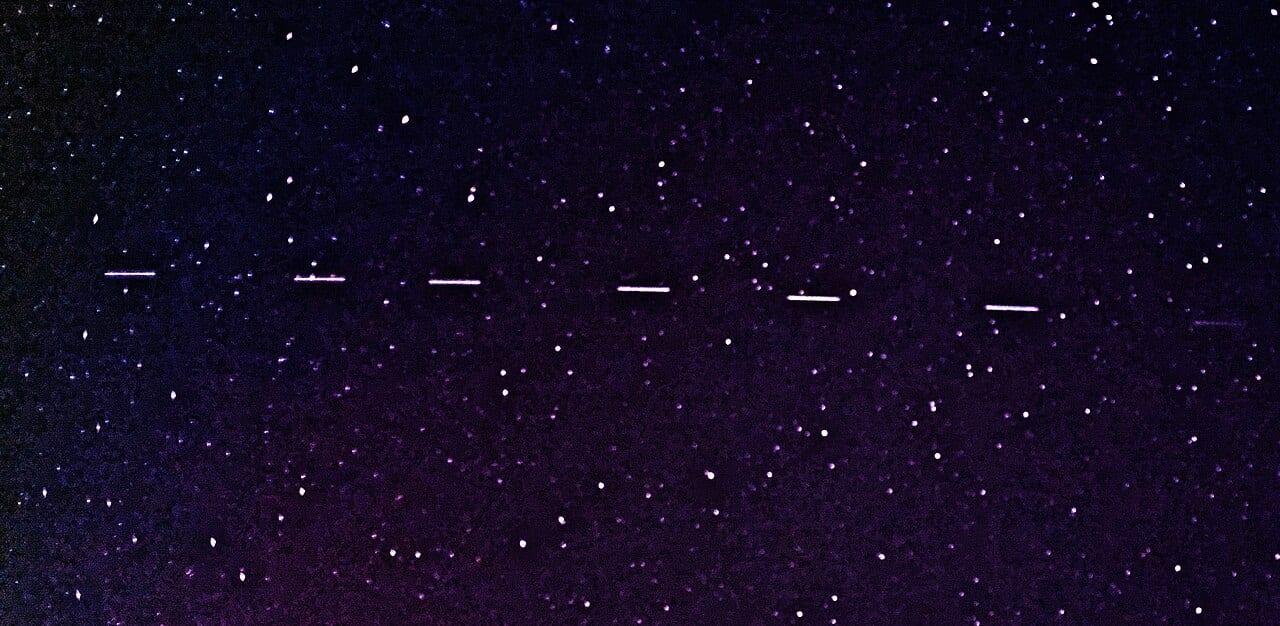
SpaceX now has US permission to put up to 1 million satellites in orbit that work as AI data centers. The Federal Communications Commission (FCC), the US agency that licenses satellites' radio links, granted the request on November 25 and called it the first US authorization for a constellation of data centers in space. Not one of these satellites exists yet. SpaceX has until 2033 to launch the first.
The project is called Starmind. SpaceX says the satellites will run AI chips on sunlight, which it says is continuous in the sun-synchronous orbits it plans to use, and send the results down to Earth by laser through its Starlink internet satellites. The pitch is about power: on the ground, AI data centers are struggling to find enough electricity.
visible as extremely bright objects for longer periods in the night sky
What SpaceX wants to build
On its Starmind page, SpaceX describes a satellite called AI1 that measures 75 meters (246 feet) from wingtip to wingtip and 30 meters tall when unfolded. Each would carry up to 250 kilowatts of computing at peak and 175 kW on average.
SpaceX says heat "radiates freely into the vacuum of space", so the satellites need no chillers, fans or cooling towers. It plans to build them at a "Gigasat Factory" in Bastrop, starting as soon as late 2027, and to make the chips at a new plant it is building with Tesla.
The deadlines, and what the FCC held back
The FCC's order sets a schedule. Missing a milestone voids the license, SiliconANGLE reports.
| By | Satellites in orbit |
|---|---|
| November 25, 2033 | at least 1 |
| 2035 | 100,000 |
| 2038 | 500,000 |
| 2040 | 1,000,000 |
The satellites would fly in six bands between 500 and 1,002 kilometers up. The license itself covers a backup radio system for emergencies; the main links are optical. The FCC also put off one request. SpaceX wanted to move worn-out satellites above 600 km into "disposal" orbits, or out towards the Sun, instead of letting them burn up in the atmosphere. The FCC said SpaceX had "not provided sufficient information" and must apply again before launching any satellite that won't come down that way.
Petitions to block the license from Viasat, Amazon's satellite unit Kuiper Systems and the American Astronomical Society (AAS) were denied. To people who argued the business makes no sense, the order replied that their comments "seek to substitute the government's judgment regarding the viability of business endeavors for that of the applicant and private enterprise. We decline to do so."
FCC chairman Brendan Carr said the decision "opens a bold new frontier for the computing infrastructure needed to power America's leadership and growth."
Why astronomers are upset
The AAS said it was "disheartened and dismayed." Starmind's satellites are larger, and so brighter, than Starlink's, and fly higher, so they would be "visible as extremely bright objects for longer periods in the night sky," the society said. It also warned of radio interference with radio telescopes, waste heat that brightens the sky in infrared, pollution from launches and re-entries, and a higher risk of collisions.
Michael Brown, an astronomer at Monash University in Australia, ran the numbers: if each satellite lasts five years, "over 500 satellites will need to be launched every day." He said Starmind would multiply the number of active satellites in orbit by more than 50.
Others doubt it will ever get that far. Astrophysicist Adam Becker told the Associated Press the plan is "a fantasy." His problem is the same heat SpaceX calls an advantage: space is cold, but a vacuum holds heat in, much like a thermos, and he says there are "basic physical limits" to radiating it away.
SpaceX is not alone. Google launched a test satellite for its Project Suncatcher in October, and Blue Origin plans a dedicated launch for it in 2029, The Verge reports. The FCC says it is reviewing other orbital data center proposals too.
What it means for you
Nothing changes in your sky this year, and your chatbot will not be answering from orbit any time soon. A license is permission, not hardware. Our read: the date worth watching is the first real Starmind launch, because that is when SpaceX's cooling claims meet physics. If the plan does scale, Brown says it would mean "fundamentally changing everyone's view of the heavens."
Sources
- FCC: FCC authorizes 1 million satellites for data centers in space (docs.fcc.gov)
- FCC Space Bureau: SpaceX Orbital Data Center System order and authorization (DA 26-1273) (docs.fcc.gov)
- SpaceX: Starmind (spacex.com)
- American Astronomical Society: statement on FCC approval of SpaceX's orbital data center system (aas.org)
- AP: FCC says SpaceX can deploy 1 million satellites for data centers in space. Scientists are skeptical (apnews.com)
- Monash University expert comment on the FCC Starmind decision (newshub.medianet.com.au)
- SiliconANGLE: FCC clears SpaceX to put up to 1 million Starmind data centers in space (siliconangle.com)
- The Verge: FCC signs off on SpaceX's plan to put up to 1 million data center satellites into space (theverge.com)
Source: docs.fcc.gov