University of Sydney makes every honours student defend their thesis out loud
The university says it cannot reliably keep AI out of a written thesis, and in one engineering school the oral now counts for 50% of the grade.
In brief
University of Sydney makes all honours students defend their thesis out loud
Because it can't reliably restrict AI use in written work, the University of Sydney now requires every honours student to pass an oral assessment on their thesis. In one engineering school the conversation counts for 50% of the grade and the 20,000-word thesis for 20%.
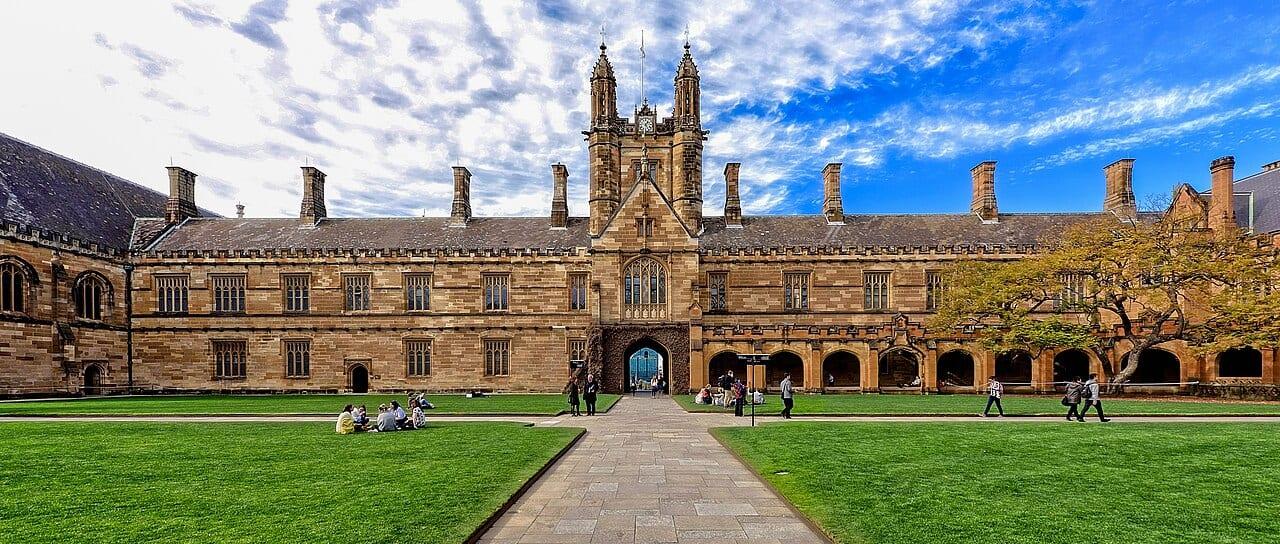
At the University of Sydney, a 20,000-word thesis is no longer enough to finish an honours degree. This year every honours student there must also defend their work out loud in front of academics, because the university says it can no longer reliably keep AI out of written work.
Sydney is the first Australian university known to require oral assessments across all its honours programs, the Guardian reported on November 25, 2026. Honours is an extra year of intensive research that some students take after a bachelor's degree, and it usually rests on one big written project.
We necessarily treat honours theses as open assessments as we can't reliably restrict AI use
"We necessarily treat honours theses as open assessments as we can't reliably restrict AI use," Adam Bridgeman, the university's acting deputy vice-chancellor for education, told the Guardian.
How the conversations work
Each faculty runs them differently, and the gap between them is wide.
| Student | Oral format | Weight |
|---|---|---|
| Aidan Elwig Pollock, history | A short conversation, about 15 minutes | Pass or fail; worth no marks, but failing it means no degree |
| "Isabelle", engineering (not her real name) | An hour of interviews, in a room with five classmates | 50% of the grade; the 20,000-word thesis counts for 20% |
Isabelle's engineering school assessed 250 students in two days. "There were people coming in and out of the room while we were being assessed so it was distracting," she said, adding that she had to move across the room so her marker could hear her.
Elwig Pollock, who wrote about how Captain Cook has been commemorated over time, said he had not used AI at all and called the requirement "insulting" to students and supervisors. "If you've used AI to do your honours thesis and your supervisor has not figured it out throughout your regular meetings, then what's stopping you from communicating that material successfully in a 15-minute conversation," he said.
Why Sydney did it
The rule grows out of what the university calls its "two-lane" approach, announced in November 2024. Work done unsupervised, at home or online, counts as "open": students may use AI on it and must say how. Only work done in person under supervision, such as exams, lab tests and oral assessments, counts as "secure" proof of what a student can do. The university's own assessment page lists the honours thesis under open assessments, which is why the thesis alone no longer proves anything. Students in online courses will also have to sit secure assessments in person from 2027.
The university's teaching staff laid out the options in a guide to honours oral exams in May: a traditional viva, an interactive conversation, or a set of prepared questions, as a share of the mark or as a pass-or-fail hurdle.
There are no public reports of Australian honours students cheating with AI, the Guardian noted. Kurt Iveson, an honours coordinator in geosciences, said honours students are "not the kind of people that I would personally be worried about getting Claude to write their honours thesis for them", but that management wants to show the world "that things are being assessed securely".
The cost lands on staff and nervous speakers
The interviews add a lot of work for academics, and no casual staff were hired to help, according to staff and students who spoke to the Guardian. Students who rarely speak in class, or who do not have English as a first language, have found the change stressful. Bridgeman said students and staff were offered guidance and practice so that fluency would not be "inadvertently rewarded", and that the university would "take feedback on board as we plan for 2027 assessments."
Other Australian universities are moving the same way: schools at the University of Melbourne, Monash University and Australian Catholic University are bringing in orals, and Adelaide University uses role-play "interactive oral assessments".
My read: Sydney's own planning paper says honour codes and AI detection software "do not achieve security". What does, it turns out, is the oldest exam there is: a professor asking "why did you do it that way?"
What it means for you
Sydney is not alone. England's regulator wants university exams back for the same reason, and South Korea lost an education minister over AI cheating this month, while Sydney itself is rolling out ChatGPT Edu to its students. If you are studying anywhere, expect more of your marks to come from things you do in a room, out loud.
To prepare: keep your notes, drafts and data, because they are the story of how you did the work. Practise explaining your main choices in two minutes to someone outside your field. Ask in advance whether the oral is a hurdle or a share of the grade, and ask for the marking rubric; Sydney's own guide tells staff to share it with students before the oral.
Sources
- Aidan is one of thousands of students forced to verbally defend his honours thesis as universities take on AI (The Guardian) (theguardian.com)
- Assessments (University of Sydney) (sydney.edu.au)
- A guide to Honours oral exams (Teaching@Sydney, University of Sydney) (educational-innovation.sydney.edu.au)
- University of Sydney AI assessment policy (University of Sydney, November 27, 2024) (sydney.edu.au)
- Two parallel lanes: the roadmap for a future-ready transformative education (Teaching@Sydney) (educational-innovation.sydney.edu.au)
- Using artificial intelligence tools responsibly (University of Sydney) (sydney.edu.au)
Source: theguardian.com