An amateur hacker used a jailbroken AI agent to steal data from 82 Flemish towns
Names, national ID numbers and bank account numbers came off one recycling-centre server, while two-step sign-in stopped the same agent at banks.
In brief
An AI agent stole ID data on up to 1.2 million people in Flanders for an amateur hacker
A hacker who wrote his orders in misspelled French used a jailbroken DeepSeek agent to steal names, national ID numbers and bank account numbers from 82 Flemish towns, researchers say. The same agent failed wherever two-step sign-in was switched on.
A hacker with little technical skill used a jailbroken AI agent to steal personal data from 82 municipalities in Flanders, the Dutch-speaking north of Belgium, between November 6 and 15, 2026. The security firms Secutec and SOCRadar disclosed the theft on November 25. The 82 towns have about 1.2 million residents between them.
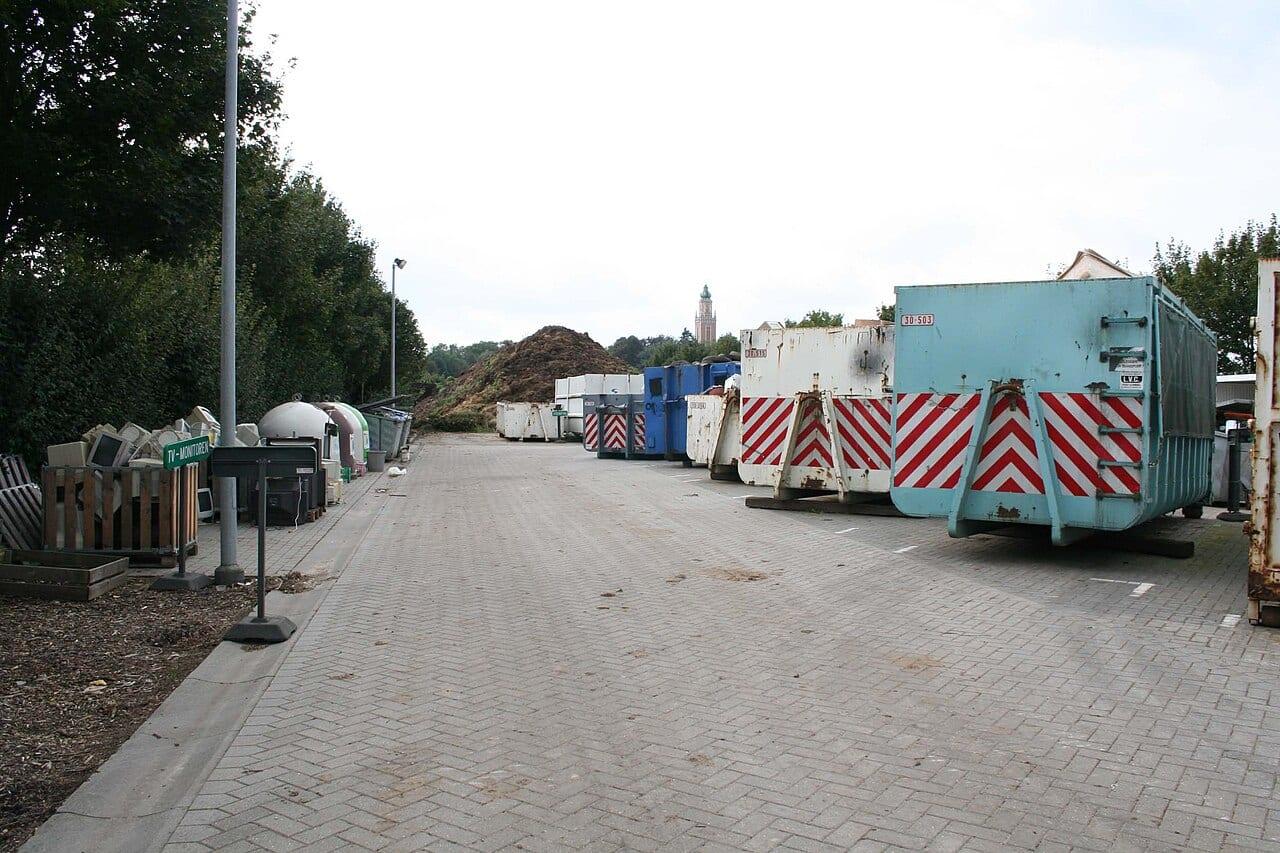
The records came from a single server run by a company that keeps visitor data for the region's recycling centres. In much of Flanders you scan your identity card at the gate before you can drop off old furniture or garden waste, and that check is what put so much data in one place, VRT NWS reported.
These are not elite hackers
What was taken
According to Secutec, the stolen files cover residents and municipal staff:
| Data | Taken? |
|---|---|
| Names, addresses, dates of birth, gender | Yes |
| National register number and identity card number | Yes |
| Bank account number (IBAN) | Yes |
| Car number plates | In some towns |
| Passwords in municipal configuration files | Yes |
The list does not include PIN codes or bank passwords. Secutec says data from several towns has already been passed on and data from at least one has been sold. On November 28, a person using the hacker's alias told VRT NWS over Telegram that the data is being sold on the black market.
The figure of 1.2 million is the towns' combined population, so it is the upper limit. Belgium's Centre for Cybersecurity (CCB) told VRT NWS it could not confirm the numbers but thought they were in that range. The prosecutor's office in East Flanders, the hardest-hit province, has opened an investigation. The firms have not named the supplier or published a list of towns.
The AI did the technical work
SOCRadar reconstructed the whole campaign because the hacker left his own working folder open on a hijacked server in France: every prompt he typed, his command history and about 10 GB of stolen data. He was caught by the same kind of mistake he exploited.
The prompts show someone who could not find his own output on screen and wrote in misspelled French. One order, as SOCRadar translates it: "Make me 13 files of 1,000 full records with IBAN, nice and tidy." The agent wrote the scanners, the break-in scripts and the tools that carried the data out.
The agent ran on DeepSeek, the Chinese AI model, inside Hermes Agent, open-source software from the US company Nous Research. A jailbreak, a set of instructions that talks a model out of its safety rules, plus automatic rewording whenever the model said no, left DeepSeek refusing only 41 of more than 5,800 requests, Secutec says. The agent went quiet on November 14, when its access key to the model was revoked.
"These are not elite hackers," said Samet Sazhak of SOCRadar. "Where launching a campaign like this once required years of experience, an AI model without guardrails and a series of poorly typed sentences are now enough."
Old holes and a weak password
Nothing here was new. SOCRadar says the recycling server's management page was open to the internet and protected by a weak administrator password. The data of different towns was not kept apart and the files were not encrypted, so one login opened all of them. Elsewhere the agent used flaws mostly from 2017 to 2023, including one in the Metabase analytics tool that was fixed in 2023.
The same agent went after more than 50 organisations in Belgium, France and Switzerland, including banks, insurers and crypto exchanges. At one insurer it exported the whole customer database. Where two-step sign-in and locked-down admin pages were in place, it failed. "Wherever multi-factor authentication and properly secured access were in place, the AI agent was stopped," said Geert Baudewijns, Secutec's chief executive.
Is DeepSeek to blame? Maarten Anckaert of the Belgian software firm iCapps told ITdaily it is being singled out unfairly: "The hack could just as easily have happened with another model." None of the reports carried a comment from DeepSeek. My read: both points stand. A model that says no more often would have slowed this hacker down, but a weak password is what let him in. Our earlier story on a jailbroken DeepSeek agent that spent two weeks inside a European telecom shows this is not a one-off.
What to do this week
If you live in Flanders, assume a scammer may know your name, address and bank account number, and could quote them to sound real. Belgium's data protection authority, the GBA, gives this advice:
- Never give bank codes or passwords over the phone or in a message, whoever the caller says they are.
- If "your bank" or "the town hall" calls, hang up and ring back on the official number you look up yourself.
- Log in through your bank's app, never through a link in a text, email or WhatsApp message.
- Turn on two-step sign-in on your accounts.
Consumer group Test Aankoop adds two more: check your bank statements in the coming weeks for payments you don't recognise, and forward suspicious emails to verdacht@safeonweb.be, Belgium's official phishing inbox.
Everywhere else, the lesson is the one that stopped this agent at the banks: two-step sign-in on your email first, then everything else.
Sources
- Secutec: Ghost Hunters hacking group steals personal data of 1.2 million Flemish residents (secutec.com)
- SOCRadar: BabidiGhost, an AI-augmented cybercrime operation (socradar.io)
- VRT NWS: Data of 1.2 million Flemings from 82 municipalities stolen (vrt.be)
- VRT NWS: prosecutor in East Flanders opens investigation (Dutch) (vrt.be)
- VRT NWS speaks with the hacker selling the data (Dutch) (vrt.be)
- ITdaily: Ghost Hunters steal data of 1.2 million Flemish residents (itdaily.com)
- Belgian Data Protection Authority: be vigilant (Dutch) (gegevensbeschermingsautoriteit.be)
- Test Aankoop: how to protect yourself after the recycling centre leak (Dutch) (test-aankoop.be)
Source: secutec.com