Anthropic's Levent Alpöge says Claude helped him prove the Riemann hypothesis
Two Lean groups certified the machine-checked proof on November 21, but mathematicians say understanding its 17 million lines of code will take years.
In brief
Anthropic mathematician says Claude helped him prove the Riemann hypothesis
Levent Alpöge posted a machine-checked proof of the 167-year-old Riemann hypothesis, made with Claude, on November 20. Two Lean groups certified it a day later. The Clay prize still needs two years of scrutiny.
On November 20, Levent Alpöge, a mathematician on Anthropic's technical staff, made one of the biggest claims in the history of mathematics. In a four-page statement on his personal website, he wrote that he and Claude, Anthropic's AI model, had found a proof of the Riemann hypothesis. A day later, two groups that run the Lean proof-checking system said they had verified it.
"I believe I have, working with Claude, discovered a proof of the Riemann Hypothesis," Alpöge wrote.
I believe I have, working with Claude, discovered a proof of the Riemann Hypothesis
What is the Riemann hypothesis?
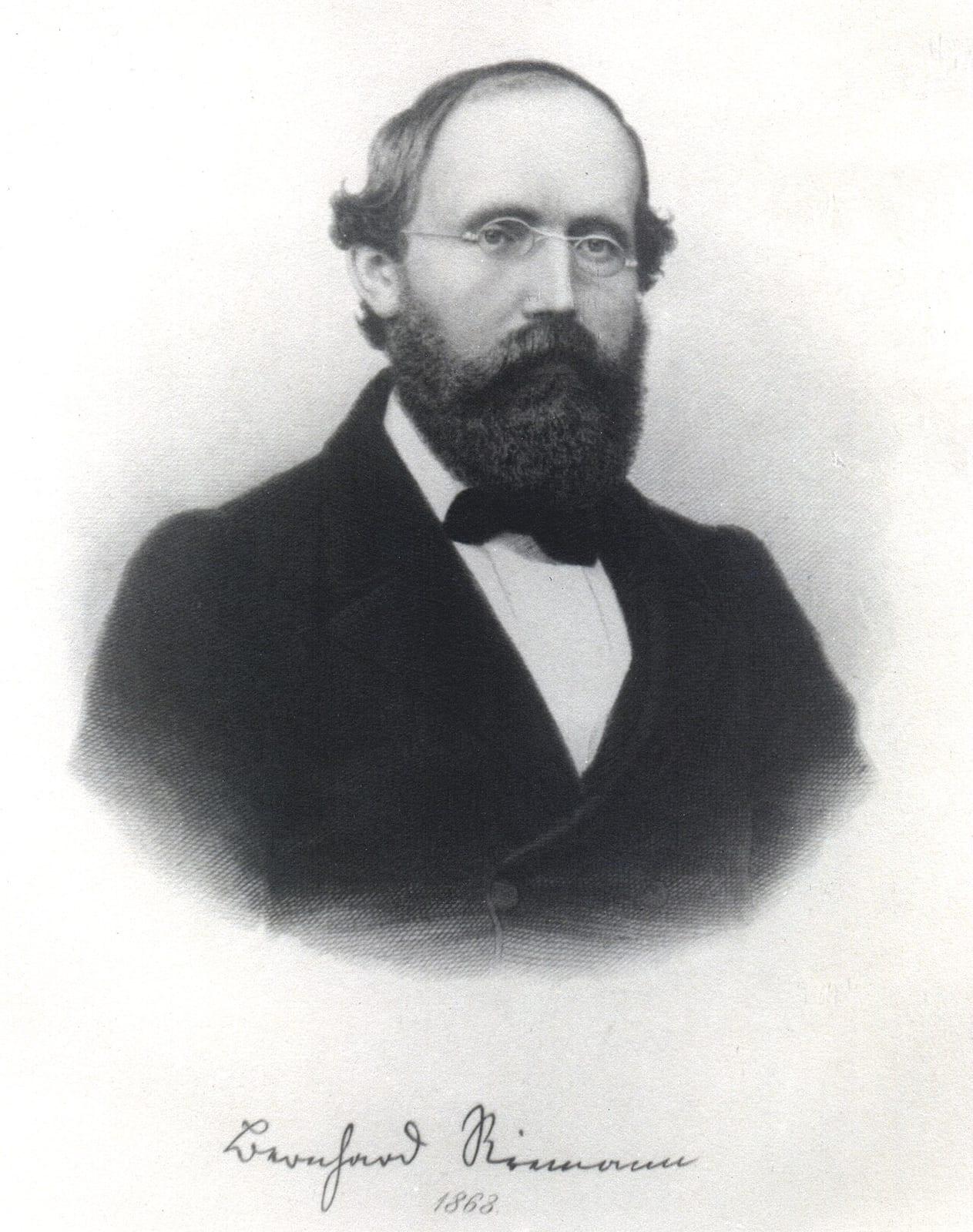
The German mathematician Bernhard Riemann proposed it in 1859. It is about the prime numbers (2, 3, 5, 7, 11 and so on), which look scattered at random along the number line. Riemann guessed that their spread actually follows a deep, precise pattern. Nobody managed to prove it in 167 years. It is one of seven Millennium Prize Problems, each carrying a $1 million reward from the Clay Mathematics Institute, and only one of them, the Poincaré conjecture, had been officially solved before.
What did he actually publish?
Alpöge did not publish a normal journal paper. He released the proof written in Lean, a programming language that checks every logical step by machine, and Science reports that the code runs to 17 million lines. He says the full explanation Claude produced is more than 250,000 pages long and has not been released. He says the method also covers the Generalized Riemann Hypothesis, a much wider version, and told The Guardian that Claude worked on it with him for about six weeks.
Who has checked it?
Within hours, mathematicians including Andrew Sutherland of MIT compiled the Lean files on their own machines without errors. "Honestly the chance that anything is fishy here is approximately zero," Sutherland told Scientific American.
On November 21, the Lean Focused Research Organization and the Mathlib Initiative, which maintain Lean and its maths library, went further. "We hereby certify that both the statement and the proof of the Riemann Hypothesis are correct," they wrote. That answers the first worry experts such as Imperial College London's Kevin Buzzard had raised: whether the theorem typed into the code really is the Riemann hypothesis and not something subtly different.
Why isn't it settled?
- Nobody understands it yet. "Mathematicians of course won't be satisfied with 17 million lines of Lean. They'll be satisfied when, and only when, they're able to understand the proof themselves," Scott Aaronson of the University of Texas at Austin told New Scientist.
- The prize has rules. The Clay Institute only considers a solution after it is published and survives at least two years of scrutiny with "general acceptance" from mathematicians.
- Anthropic has not commented. According to The Verge, Alpöge wrote that he texted CEO Dario Amodei about the result "late Sunday night" and held it back until after Anthropic's stock market debut on November 19. In August, Anthropic had said it did not expect Claude's techniques to lead to a proof.
Some mathematicians are uneasy for another reason. NYU's Maksym Radziwill told Science that results like this suit companies pushing the idea "that understanding is unnecessary," and that only people with access to frontier AI can now produce them. On the same day, independent mathematician Alessandro Masullo and Stanford's Brian Conrad released an unfinished, 940-page human proof of the generalized version, written without AI and not yet checked.
What does it mean for everyone else?
A proof of the Riemann hypothesis will not change your phone or your bank tomorrow. Its importance is inside mathematics: thousands of results were written in the form "if Riemann is true, then...", and those now stand on firmer ground. The bigger story is what it says about AI. A model helped settle a problem that top mathematicians thought was nowhere near reach, and humans now have to work out why the answer is right.
Sources
- Anthropic mathematician proves Riemann hypothesis, most famous problem in all of math (Scientific American) (scientificamerican.com)
- Anthropic mathematician claims to have solved prestigious Millennium Prize problem with Claude (The Verge) (theverge.com)
- Levent Alpöge's statement (alpo.ge)
- AI just solved the 'real' Navier-Stokes problem (Scientific American) (scientificamerican.com)
Also used: Scientific American: independent mathematicians confirm the proof, The Guardian: two groups verify the claim, New Scientist: mathematicians react and Science: can humans understand the answer?
In this story
Source: scientificamerican.com