The New York Times tells its photographers not to use the new Photoshop
The paper says Photoshop 2027 uses generative AI in ways users may not notice, and Adobe's hidden label can mark a real news photo as AI-edited.
In brief
The New York Times told its freelance photographers to avoid Photoshop 2027
The New York Times asked freelance photographers not to use Adobe's newest Photoshop on assignment. The paper says some functions use generative AI in ways users may not notice, and Adobe automatically adds a hidden label that can mark a real news photo as AI-edited.
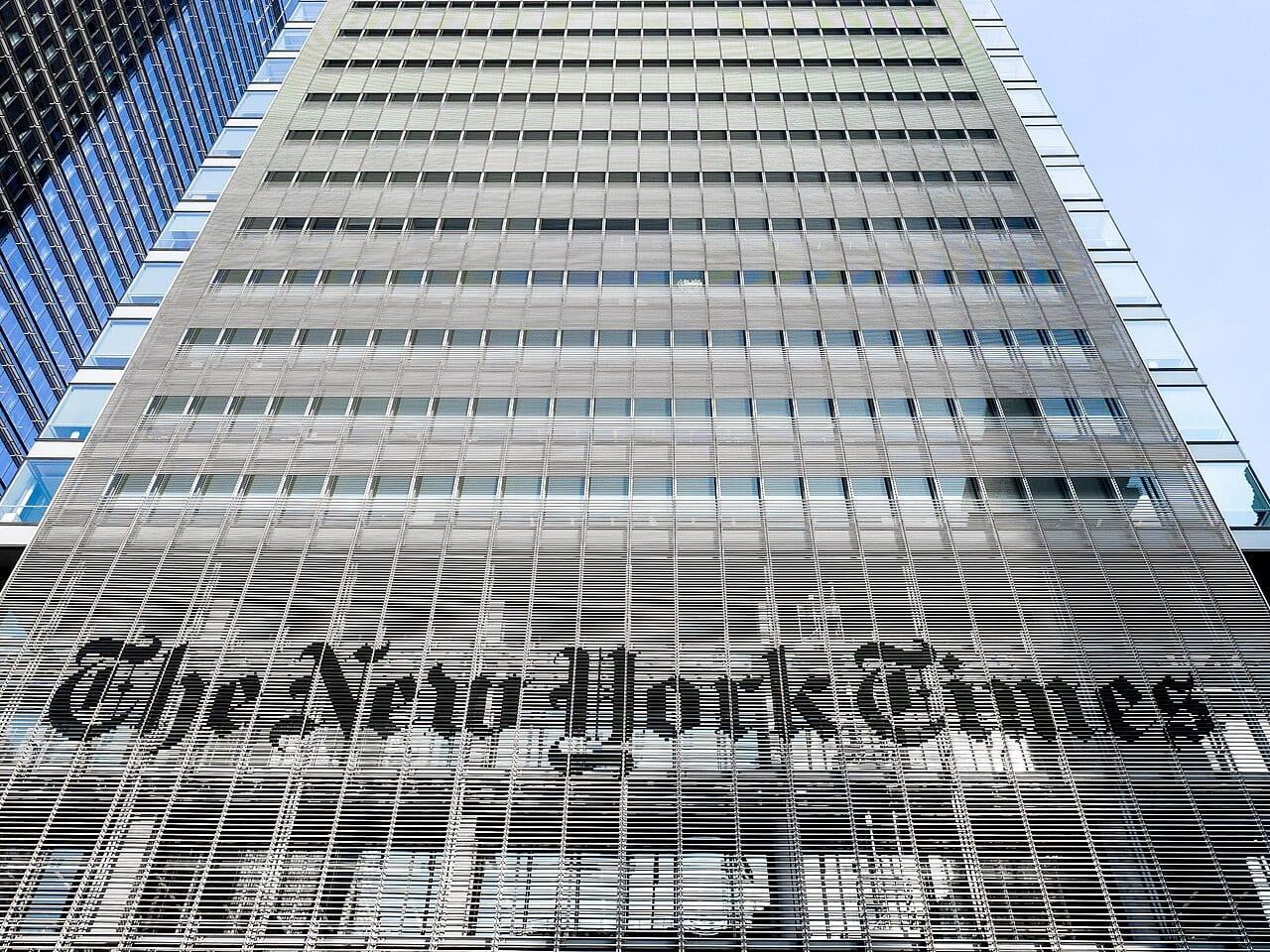
The New York Times has told its freelance photographers not to use the newest version of Photoshop, the program whose name became the verb for editing a picture. The reason, in an email first reported by The Verge on November 24, is that Photoshop 2027 uses AI in ways the paper fears its photographers may not notice, and that can leave a real news photo labeled as AI-edited.
The email, signed by two of the paper's photography leaders, Meaghan Looram and Josh Haner, is short: "At this time, we are requiring that all contributing photographers avoid using Adobe Photoshop 2027 (release 28.0.0 and subsequent updates) when working on assignment for The Times." A Times spokesperson, Graham James, confirmed it to PetaPixel: "It has come to our attention that certain functions in Adobe Photoshop 2027 utilize generative AI in ways that may not be apparent to users of the software."
It has come to our attention that certain functions in Adobe Photoshop 2027 utilize generative AI in ways that may not be apparent to users of the software.
Why would a newspaper ban a software update?
The Times keeps photo editing to a minimum. Its standards, as PetaPixel summarizes them, forbid adding, moving, blurring or removing anything in a news photo; color may be adjusted only to show the scene as it was. Generative AI, which invents new pixels, is off limits.
Photoshop 2027 came out on November 10 with a stack of new AI features. The Verge lists an "AI Assisted Editor" view that gathers the AI tools in one toolbar, an assistant that gives step-by-step editing instructions, editing by typed prompt, new AI upscaling and a tool that recomposes a picture for a different size. The email warns that using such features "can result in metadata identifying photographs as AI-generated."
That metadata is a hidden label inside the file. Under new transparency laws, including California's AI Transparency Act and the EU AI Act, Adobe now stamps it on automatically. Adobe's own FAQ is blunt: "When qualifying generative AI tools are used to create or modify content in Adobe apps, C2PA metadata will be automatically attached to the file," and "under the new laws, this metadata cannot be disabled for qualifying content." C2PA is an open standard for recording where a picture came from and how it was edited.
Which edits get the label?
Adobe says the rule "applies only to generative AI tools, not traditional AI-powered features." It does not publish a tool-by-tool list, which is the gap the Times is worried about. Here is what is known:
| What you do in Photoshop | Labeled as AI? |
|---|---|
| Generative Fill, Generative Expand, editing by typed prompt | Yes. Adobe calls these generative tools. |
| Crop, levels, curves, color correction | No, under Adobe's rule. |
| The upgraded Remove tool, Relight, the AI Assisted Editor | Unclear. Adobe has not said, and photo sites disagree. |
According to PhotoWorkout, Adobe had not answered questions from The Verge, PetaPixel or Creative Bloq as of November 26, and we could not find a public reply.
The Times helped build the label
In November 2019, Adobe announced the Content Authenticity Initiative, the effort behind these provenance labels, together with The New York Times Company and Twitter. The Times helped build the system that now makes it wary of the newest Photoshop. To be fair to both sides, the Times has not dropped Adobe or the labels. It is avoiding one version until it knows which buttons leave a mark.
There is a second irony in a newspaper asking photographers not to update. For years the advice to everyone has been to install updates promptly. For a news photographer in November 2026, the safer choice is to stay one version behind.
What it means for you
If you take photos for clients, contests or agencies that ban generative AI:
- Check your exported files. Adobe's FAQ points to its Inspect tool, which shows the label if one is there.
- Turn generative options off in tools that offer both modes, and avoid Generative Fill on work that must stay untouched.
- If you need the old behavior, PetaPixel says the Creative Cloud app can still roll Photoshop back to version 27.0, though not earlier.
If you only look at photos, remember that an "AI" tag can mean very different things. Adobe's metadata records whether a picture was "wholly generated with generative AI or modified using generative AI," but each website decides how to show that, and Adobe says it adds no visible label itself. A small generative touch-up and a fully fake image can end up looking the same in a feed.
Adobe has been pushing AI into everything it makes; we covered its demo of ChatGPT building Photoshop posters on November 11. Our read: the Times email shows that some of its most demanding customers want to know what each button does before they press it.
Sources
- The Verge: The New York Times warns photographers not to update Photoshop over AI features (theverge.com)
- PetaPixel: New York Times Prohibits Photographers From Using Photoshop 2027 (petapixel.com)
- Adobe: Generative AI content labeling FAQ (helpx.adobe.com)
- The New York Times Company: Adobe, The New York Times Company and Twitter Announce Content Authenticity Initiative (2019) (nytco.com)
- PhotoWorkout: The New York Times Bars Photoshop 2027 on Assignment (photoworkout.com)
- Phototrend: Le New York Times interdit Photoshop 2027 à ses photographes (phototrend.fr)
Source: theverge.com