South Africa gives itself 90 days to write a national AI plan
President Cyril Ramaphosa also promised a R100 million (about $5.7 million) fund for AI start-ups after a week in Silicon Valley with nearly 300 South Africans.
In brief
Ramaphosa gives South Africa 90 days to write a national AI plan
After a week in Silicon Valley, President Cyril Ramaphosa ordered a national AI action plan within 90 days, with four priorities from public services to data centres. He also promised a R100 million (about $5.7 million) fund for AI start-ups.
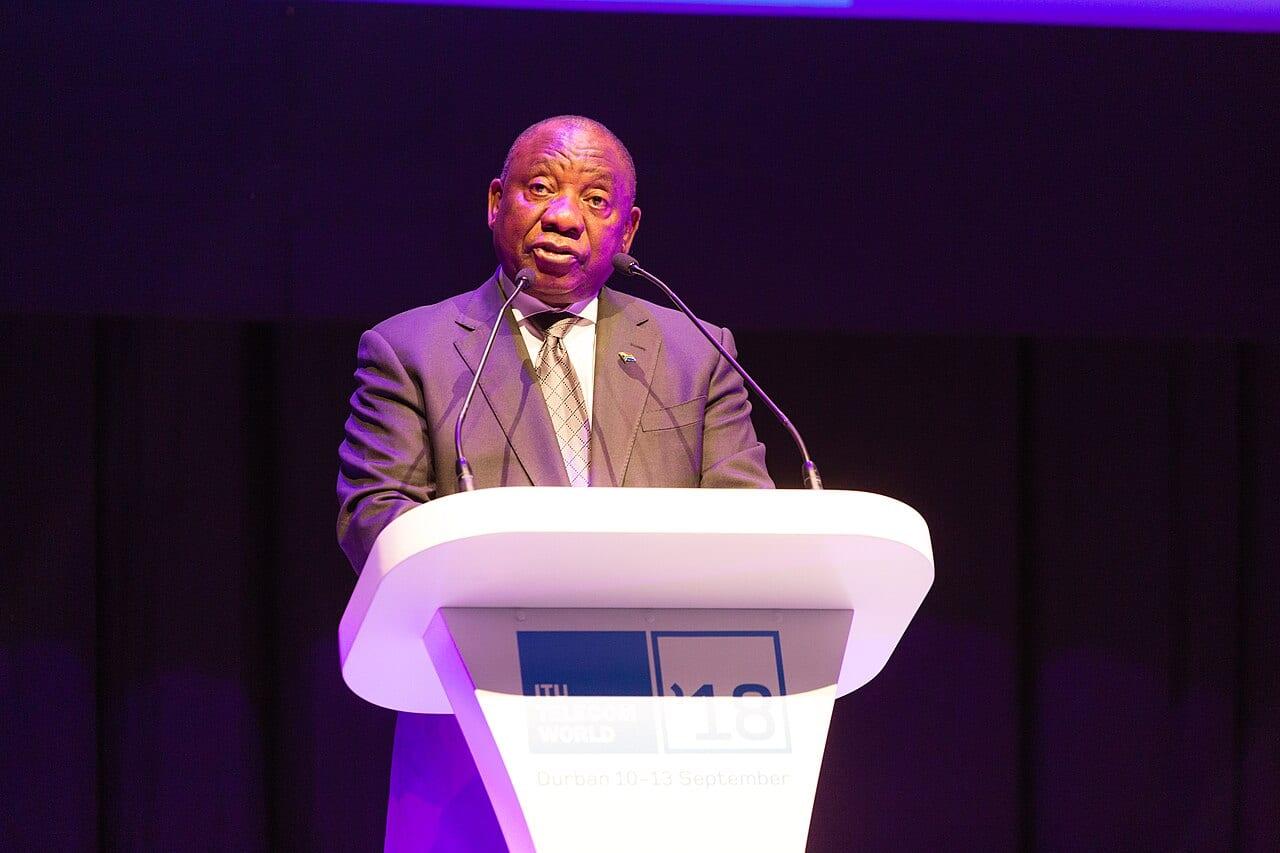
South Africa's president took nearly 300 people to Silicon Valley for a week and came home with a deadline. On November 20, 2026, Cyril Ramaphosa gave his government 90 days to produce a national AI action plan, and two days later promised a 100 million rand (about $5.7 million) fund for local AI start-ups.
He announced the deadline in San Jose, California, at a debrief with the ministers, business leaders, researchers and students who had travelled with him, according to SAnews, the government's news agency. "I have decided that we must develop a concrete national AI action plan within the next 90 days," he said. He plans to present its main points in his State of the Nation Address, the yearly speech to parliament, in February 2027.
This team must not become a structure that produces reports without results. It must be a delivery mechanism
What is in the plan?
Ramaphosa set out four priorities. A small team run from the Presidency, with people from government departments, business and universities, is meant to turn them into targets.
| Priority | What Ramaphosa asked for |
|---|---|
| Public services | Quick, practical uses of AI in education, health care, farming and government offices |
| Infrastructure | Use the country's renewable energy to attract data centres, then sell computing power abroad |
| Local skills and access | Give universities, researchers and start-ups access to advanced models, computing, data and training |
| Risks | Stronger cyber security, protection of critical systems, rules for safe use, and retraining for workers |
He was blunt about what the team should not become. "This team must not become a structure that produces reports without results. It must be a delivery mechanism," he said.
How big is the start-up fund?
At a press conference on November 22, Ramaphosa said the government would set up a venture capital fund "that will start off with R100 million" and a credit guarantee fund to help AI and tech start-ups borrow, SAnews reported. The government would try to match money committed by South African entrepreneurs and invite private investors in.
At 17.5 rand to the dollar, R100 million is about $5.7 million. By Silicon Valley standards that is small: Maple, a US privacy start-up, raised $5.3 million this week, according to TechCrunch. Ramaphosa said the fund marks the beginning of a wider effort, so the real test is how much private money follows it.
The data centre pitch
The bigger bet is on hardware. Ramaphosa said South Africa already hosts more than 70% of Africa's data centres, and argued that the country's renewable power and energy reforms could make it a place where foreign companies build AI computing capacity and sell it to the rest of the continent and beyond. That figure is his; the government did not publish how it was counted.
South Africa is not starting from zero. It released a National AI Policy Framework in August 2024, which Thandi Moraka, deputy minister of international relations, described on November 22 as "the first step" toward a full policy. Her own remarks named the problem the new team now has to solve: "moving from a framework to implementation."
My read: 90 days is a short clock for a government, and that is the point. The plan's value will show in February, when it either names budgets, owners and dates, or does not.
Why it matters outside South Africa
Ramaphosa's pitch is continental: clean power for data centres, and a hub that sells AI computing to the rest of Africa. That puts South Africa in competition with every other country courting the same data-centre investors. It is also an early test of the African Union's continental AI strategy, endorsed by African ministers in June 2024 to run from 2025 to 2030, whose first phase centres on national AI strategies, according to Moraka's remarks. And it comes as the United Nations pushes for shared AI safety rules within a year.
What it means for you
If you work in tech in South Africa, watch for the Presidency's team to be named and for the fund's rules: who can apply, and whether the state's money really waits for private money to match it. If you are a founder elsewhere in Africa, the promise of exported computing power could mean cheaper AI capacity close to home, but only once the data centres are built. For everyone else, February's State of the Nation Address is the date to check whether the 90-day plan has numbers in it.
Sources
- President gives government 90 days to develop national AI action plan (SAnews) (sanews.gov.za)
- SA eyes R100m venture capital fund to support AI start-ups (SAnews) (sanews.gov.za)
- President gives govt 90 days to develop AI action plan (ITWeb) (itweb.co.za)
- Remarks by Deputy Minister Thandi Moraka at the Aswan Forum, November 22, 2026 (DIRCO) (dirco.gov.za)
- Maple raises $5.3M to build AI products that protect your data (TechCrunch) (techcrunch.com)
- US dollar exchange rates, November 25, 2026 (ExchangeRate-API) (open.er-api.com)
Source: sanews.gov.za