Google's Genie 4 world maker opens for $200 a month, or 10 cents a second
Subscribers to Google's top AI plan can now type a world into being and change it while walking through it, and developers pay by the second through the Gemini API.
In brief
Google opens Genie 4, which turns a sentence into a world you can walk through
Google's Genie 4 world model is now open to Google AI Ultra subscribers at $200 a month and to developers at about $0.10 a second. You type a scene, walk around it with the keyboard and change it mid-session, but each world lasts two minutes at most in the API.
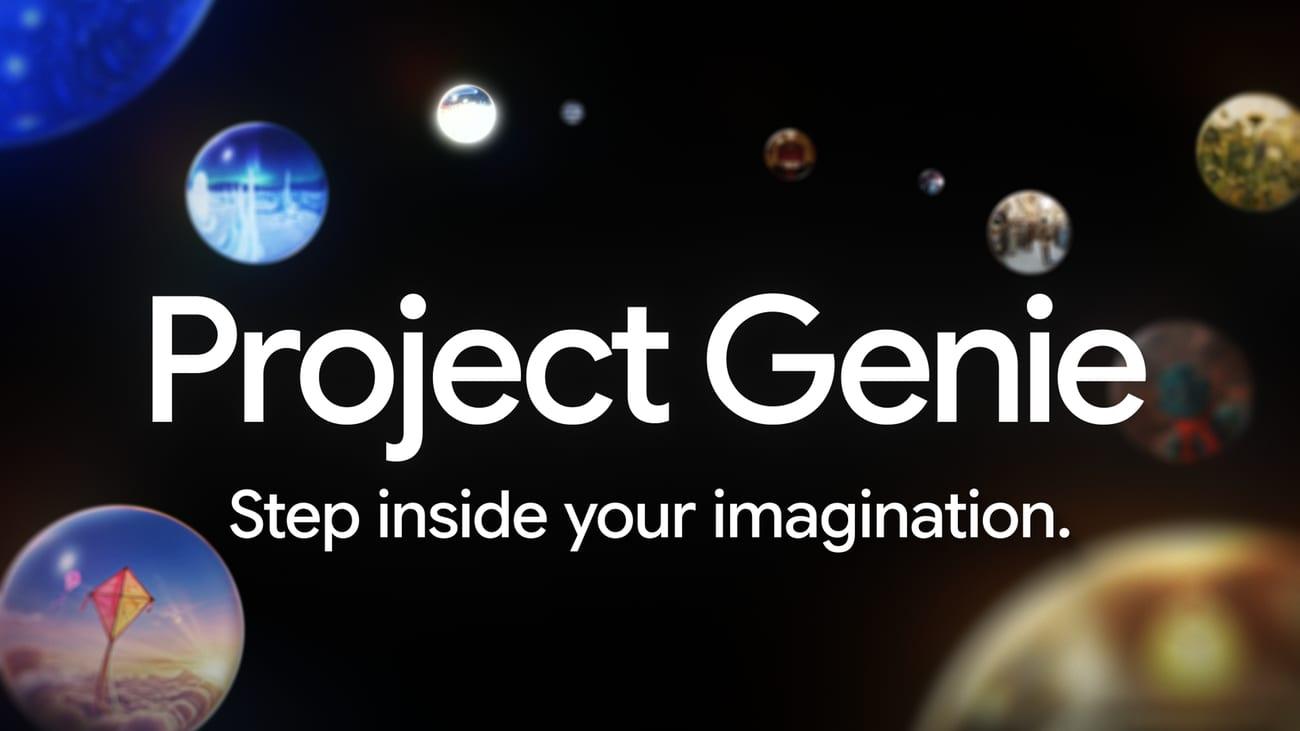
Google has opened Genie 4, its model that turns a sentence into a world you can walk around in, to paying users. Since November 18, 2026, subscribers to Google's top AI plan can use it in a web app called Project Genie, and since November 19 developers can build it into their own apps through the Gemini API, where Google lists it as generally available.
Google DeepMind first showed Genie 4 on October 27 as a research preview for a small group of testers. Its launch video on the Google DeepMind YouTube channel shows what that looks like in practice:
Shift the weather, drop in a character, or redirect the action.
What does Genie 4 do?
Genie 4 is a "world model": instead of making a fixed video clip, it draws each frame live in response to what you do, a bit like a video game with no game designer behind it. You describe a place, or give it a picture, and step inside. You move with the keyboard, and you can keep typing while you play. Google's own description: "Shift the weather, drop in a character, or redirect the action."
The new part is sound. Genie 4 generates audio along with the picture, from background noise to characters who talk, which Google says is a first for its world models. Developers get the world at 720p and 24 frames a second.
The Project Genie app also gained an agent that helps you plan a world through conversation, a gallery where people publish worlds for others to explore and remix, and upgrades to the older Genie 3 model, which can now run for up to 3 minutes per world instead of 60 seconds. Among the featured worlds is "The Life of Ants", made with filmmaker Anand Gandhi, which lets you follow a colony from an ant's height.
Who can use it, and what does it cost?
| Project Genie app | Gemini API and Google AI Studio | |
|---|---|---|
| Who | Eligible Google AI Ultra subscribers aged 18 or over | Developers with a paid Gemini API key |
| Price | The Ultra plan that includes Project Genie costs $200 a month | About $0.10 per second of world, sound included |
| Where | More than 140 countries, according to Google's plans page | Served from data centres in the US, Western Europe and Japan |
| Waiting list | Google AI Pro subscribers can join one | None mentioned |
The consumer side is narrower than the headline suggests. Google's plans page says Project Genie is "only available with a Google AI Ultra 20x plan", the $200 tier, not the cheaper $100 Ultra plan Google added in May. Google AI Pro subscribers can join a waiting list; everyone else can watch Google's demos.
For developers, the meter runs by the second. At about $0.10 a second, a minute of world costs around $6. Google's documentation warns that closing a browser tab does not stop the server from generating, so an app has to end each session properly or keep paying. Outside North America, Western and Central Europe and East Asia, Google says higher latency can slow keyboard steering and cut the frame rate.
The limits Google admits
The worlds do not last. The developer documentation sets a hard cap of 120 seconds per session and warns that picture quality may degrade after 60 to 90 seconds. Look away from an object for 8 seconds or more, or turn all the way around, and doors, buttons or landmarks can shift or reset. Signs and clocks deform over time, and the number of objects in a scene can change as the camera pans. In other words, it is a convincing stage set with a short memory.
Every video and sound Genie produces carries SynthID, Google's invisible watermark for AI-made content, and Google says all inputs and outputs go through safety screening. According to the documentation, prompts that touch copyrighted brands, among other things, can be blocked at the start or end a session midway.
What it means for you
If you are not paying $200 a month for Google's top plan, nothing changes today except that you can watch the demos. For game makers, filmmakers and teachers, the API is the interesting part: at around $6 a minute, Genie 4 is cheap enough to prototype a scene, a museum walk-through or a training simulation, but two-minute sessions and a world that forgets what is behind you rule out anything you would call a game. My read: this is a preview of where interactive media is heading, priced for professionals and early adopters.
For how Google's Genie models work and what they could mean for games, see our earlier explainer from November 9.
Sources
- Google: Genie 4 is now available (November 18, 2026) (blog.google)
- Google: Genie 4 is now available on the Gemini API (November 19, 2026) (blog.google)
- Gemini API docs: Interactive world generation with Genie 4 (aistudio.google.com)
- Google AI plans and Project Genie availability (one.google.com)
- Google: Introducing a $100 AI Ultra plan (Project Genie on the $200 tier) (blog.google)
- Google DeepMind on YouTube: Introducing the new Project Genie, powered by Genie 4 (youtube.com)
Source: blog.google