Goldman Sachs says workers who lose AI-exposed jobs take about a month longer to find work
No survey asks whether AI cost someone their job, so Goldman estimated it from job type, industry and whether the role was eliminated.
In brief
Workers laid off from AI-exposed jobs stay unemployed longer, Goldman Sachs estimates
Goldman Sachs estimates that workers laid off from AI-exposed jobs take about a month longer to get hired again and are 10 points more likely to be jobless a year later. Workers 35 and over have it hardest. No survey asks whether AI cost someone a job, so the bank inferred it from job type and industry.
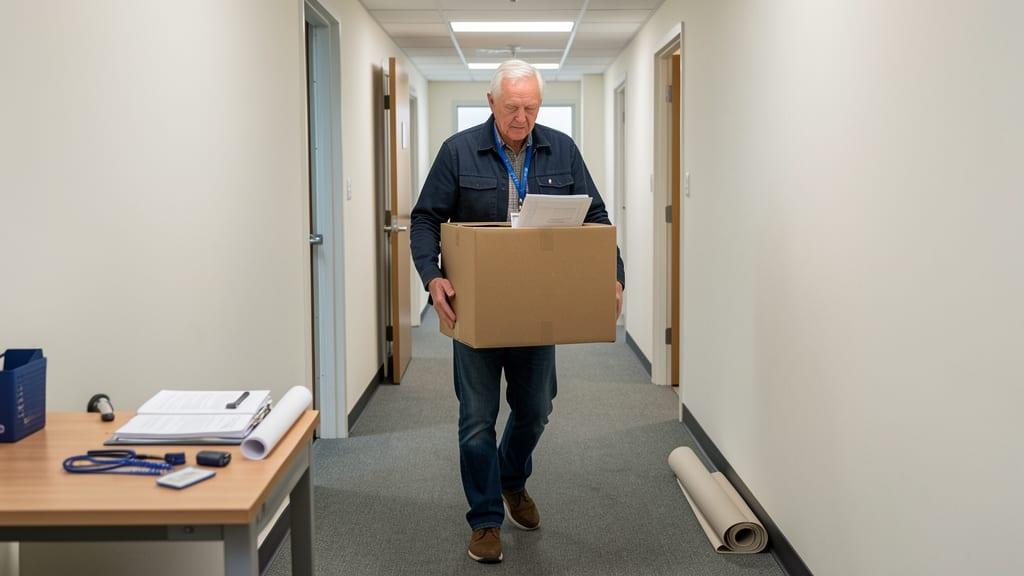
Losing a job to AI may be harder to recover from than losing one for other reasons. That's the early finding of a new note from Goldman Sachs economist Pierfrancesco Mei.
The main numbers
Goldman looked at more than 15,000 U.S. workers who lost their jobs between 2016 and 2025. Compared with other laid-off workers, people who lost AI-exposed jobs since 2025:
- took about one month longer to find a new job
- were roughly 10 percentage points more likely to still be unemployed a year later
Mei says these effects are "comparable in magnitude" to earlier waves of technology, such as personal computers and factory automation, whose damage proved "long-lasting."
Age matters
Older workers are struggling more. AI-displaced workers aged 35 and over took about five weeks longer than other laid-off workers to get back to full-time work. For those under 35, the gap was about three weeks. Younger workers also needed fewer temporary jobs along the way.
Goldman also noticed something worrying: many AI-displaced workers, especially older ones, ended up in new jobs with similar or even higher AI exposure. In other words, they may face the same risk again.
There is one bright spot. College students are shifting toward majors with less AI exposure, such as healthcare and engineering, rather than fields like computer science.
How Goldman counted "AI layoffs"
This part is important. The data comes from a government survey of displaced workers, and no question asks whether AI was the reason. Goldman built a score from three things: how exposed the job is to AI, how much the industry uses AI, and whether the position was eliminated. The top 30% were treated as likely AI-displaced. So these are estimates, not confirmed AI layoffs.
The bigger forecast
In a separate note in October, Goldman economist Joseph Briggs estimated that up to 9% of workers, about one in 11, could be displaced during the AI transition. His key point is timing: in the past, automation hit workers hardest during recessions, when companies use the slowdown to restructure. A healthy economy has kept the damage limited so far.
Other researchers are more cautious. Stanford's Digital Economy Lab says it does not see "widespread, economy-wide job displacement" from AI. The Yale Budget Lab has found no clear link between AI exposure and unemployment.
What it means for you
If you work in a job where AI can do many of the tasks, the risk isn't only losing the job. It's how long it takes to land the next one, and whether that next job is any safer. Building skills that are harder to automate, before you need them, is the practical lesson here.
Sources
- Fortune: Goldman says AI layoffs are starting to leave a 'long-lasting' scar (fortune.com)
- Business Insider via Yahoo Finance: Goldman Sachs says AI-displaced employees face a harder path back to work (finance.yahoo.com)
- Axios: Workers laid off because of AI face longer job searches, Goldman Sachs finds (axios.com)
- Fortune: AI could displace one in 11 workers, Goldman says (fortune.com)
Source: fortune.com