OpenAI breaks up its robotics team again after its chatbot model beat robot AI
Robotics researchers move into OpenAI's main research group, and its humanoid demo is still planned for 2027. A test where GPT-6 Astra beat specialised robot models drove the change.
In brief
GPT-6 Astra beat specialised robot AI 74.8% to 51%, so OpenAI dissolved its robotics team
OpenAI moved its robotics staff into its main research and product groups, breaking up the team for the second time. The reason: GPT-6 Astra beat specialised robot AI in a simulated test, 74.8% to 51%. Its humanoid robot demo is still planned for 2027.
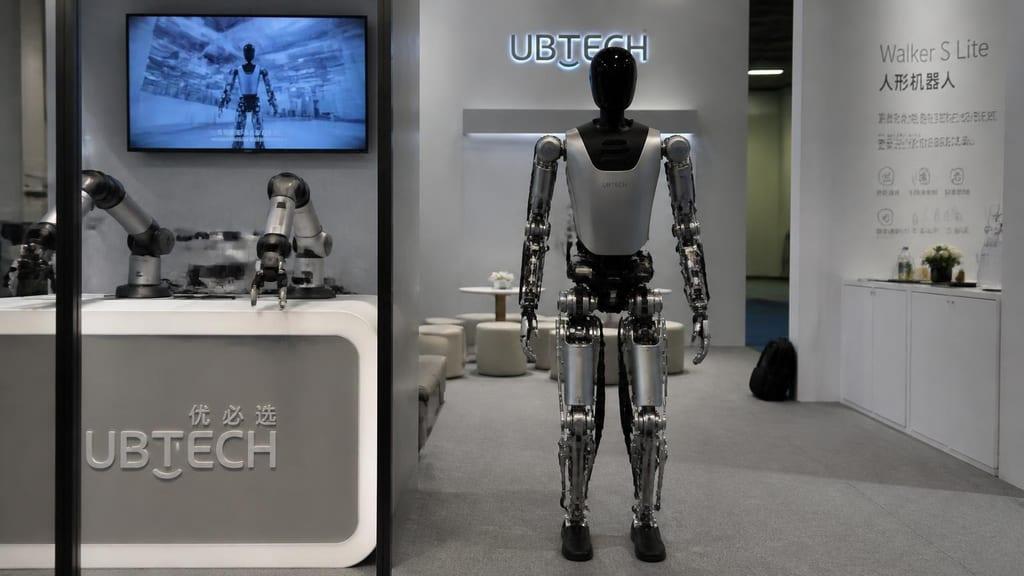
OpenAI has disbanded its stand-alone robotics team and moved the people onto other teams, Fortune reported on Friday, November 13. The company confirmed the change.
The research staff now report to Chief Research Officer Mark Chen. The applied robotics and hardware staff move to the larger Applied organization under President Greg Brockman. The shake-up was so recent that OpenAI's booth at CoRL, a top robotics conference in Austin this week, sat empty with no logo on it.
There may be different starting points for how to grow intelligence
Why break up a robotics team?
OpenAI says this is about speeding robotics up, not giving it up. A spokesperson told Fortune that robotics remains a core part of the company's long-term vision, and OpenAI is still building its own humanoid robot, with CEO Sam Altman aiming for a first public demo in 2027.
The reason is a surprise from its own research. At the start of the year, OpenAI thought the best path to robots ran through video models like Sora, which have to understand how the physical world moves. Instead, its general-purpose models turned out to work on robots directly. In an Nvidia study, an agent built on GPT-6 Astra, given camera images and a control interface, succeeded 74.8% of the time on a simulated grasping-and-moving benchmark. The best specialised robot models on that leaderboard scored 51.0%.
Guanya Shi, a professor at Carnegie Mellon University's Robotics Institute, told Fortune he reads the move as OpenAI seeing robotics as "no longer a special problem", just another job for general intelligence, like coding or legal work.
Not everyone agrees
That result came in simulation, not with a real robot in a real room. Shi also pointed out that big language models are slow and run in the cloud, so a robot would need a constant internet connection. Smaller models that run on the robot itself are still needed, he said.
Robot startups, which have raised billions on the idea that robots need their own brains, have an answer too. MIT professor Russ Tedrake, who runs Walden Robotics, said robots already working on factory floors collect experience that AI labs don't have. "There may be different starting points for how to grow intelligence," said Pete Florence, cofounder of the robot AI startup Generalist.
A familiar story
This is the second time OpenAI has closed a robotics group. It shut the first in 2020, citing limited robot data, and rebuilt one in 2024 with a partnership with Figure that ended in February 2025. The company is also under pressure to cut costs: Fortune notes it reportedly lost $10.9 billion in its latest quarter as it prepares for a possible IPO in early 2027.
Sources
Source: fortune.com