10 AI video makers took a physics test, and the winner passed only 44% of the time
Researchers at the University of Illinois Chicago checked whether AI video tools can show a ball bounce, ice melt or a speaker shake paper the way it really happens. Here is how ten of them ranked, and which one fits which kind of user.
In brief
Seedance 2.5 topped a physics test of 10 AI video makers with just 44%
Researchers at the University of Illinois Chicago checked if 10 AI video makers can show everyday physics correctly. Seedance 2.5 led at 44%, Veo 3.1 got 36%, and open models scored 4% to 15%. Heat and sound effects were the hardest.
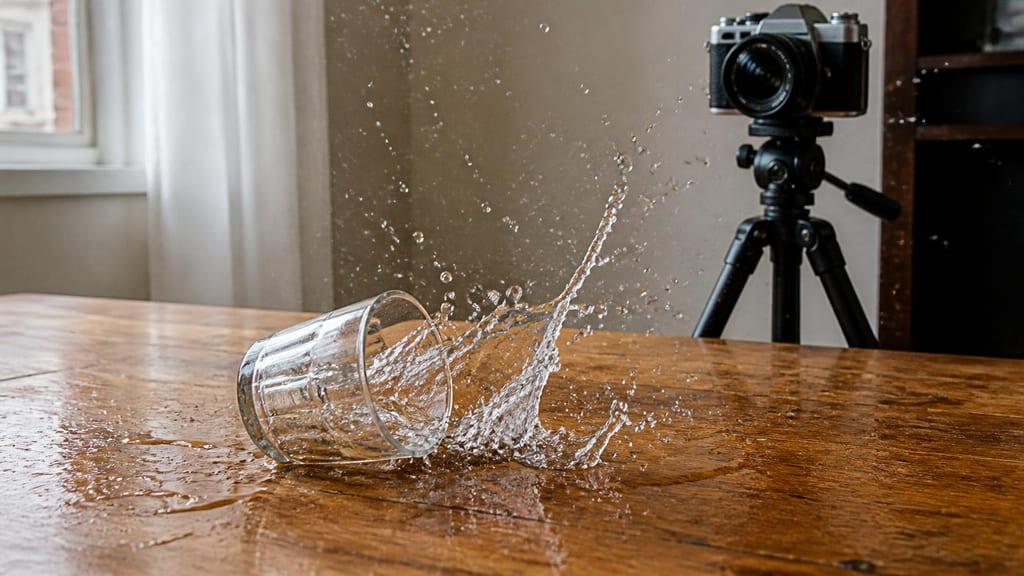
AI video tools are often sold as small "world simulators." A new study asked a plain question: when you ask for a short scene, does the video match your description and obey everyday physics?
The answer, for now, is mostly no.
even the strongest model, Seedance 2.5, produces videos that are both faithful to the caption and physically plausible in fewer than half of cases.
How the test worked
The team behind PhyRubric, from the University of Illinois Chicago, wrote prompts across five areas of physics: mechanics, optics, heat, electricity and acoustics, split into 34 categories. Before looking at any video, they wrote a checklist for each prompt: what must appear, and what should happen physically.
Each clip (five to six seconds long) was rated by people on two things: does it show what was asked, and is it physically plausible? A clip only "passes" if it scores well on both. That pass rate is the number below.
The results
Closed commercial models
- Seedance 2.5: 44.2%
- Veo 3.1: 36.2%
Open-source models
- HunyuanVideo-1.5 (8B): 14.9%
- Wan2.2-T2V (A14B): 14.9%
- Cosmos-Predict2.5 (14B): 12.2%
- LTX-2.3 (22B): 11.5%
- Wan2.2-TI2V (5B): 7.9%
- Cosmos-Predict2.5 (2B): 6.7%
- CogVideoX1.5 (5B): 5.3%
- LTX-Video (2B): 4.1%
even the strongest model, Seedance 2.5, produces videos that are both faithful to the caption and physically plausible in fewer than half of cases.
Every open-source model averaged below 3 out of 5 on matching the prompt, which means at least one main element of the request was usually missing.
Where they break
Heat and acoustics were the hardest areas for most models, the authors said. Because the videos are silent, "acoustics" means showing what sound does: paper flapping on a speaker, an alarm clock shaking as it rings.
Seedance did best on electricity (56%) and worst on acoustics (30%). Veo 3.1 did best on optics (48%) but dropped to 15% on acoustics.
Which one for whom
- You want realistic motion for an ad, a class video or social media: Seedance 2.5 is the safest pick in this test, with Veo 3.1 second. Plan to generate several takes and choose the best, because even the winner fails more than half the time.
- You run models on your own computer or want free tools: HunyuanVideo-1.5 and Wan2.2-T2V A14B are the strongest open options here, at about 15%. Expect to fix or discard most clips if physics matters.
- Small 2B to 5B models: fine for quick experiments, not for anything where a falling glass needs to look like a falling glass.
What this test doesn't tell you
It does not compare price, speed, video length, sound or editing tools. Seedance was tested at 480p and Veo at 720p through their official APIs. Well-known tools such as Sora and Kling were not in the study. And this is a research paper posted on November 10, not an industry standard.
The team also trained a small open judge model on 3,788 videos that, they report, agrees with human ratings about as well as Google's Gemini 4 Argon. That could make this kind of physics check cheap enough for video tool makers to run on every update.
Sources
Source: arxiv.org