A hobbyist built a free dock driver with Claude, and Synaptics sent patent threats
Synaptics says a clean-room Linux driver for DisplayLink docks still breaks its patents, even though no code was copied. The project is now offline.
In brief
Synaptics says a Claude-written Linux driver breaks its patents though no code was copied
A hobbyist used Claude to write an open-source Linux driver for DisplayLink docks without copying code. Synaptics says it breaks two UK patents. The project is offline, and no court has ruled.
AI coding tools make it much easier for one person to build software that used to need a whole team. A dispute this week shows the legal wall that person can hit.
The driver
I do not accept that any act of mine infringes either patent.
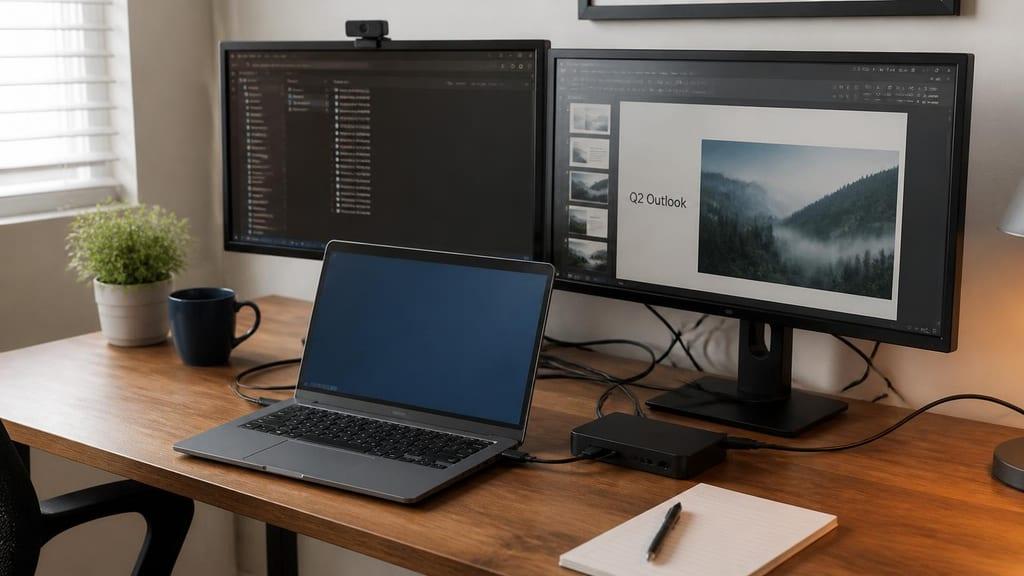
Mike Lothian, a hobbyist developer, was tired of crashes with the official software for DisplayLink docks, the USB docking stations many people use to plug extra monitors into a laptop. DisplayLink is owned by the chipmaker Synaptics. So Lothian wrote his own open-source Linux driver, called Vino, in the Rust programming language, using a Claude subscription to help with the clean-room reverse engineering. Clean-room means he worked out how the hardware behaves without copying the company's code. The driver came to support three generations of DisplayLink hardware.
The letters
In July, Lothian asked a Synaptics engineer for help with some bugs. Instead, a company manager raised patent concerns, and Synaptics' legal team sent a cease-and-desist letter asking him to take the GitHub project down. It cites two UK patents: one on sending screen updates over a general network such as USB, the other on hardware that decompresses display data only as needed.
When Lothian asked exactly how his code infringed, the company said it would bill him to recoup the cost of documenting his "infringing acts." Assistant general counsel Andrew Bateman wrote that open-sourcing the driver would mean "single-handedly eviscerating DisplayLink's competitive advantage," and invited him to publicise the company's response.
His answer
Lothian took the repository offline but has not given up. In an October 14 reply to Synaptics' UK patent lawyers, he wrote:
I do not accept that any act of mine infringes either patent.
He argues the patents are invalid because the network feature added during approval was not new, citing a 1998 remote-display standard. He also argues that the patented steps happen inside the dock, which users bought legally, and that Synaptics is a member of the Open Invention Network, a patent peace pact for Linux. Synaptics says its DisplayLink patents are not covered.
What it means
No court has ruled and no lawsuit has been filed. But the case lands on a question many people will face as AI makes coding cheaper: you can write your own version of something without copying a single line, and still run into patents. Copyright protects code; a patent can protect the idea of how something works.
For DisplayLink dock owners on Linux, nothing changes for now: the official driver is still the only supported option.
Sources
- Tom's Hardware: Synaptics sends cease-and-desist order to creator of open-source DisplayLink driver (tomshardware.com)
- ChipDispatch: Synaptics targets Vino Linux driver in UK patent dispute (chipdispatch.com)
- VideoCardz: Synaptics threatens developer who used Claude AI to create open-source DisplayLink driver (videocardz.com)
- Phoronix: Synaptics blocks Vino driver (phoronix.com)
In this story
Source: tomshardware.com