Saudi Arabia approved a homegrown AI that lets a nurse check a diabetic's eyes in minutes
SAARIA, built by Riyadh startup SDM, reads a photo of the retina and sends back a report in Arabic and English within minutes. The Saudi Food and Drug Authority cleared it in September as a support tool, but its accuracy figures still come only from the company.
In brief
Saudi AI SAARIA reads a retina photo and flags diabetics who need an urgent eye referral
SAARIA, from Riyadh startup SDM, reads a retina photo and tells clinic staff within minutes whether a diabetic patient needs an urgent eye referral. The Saudi Food and Drug Authority cleared it in September as a support tool, but its accuracy figures still come only from the company.
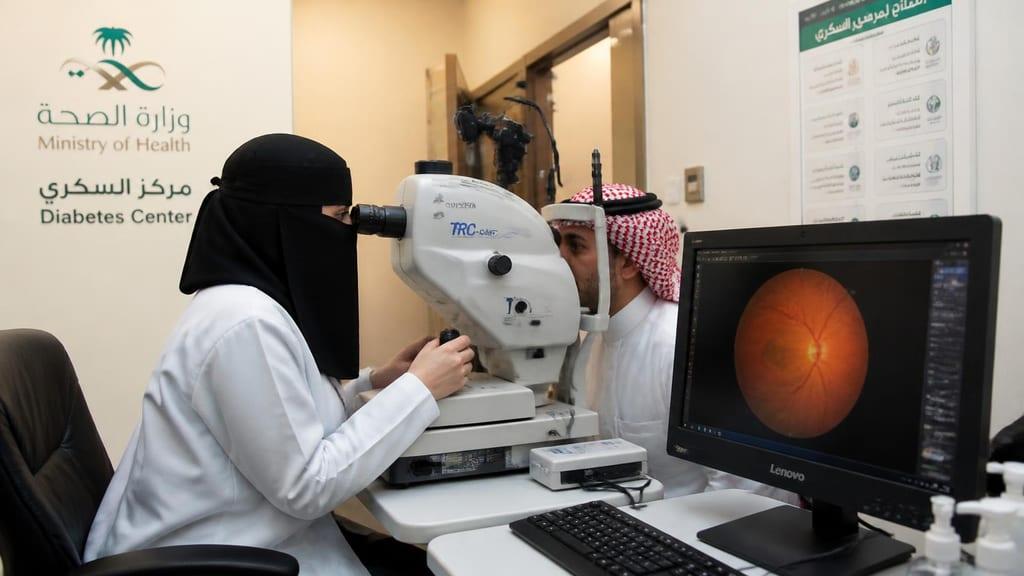
Diabetes can damage the back of the eye for years before a person notices anything wrong with their sight. By then, some of the damage cannot be undone. That is why people with diabetes are told to have a yearly eye check, and why many of them skip it.
A Saudi startup is trying to move that check out of the eye specialist's office and into the diabetes clinic.
By the time many patients come to me, it's already too late and they're blind.
What SAARIA does
SAARIA (Saudi Advanced Automated Retinal Image Analysis) is software from the Riyadh startup SDM. A trained technician or nurse takes a photo of the retina with a fundus camera, a type of eye camera many clinics already have. The image goes over a secure cloud connection to the AI, and a report comes back within minutes.
The software checks each eye for two problems: diabetic retinopathy (damage to the retina) and diabetic macular edema (swelling at the centre of the retina). The report, in Arabic and English, ends with one of three next steps:
- No signs of disease: come back in 12 months.
- Signs of severe disease or swelling: urgent referral to an eye specialist.
- Photo too blurry to grade: the software says so and recommends a referral instead of guessing.
SDM says the model was trained on data from Saudi patients.
Who approved it
On September 10, 2026, the Saudi Food and Drug Authority (SFDA) granted SAARIA marketing authorisation through its Innovative Medical Devices Pathway, after reviewing its technical documents and clinical evidence. The SFDA describes it as a clinical support tool that helps find patients who may need a specialist. The final diagnosis stays with a doctor, and the regulator warns against relying on the software's output alone.
The startup's co-founder is Dr. Selwa Al-Hazzaa, an ophthalmologist who has practised for decades. In 2024 she told Arab News:
"By the time many patients come to me, it's already too late and they're blind."
She runs the company with her son, Naif Al-Obaidallah, its managing director. SDM has about 50 employees.
Why it matters in Saudi Arabia
In 2024 Arab News cited a World Health Organization estimate of 7 million people with diabetes in the Kingdom, and an estimate that only about 24% had been screened for diabetic eye disease. Diabetes clinics rarely have an eye doctor on site. Before SAARIA, retina photos were often stored until a specialist visited, sometimes once or twice a month.
SDM works with charities to offer free screening in places such as Jizan, Hail, Rafha and Tabarjal. It also worked with the Council of Health Insurance to create a billing code for AI screening, and in September signed an agreement with Dr. Soliman Fakeeh Hospital to use the tool there.
What is still unproven
- Accuracy is self-reported. SDM's website states above 90% sensitivity, specificity and accuracy. No published study backs these figures, and the SFDA did not publish accuracy numbers.
- Usage numbers come from the company. The founders said 30,000+ patients in May 2024, and more than 70,000 people at the LEAP conference in 2026, with no counting method given.
A tool that lets ordinary clinic staff do the first reading could reach people who never get to an eye specialist. A published study would let doctors outside the company judge how far to trust it.
Sources
Source: aiforkind.org