A third of one college's students signed a petition to cancel its $120,000 AI deal
A small Kentucky college has become the face of a growing campus movement against AI, from petitions to professors who refuse to use it and even a religious exemption.
In brief
Students at Transylvania University want its $120,000 ChatGPT and Gemini deal cancelled
At Kentucky's Transylvania University, about a third of students signed a petition asking the college to drop its $120,000 ChatGPT and Gemini licenses, though many signers use AI themselves. The New York Times says campus resistance to AI is spreading, with opt-outs and even a religious exemption.
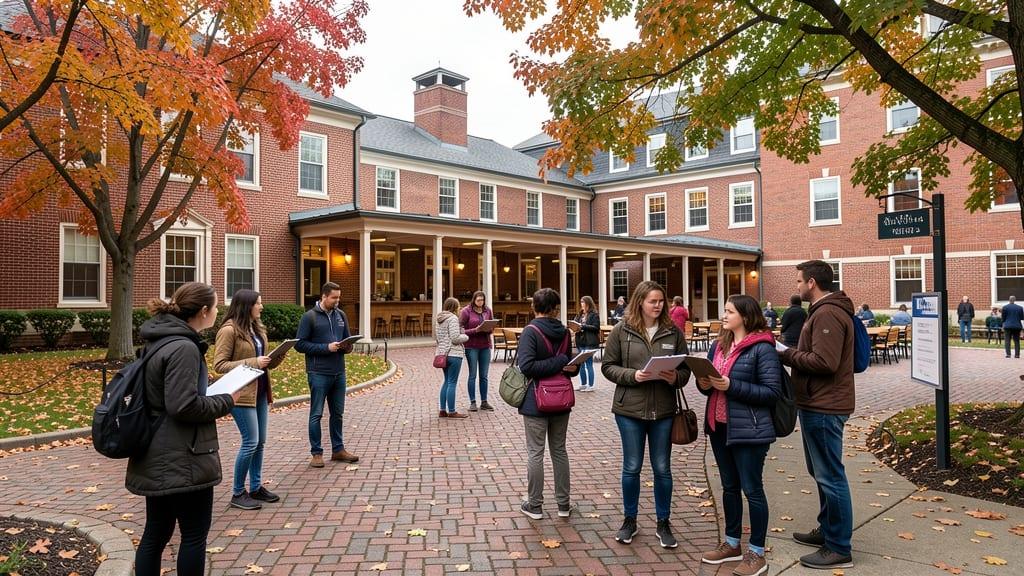
Last March, a few students at Transylvania University in Lexington, Kentucky, started a petition. They asked the college to cancel its chatbot licenses with AI companies and spend the money on "human-centered education" instead. About a third of the students signed, The New York Times reported on November 18.
Transylvania is tiny, with fewer than 1,000 students. But the Times says it is part of a wider wave of campus resistance to AI, from California to Sydney to Paris.
We're not interested in pushing people to use A.I. in ways that don't align with their values
What set it off
The student newspaper, The Rambler, reported that the university had paid $120,000 for licenses to ChatGPT and Gemini, the chatbots from OpenAI and Google, and handed them to everyone on campus. Many students were surprised, since both tools can be used for free online.
Alice Beatty, 22, helped lead the petition as a senior. When she and classmates collected signatures near the dining hall, almost everyone signed, she told the Times. Some admitted they used AI for their own work. Her recollection of what peers told her was blunt: they used it, and were ashamed of it.
A university spokeswoman declined an interview but said professors are free to embrace AI, limit it or ban it in their classes.
A wider movement
According to the Times, groups of students and faculty are now publishing demands that colleges stop partnering with AI companies, that professors not be forced to use AI in teaching or grading, and that students can refuse assignments that require chatbots without losing marks.
- At the University of Kentucky, a research employee who calls himself a humanist won a religious exemption from using AI.
- More than 1,300 educators have signed an open letter rejecting the idea that AI in schools is inevitable.
- At Georgetown, which gave students free Gemini in March, university focus groups found 40% of student opinion was cautious or negative about AI, against 25% positive.
Georgetown's new president, Eduardo M. Peñalver, said the university will set up a faculty committee for clearer AI rules, give more weight to oral presentations and in-person tests, and create more tech-free spaces. It will still expand free AI access.
"We're not interested in pushing people to use A.I. in ways that don't align with their values," Dr. Peñalver told the Times.
What this means if you're a student
Most students use chatbots for schoolwork, polls show, and many colleges call AI essential for future jobs. The pushback is not mainly about banning tools. It is about clear rules: knowing when AI is allowed, being able to opt out, and being graded in ways that still test your own thinking.
If your college bought AI licenses, it is fair to ask how much they cost and what the rules are for using them. Transylvania's students only learned the price from their student paper.
Sources
Source: nytimes.com