Abu Dhabi built an AI that speaks Emirati and scored 84.83% on a native-speaker test
Falcon-Emirati, a 7-billion-parameter model from Abu Dhabi's Technology Innovation Institute, is trained on the dialect's words, idioms and poetry. It comes with a speech-to-text model and an Arabic document reader, and you can try it on Falcon Chat.
In brief
Falcon-Emirati, an AI model from Abu Dhabi, is trained on Emirati words, idioms and poetry
Falcon-Emirati, a 7-billion-parameter model from Abu Dhabi's Technology Innovation Institute, speaks Emirati dialect rather than textbook Arabic. It scored 84.83% on a test drawn from native speakers and comes with a speech-to-text model that handles six languages. You can try it on Falcon Chat.
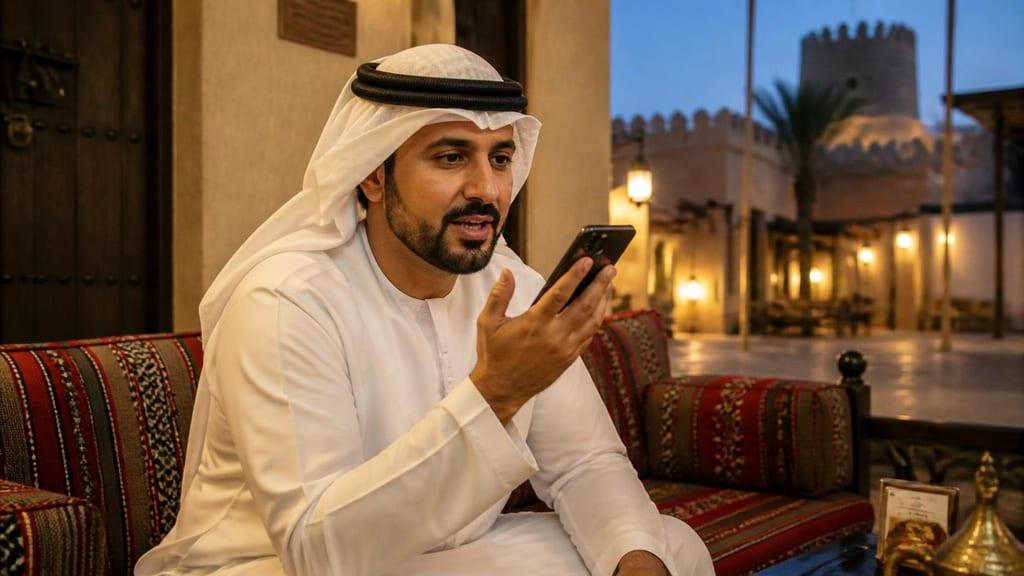
Most Arabic chatbots answer in Modern Standard Arabic, the Arabic of newspapers and school books. That is rarely how people in the UAE talk. The Technology Innovation Institute (TII) in Abu Dhabi is trying to close that gap.
TII launched three models on October 6, and its chief researcher Dr. Hakim Hacid described them again to the Emirates News Agency (WAM) on November 13:
Our language belongs in the future we are building.
- Falcon-Emirati, a 7-billion-parameter language model built for Emirati Arabic: its vocabulary, expressions, idioms and cultural references.
- Falcon-ASR, a 1.6-billion-parameter model that turns speech into text in Emirati Arabic, Modern Standard Arabic, English, French, Spanish and Portuguese.
- Falcon-OCR-Arabic, a small model that pulls Arabic text, tables and other structured content out of photos and scanned documents.
The 84.83% score
TII tested Falcon-Emirati on Alyah, a set of 1,173 questions gathered from native Emirati speakers. It covers everyday language, figures of speech, heritage knowledge and poetry. The model scored 84.83%, which TII says beats every Arabic and multilingual open-source model it compared.
The model is built on Falcon-H1-Arabic. TII trained it on Emirati web text, Modern Standard Arabic material about Emirati culture, and synthetic examples guided by Emirati word lists and style rules. Native speakers reviewed the answers.
Our language belongs in the future we are building.
That line came from Faisal Al Bannai, adviser to the UAE President and Secretary General of the Advanced Technology Research Council, at the launch.
Why a dialect model matters
A model that only knows formal Arabic "can translate every word of an Emirati sentence and still miss what it actually means," TII wrote on its research blog. Nabati poetry and proverbs carry meaning that a word-for-word reading loses. Hacid told WAM the models could let people deal with government bodies in their own dialect, by voice or in writing, and help with clinical notes and patient communication.
What to keep in mind
- The scores are TII's own. Independent tests have not been published yet.
- Small on purpose. 7 billion parameters is modest. TII says it chose that size to keep training and running costs practical, so expect a focused dialect assistant, not a rival to the biggest global chatbots.
- You can try it. TII lists Falcon-Emirati on its Falcon Chat platform, and Falcon-ASR has a public demo on Hugging Face.
For Gulf users, the interesting part is the approach: a small, cheap model tuned to how one community really speaks. Other dialects, from Jordanian to Moroccan Darija, face the same problem.
Sources
Source: wam.ae