AI spotted osteoporosis on chest X-rays in 3 outside cohorts
AI-OsRM read routine chest radiographs and matched DXA-based screening performance in large external cohorts.
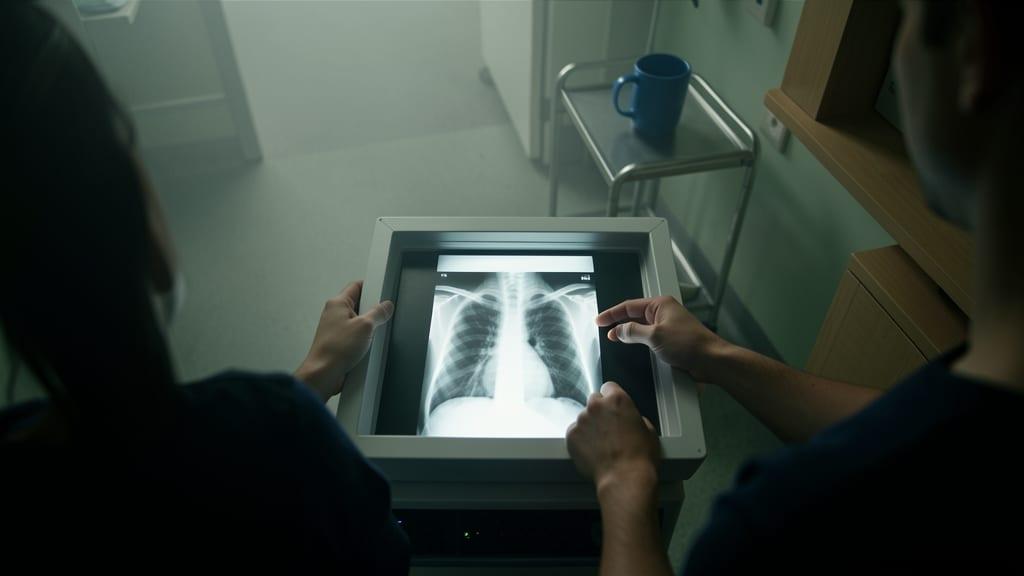
AI-OsRM looked for osteoporosis and low bone mineral density on chest radiographs, and its results were checked in three outside cohorts.
The model was trained on 46,478 paired chest X-ray and DXA scans from 26,757 patients collected at one tertiary hospital between 2016 and 2022. DXA, or dual-energy X-ray absorptiometry, is the scan commonly used to measure bone density.
AI-OsRM could cut DXA use by about 50% while still detecting 98% to 99% of osteoporosis cases.
In a temporally separate hospital cohort from SNUH with 6,391 patients, the system reached an AUROC of 0.88 for both osteoporosis and reduced BMD. AUROC is a score that shows how well a test separates people with and without a condition.
The external health checkup cohorts were even stronger for osteoporosis detection. AI-OsRM reached an AUROC of 0.93 in HPC, with 24,132 people, and 0.92 in YSMC, with 122,535 people.
The practical idea is simple: let an ordinary chest X-ray do a first pass, then send fewer people to DXA. In the simulations, that approach cut DXA use by about half while still finding 98% to 99% of osteoporosis cases and 80% to 90% of reduced BMD cases.
That matters because chest X-rays are already common, so the extra signal is sitting there in plain sight. AI is basically turning a routine image into a second opinion without asking for another appointment.
The paper was published in npj Digital Medicine on 2026-10-09. It adds another strong example of opportunistic screening, where a test done for one reason helps catch a second problem too.
The catch is that the report shows validation and simulation, not a live clinic rollout, and it tested these results in the listed cohorts rather than every population or care setting.
Source: npj Digital Medicine