Ai2 released the AstaBrief 8B model to speed up scientific reporting
The new model generates cited research reports 3.5 times faster than previous proprietary options.
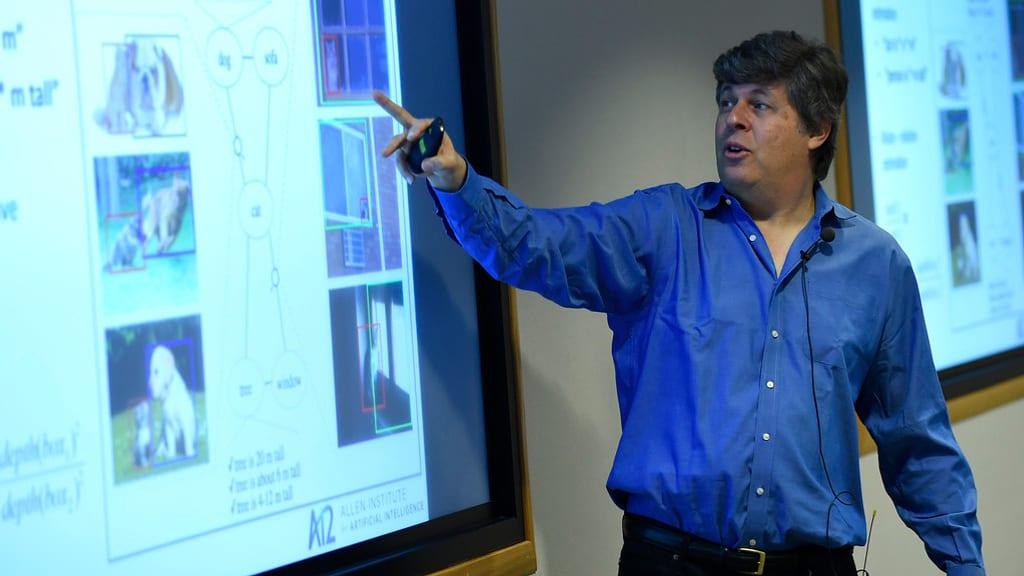
The Allen Institute for AI (Ai2) has introduced AstaBrief 8B, a compact language model designed to handle the heavy lifting of scientific synthesis. Researchers often need to turn piles of literature into organized, cited reports, a task that can be tedious.
AstaBrief 8B simplifies this by taking a research question and relevant literature snippets to write a full report in one go. By moving away from section-by-section generation, the team achieved a significant boost in performance.
The result is nearly an order-of-magnitude reduction in report generation time compared to the proprietary models we tracked.
In testing, the system cut the average report generation time to 51.1 seconds. This is roughly 3.5 times faster than the 178.5 seconds required by the proprietary models previously used in the Asta platform.
To train this model, the developers used 47,000 real research queries and a preference dataset of 6,000 examples. They focused on supervised fine-tuning and direct preference optimization to ensure the model stays grounded in actual evidence.
- It runs locally for institutions concerned about data privacy.
- It uses a simplified one-pass architecture for speed.
- It is available now as Fast mode in Asta.
Have you ever wondered if an AI can handle your specific research constraints without hallucinating facts? Because the model is open-weights, scientists can now study how it manages citation grounding and evidence preservation on their own machines.
Despite these gains, the model has limits. It has not been tested against the very latest frontier models, so these results reflect performance benchmarks from 2025. Furthermore, the team notes that even with citations, models can sometimes overstate the strength of a study's claims if not carefully constrained.
In this story
Source: Hugging Face Blog