Anthropic's Claude Ship lets AI approve code changes with no human sign-off
The beta for Team and Enterprise plans is billed by usage, and Anthropic's own documentation warns that a change can merge without anyone acting.
In brief
Anthropic's Claude can now approve code changes with no human sign-off
Anthropic launched Claude Ship on November 23 for Team and Enterprise customers on GitHub. Its agents review code changes, fix failing ones and can approve routine ones on their own if a team's policy allows. Anthropic advises starting in observe mode.
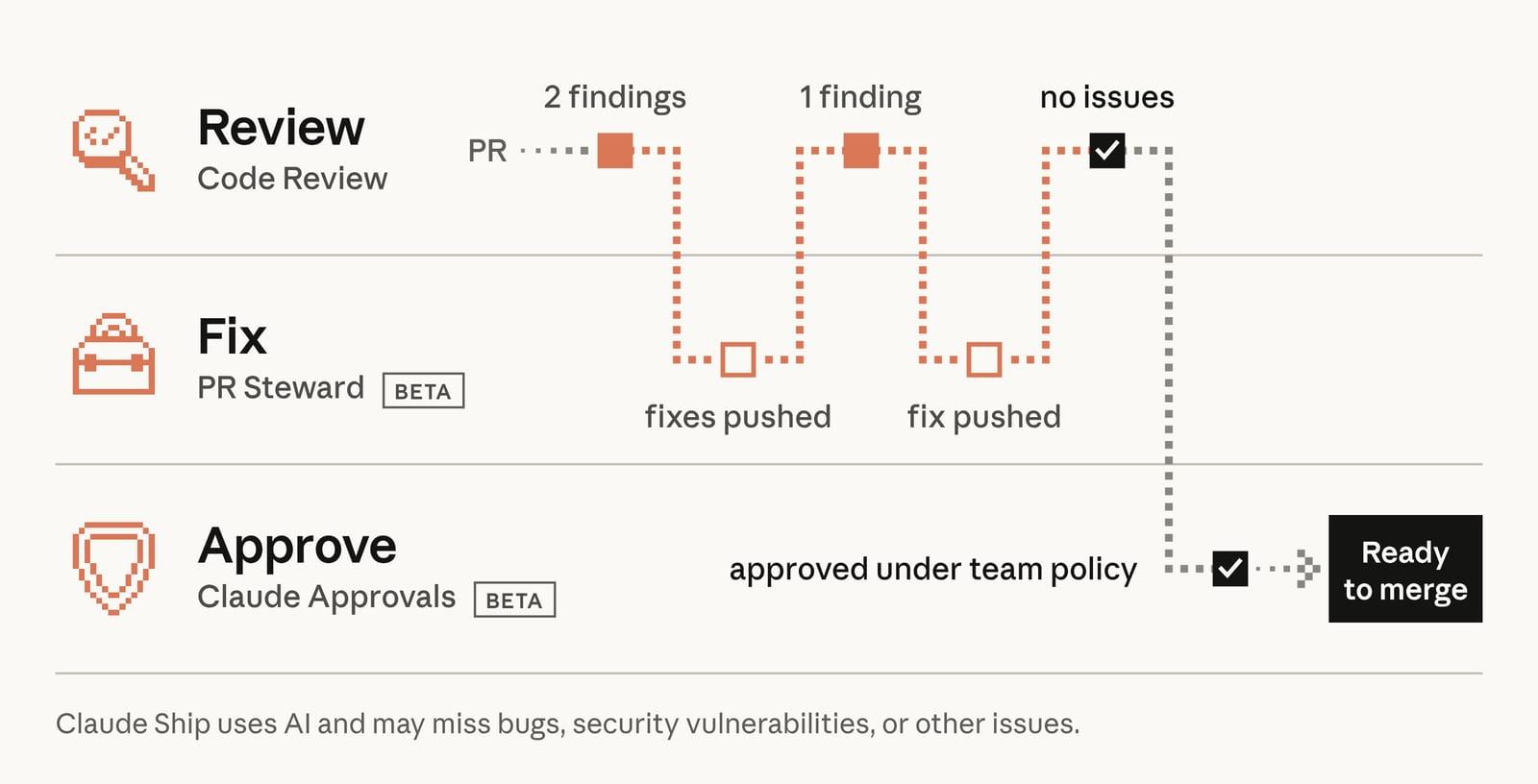
Anthropic now sells an AI that can approve code changes by itself. Claude Ship, launched in beta on November 23, 2026, reviews a proposed change to a program, fixes what breaks and can sign the change off with no person involved, as long as the team that owns the code has written a rule that allows it.
The launch post says Claude Ship is for companies on Anthropic's Claude Team and Enterprise plans whose code lives on GitHub, the site where most software teams store and share their work.
On the Claude Code team, Claude writes most of our code, and we wanted everything after the PR to move that fast too.
What does Claude Ship actually do?
Programmers change software through "pull requests": a proposed edit to the code that a colleague normally reads and approves before it goes in. Claude Ship puts three Claude agents along that path.
| Agent | What it does | Status |
|---|---|---|
| Code Review | Reads the change and the code around it, and posts the problems it finds as comments, ranked by severity | Available to all Team and Enterprise customers |
| PR Steward | Fixes failing automatic tests, merge conflicts and reviewers' comments, then says what it changed and how to undo it | Beta |
| Claude Approvals | Checks the change against an approval policy the team writes, and can approve routine changes on its own | Beta |
The idea is speed. Anthropic writes that most teams want a person to approve every change, which is easy when people write every line. Then it gives its own reason: "On the Claude Code team, Claude writes most of our code, and we wanted everything after the PR to move that fast too."
Can a change really go live with nobody looking?
Yes, in one setup. Anthropic's documentation warns that "If you use GitHub auto-merge or a merge queue with a policy that doesn't require a person's approval, a change can merge without anyone acting."
The policy is a small file kept inside the code itself, and it decides who has to approve what. In Anthropic's own example, Claude alone may approve edits to the documentation when its review passes, most code needs one person once Claude's review passes, and billing code needs two people who did not write the change, one of them from the payments team. PR Steward, the fixer, is designed never to approve or merge anything. So the intern can now mark its own homework, but only if the manager leaves a signed note saying so.
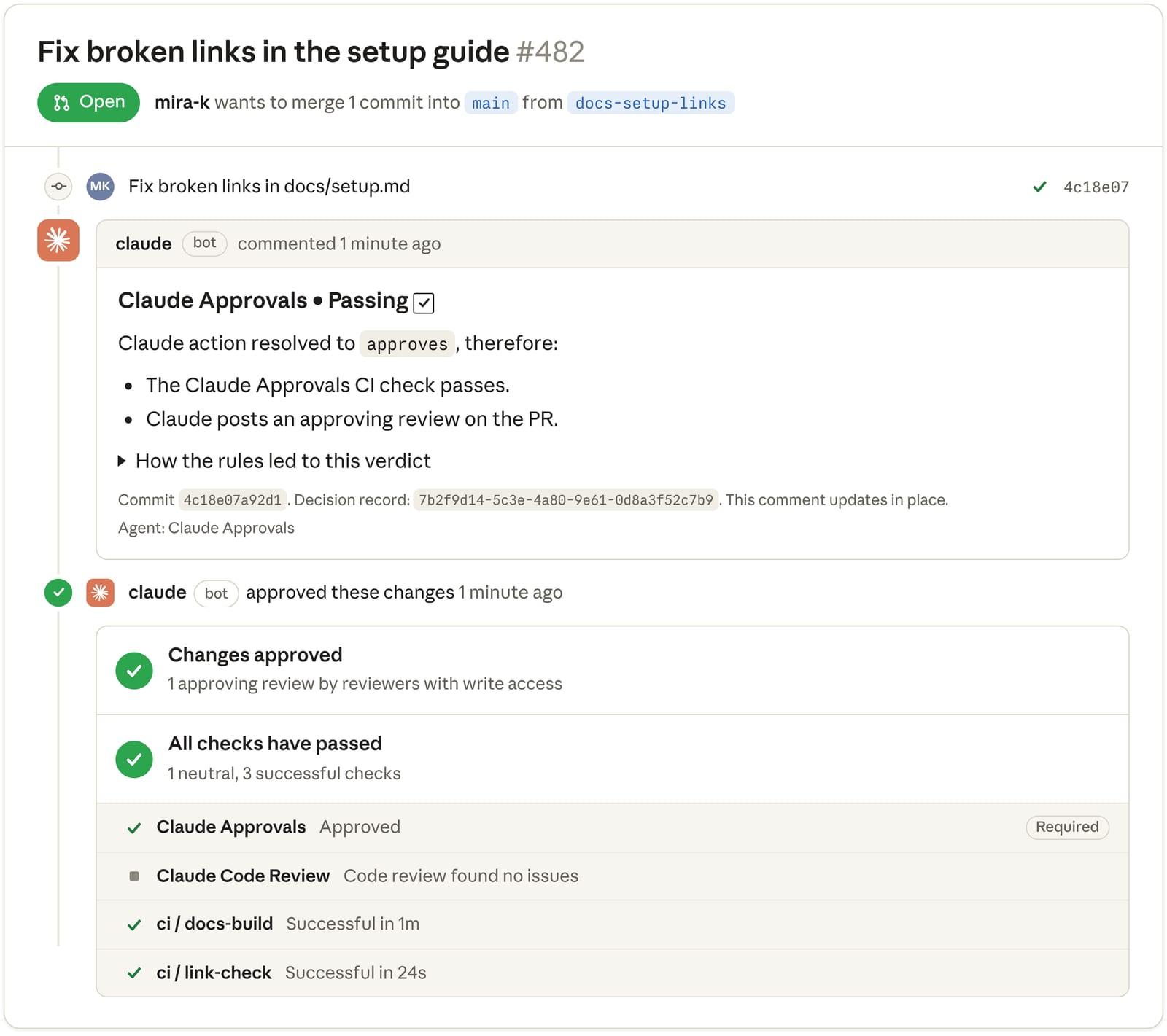
The same documentation says plainly that Claude Ship "uses AI and may miss bugs, security vulnerabilities, or other issues." Anthropic advises starting with one repository (one project's code) in observe mode, where Claude only reports what the policy would have decided and blocks nothing.
Anthropic says the Claude Code team runs Claude Ship on many of its own pull requests, and that its merged pull requests more than doubled from June to September while the share later reverted fell by more than 40%. Those are the company's own figures; no outside group has checked them.
Who can use it, and what does it cost?
- Plans: Claude Team and Enterprise, for code on GitHub only.
- Price: there is no flat fee. Each agent is billed by tokens, the small chunks of text the AI reads and writes, from the company's usage credits and separately from what the plan already includes.
- Spending: PR Steward has no spending cap until an admin sets one, and observe mode still costs money when the policy asks for Claude's review.
- Who is left out: organizations using Zero Data Retention, Anthropic's HIPAA setup for US health data, or their own encryption keys.
- Credits: eligible Enterprise customers can claim at least $10,000 in Claude Ship credits by January 15, 2027, to spend within 30 days.
- Single developers: a new /ship command in Claude Code reviews and shepherds one person's pull request, and counts as normal Claude Code usage.
Why caution still makes sense
Our read: the tools are useful, and the default should stay cautious. A test the site reported on November 23 found that top AI coding agents finished fewer than 8% of tasks in a simulated office. And Claude Code's "don't ask again" button once left passwords in 1,122 public GitHub files. A separate AI reviewer helps, but a policy that lets AI write, fix and approve the same change removes the human second look that catches what a model misses.
What it means for you
If you do not write software, nothing changes on your phone tomorrow. Over time, more updates to the apps you use may ship without a person approving each line, so a company's own rules about what needs human sign-off matter more.
If you run a team on Claude Team or Enterprise, start small: one repository, observe mode, a monthly spending limit for PR Steward, and a rule that a person approves anything touching payments, logins or security. Check your GitHub auto-merge settings before you let a policy decide anything on its own.
Sources
- Introducing Claude Ship (Anthropic) (claude.com)
- Claude Ship documentation (Anthropic) (code.claude.com)
- Anthropic launches Claude Ship, letting AI agents review, fix, and approve code changes (TechCrunch) (techcrunch.com)
- Claude AI can review pull requests and ship fixes on its own now (The Verge) (theverge.com)
In this story
Source: claude.com