Mercor, which pays experts to train AI, doubles its value to $20 billion in about a year
The San Francisco startup pays professionals to train and test AI models, and now wants to sell the same service to ordinary big companies building their own AI agents.
In brief
Five million experts teach AI their jobs through Mercor, now valued at $20 billion
Mercor, a San Francisco startup, pays professionals to train and test AI models and now sells that work to big companies building their own agents. Its value doubled to $20 billion in about a year, and it raised $750 million, partly shares bought from staff. Its network counts more than five million experts.
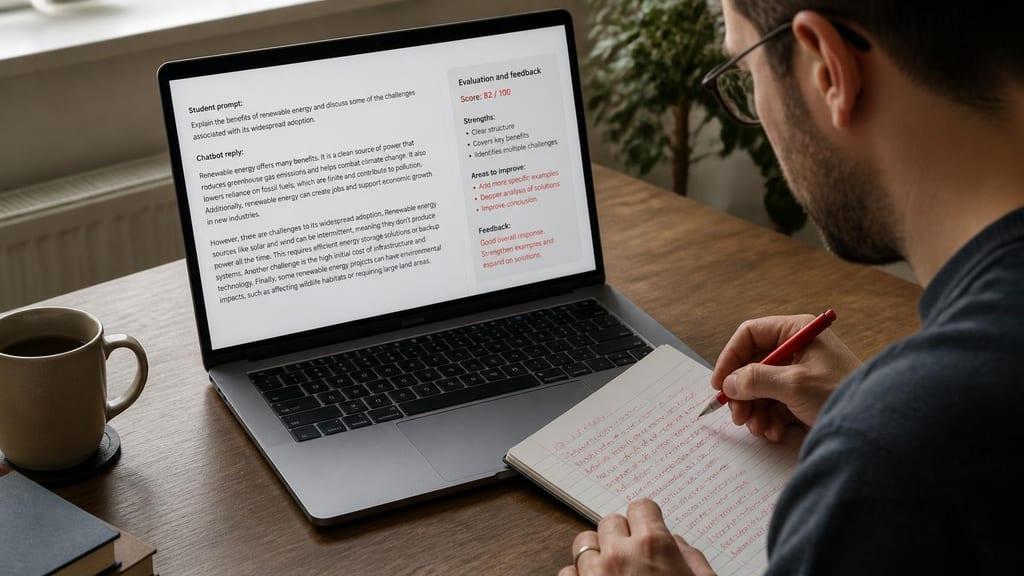
Mercor, a startup that pays human experts to train and test AI, said on November 10 that it raised $750 million in a Series D round valuing it at $20 billion. That is double the $10 billion it was worth after raising $350 million in October 2025.
Investors include Benchmark, Felicis, General Catalyst, Nvidia, Salesforce, Zoom, Sapphire Ventures and funds managed by affiliates of Apollo, among others. Part of the round was an employee tender, where staff sold some of their shares. Mercor hasn't said how the $750 million splits between that and new money for the company.
We already spend 3x as much on inference as on employee salaries, and it pays for itself by making our team better at their jobs.
What Mercor actually does
AI models get better at real work partly by being graded and corrected by people who know that work. Mercor runs that process. Co-founder and chief executive Brendan Foody wrote that more than five million experts in its network are "getting paid to train frontier AI models based on their unique knowledge."
So far its main customers have been the big AI labs. The new money is meant to bring the same service to regular companies. Mercor builds "evals", tests based on a company's real workflows, that show how well an AI agent does a job, what it costs and where it fails. Then it helps train the model to do better. Earlier this year it bought Deeptune, a team that rebuilt hundreds of business applications so AI agents can practise on realistic copies of them.
Foody points out that the US alone has more than 800 distinct occupations, each with workflows AI has never been tested on.
A telling detail
Foody also shared a number about Mercor itself:
We already spend 3x as much on inference as on employee salaries, and it pays for itself by making our team better at their jobs.
Inference is the cost of running AI models. A company spending three times its payroll on AI compute is unusual today. Foody argues that if that ratio spreads through the economy, growth could jump. That's a forecast from someone selling AI services, not a finding.
Why it matters to you
Two things are true here at once. Mercor's growth shows that human expertise is still what makes AI useful, and people are being paid for it: experts in its network earn money grading and correcting AI. But the stated goal is AI agents that can reliably do professional jobs, using that same expertise. If you're one of those experts, you are helping build the tool that may change your own job.
Mercor has opened offices in New York and London this year. It is backed by Jack Dorsey and Peter Thiel, Reuters reported.
Sources
- Mercor: Organizing human intelligence for the entire economy (Series D) (mercor.com)
- Business Wire: Mercor raises $750 million Series D at $20 billion valuation (businesswire.com)
- Reuters via Investing.com: AI training startup Mercor valued at $20 billion (investing.com)
- SiliconANGLE: Mercor raises $750M at $20B valuation (siliconangle.com)
Source: mercor.com