After an AI cheating confession, South Korea will check all glasses at its university exam
The top scorer in South Korea's tax accountant exam confessed to photographing questions with a hidden camera and getting answers from AI. Three days before the national college exam, the government is banning offenders for longer and putting a smart-device monitor in every exam centre.
In brief
South Korea's top tax exam scorer got 159 of 160 right, then admitted AI gave the answers
The top scorer in South Korea's tax accountant exam scored 397.5 out of 400 by photographing questions with a hidden camera and getting answers from AI. Before Thursday's university entrance exam, South Korea will inspect all glasses and cancel results of anyone caught with a smart device.
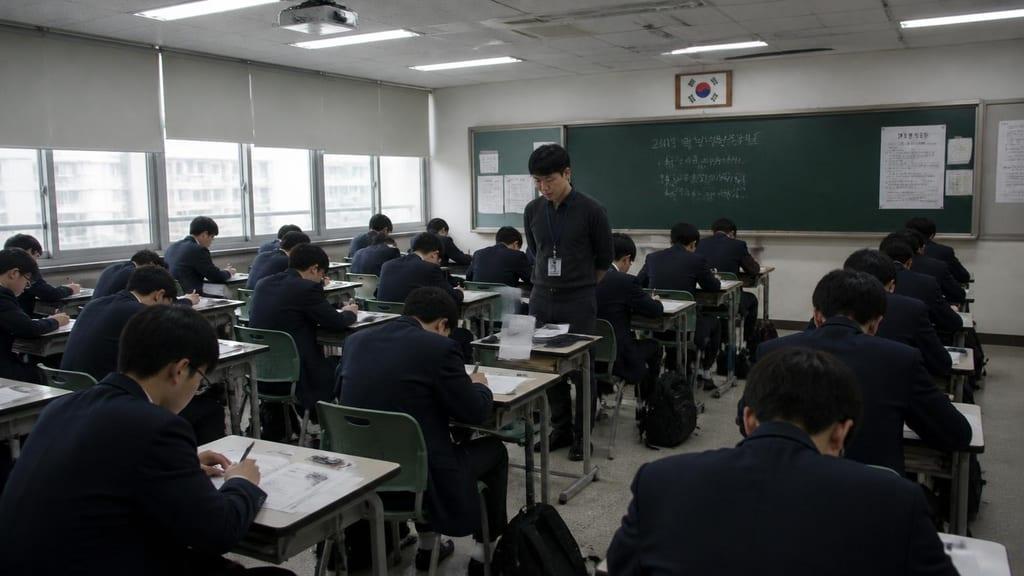
His result looked too good to be true: 397.5 out of 400 in the first round of South Korea's national tax accountant exam, with just one wrong answer out of 160 questions. He came first again in the second round.
On Sunday, November 15, the candidate admitted it was not his own work.
I cheated using electronic devices and generative AI.
How he did it
The candidate, who gave only his surname, Han, confessed through his lawyer and in a video posted on the lawyer's YouTube channel. He said he photographed the exam questions with a microcamera, sent them to an AI tool and read the answers on a smartphone. Earlier, he had denied rumours that he used smart glasses.
"I cheated using electronic devices and generative AI. My passing the exam with the top score was not the result of fair effort," he said, wearing a face mask.
Seoul police said they had received his written confession and assigned the case to investigators. The agency that runs the exam, HRDK, apologised and said it would file a criminal complaint against him. The same agency said its "AI inspector" caught another test taker wearing smart glasses at a gas engineer certification exam last month.
Why it matters this week
The confession came days before the College Scholastic Ability Test (CSAT), the university entrance exam on Thursday, November 19. In South Korea this one test shapes which university, and often which career, a student gets. Some people called for it to be postponed. The Education Ministry refused.
Instead, Education Minister Choi Kyo-jin told parliament on Monday:
- Every pair of glasses worn by candidates will be inspected in every session of the exam.
- Every exam centre will have at least one staff member whose only job is watching for smart devices. Smart devices were added to the banned list in July.
- A hotline will link exam centres, local education offices and the ministry for cases that are hard to judge on the spot.
- Anyone caught with a smart device will have that year's results cancelled and be barred from the next year's exam. The ministry wants parliament to lengthen the ban to 3 to 10 years, and offenders may be reported to the police.
- For next year, the ministry is looking at radio-signal detectors.
Prime Minister Han Seong-sook said the government will form an emergency team to protect the exam, and asked officials to develop AI-based detection technology and tougher penalties.
What this means for students everywhere
This case was not about essays or homework. It used a phone-sized camera and a chatbot that can read a photo of a question and answer it in seconds. Any exam that relies only on a ban on phones is now easier to beat. Expect more schools and testing bodies to check glasses, watches and earbuds at the door.
For honest students the rules may feel heavy: if your normal glasses are inspected, or your watch is taken, that is the reason. And for anyone tempted, the Korean case shows how it can end: an unusually perfect score drew suspicion, and the confession came months later, with police and a criminal complaint attached.
Sources
- The Guardian: Top scorer in South Korea tax exam admits AI cheating (theguardian.com)
- Reuters (via WIFC): South Korea to inspect glasses worn by exam candidates (wifc.com)
- RTE: Accountancy student used AI to ace exam (rte.ie)
- Japan Times: South Korea probes top exam scorer after AI cheating confession (japantimes.co.jp)
Source: theguardian.com