Jordan says 42 of the 68 projects in its national AI plan are done or under way
The digital economy minister gave a progress report on the 2023-2027 AI strategy. The numbers are the government's own, and only 14 projects are finished.
In brief
Jordan reports 14 of 68 AI plan projects finished and over 9,000 civil servants trained
The digital economy minister says 42 of the 68 projects in Jordan's 2023-2027 AI strategy are under way or complete, with 14 finished. More than 9,000 government employees have been trained. These are the government's own figures.
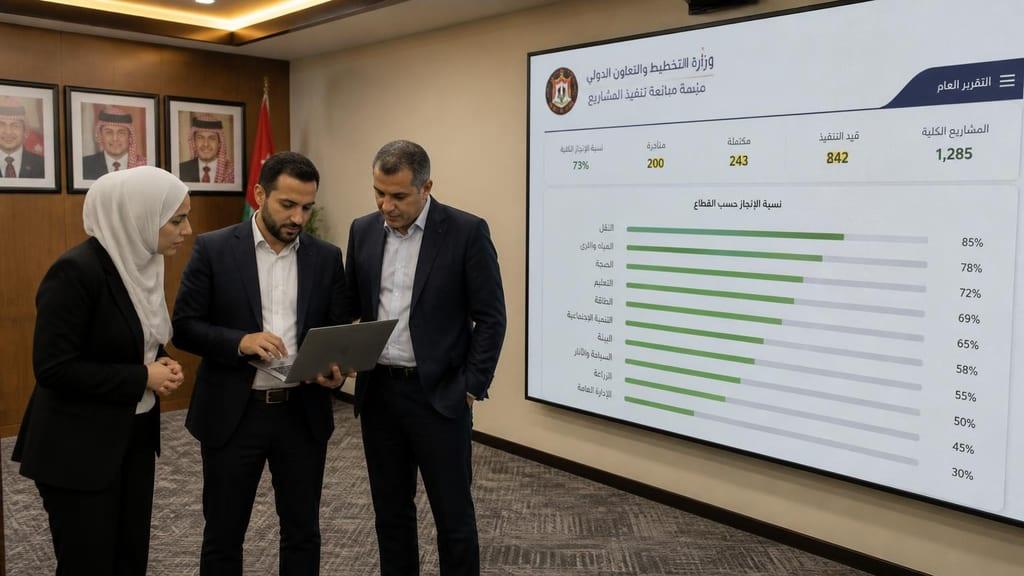
Jordan's national AI strategy now has a progress count, and it is a mixed one. Minister of Digital Economy and Entrepreneurship Sami Smeirat told Qatar News Agency (QNA) that 42 of the 68 projects and initiatives in the executive plan of the 2023-2027 strategy have reached implementation or completion, about 62%.
Read the breakdown before the headline figure. Citing the 2025 progress report, he said 14 projects are completed (about 21%) and 28 more are under way (about 42%). That leaves 26 projects not yet started, by this arithmetic, with about a year of the plan's period left. All figures are the minister's own and were not independently checked.
What has actually been built
Smeirat pointed to Klstrai, an AI computing platform hosted and run inside the Aqaba Digital Hub. It lets government bodies, companies, startups and developers use advanced computing inside Jordan and process data locally.
On people, a national awareness and capacity programme aims to train 15,000 government employees by the end of 2027. By the end of 2025, more than 9,000 employees from over 90 government institutions had been trained. He also said 27 Jordanian universities now offer AI and data science specialisations.
A separate Petra report from September quotes Lama Arabiyat, the ministry's director of AI and advanced technologies, saying the strategy has been turned into action tracks across 12 sectors, backed by an AI ethics charter and governance framework. She cited tools for education, energy demand forecasting, government data quality, and assistants and language models in public services.
Rules next
Smeirat said the ministry is reviewing AI-related policies and legislation, looking for regulatory obstacles and ways to improve the investment climate. No new AI law was announced in the interview.
This week brought a related step. On November 9 the UN's regional commission ESCWA and the ministry held a workshop in Amman on AI and strategic foresight for policymaking, aimed at building AI literacy among non-technical decision-makers and drafting evidence-based AI roadmaps. Two days later ESCWA held a regional meeting on safely deploying AI agents in Arab public institutions, reviewing a guidebook that stresses transparency, security, accountability and human oversight.
How to read it
Counting "under way" projects as progress flatters any plan, and the interview gives no budget per project. Still, a published scorecard is more than many countries offer. The next check is whether the 14 finished projects change something a citizen can see, such as a faster service, rather than adding to a ministry's list.
Sources
Source: fananews.com