UN talks on killer robots end without a ban that nearly 100 countries wanted
Instead, the 128 states gave experts two years, 2027 and 2028, to draft rules whose legal force is still undecided.
In brief
UN talks on killer robots ended with no ban despite almost 100 countries asking
Almost 100 countries wanted talks on a binding ban on weapons that kill without a human decision. The US, Israel, Belarus and Britain were among those opposed. Experts will now draft rules through 2028, with their legal force undecided.
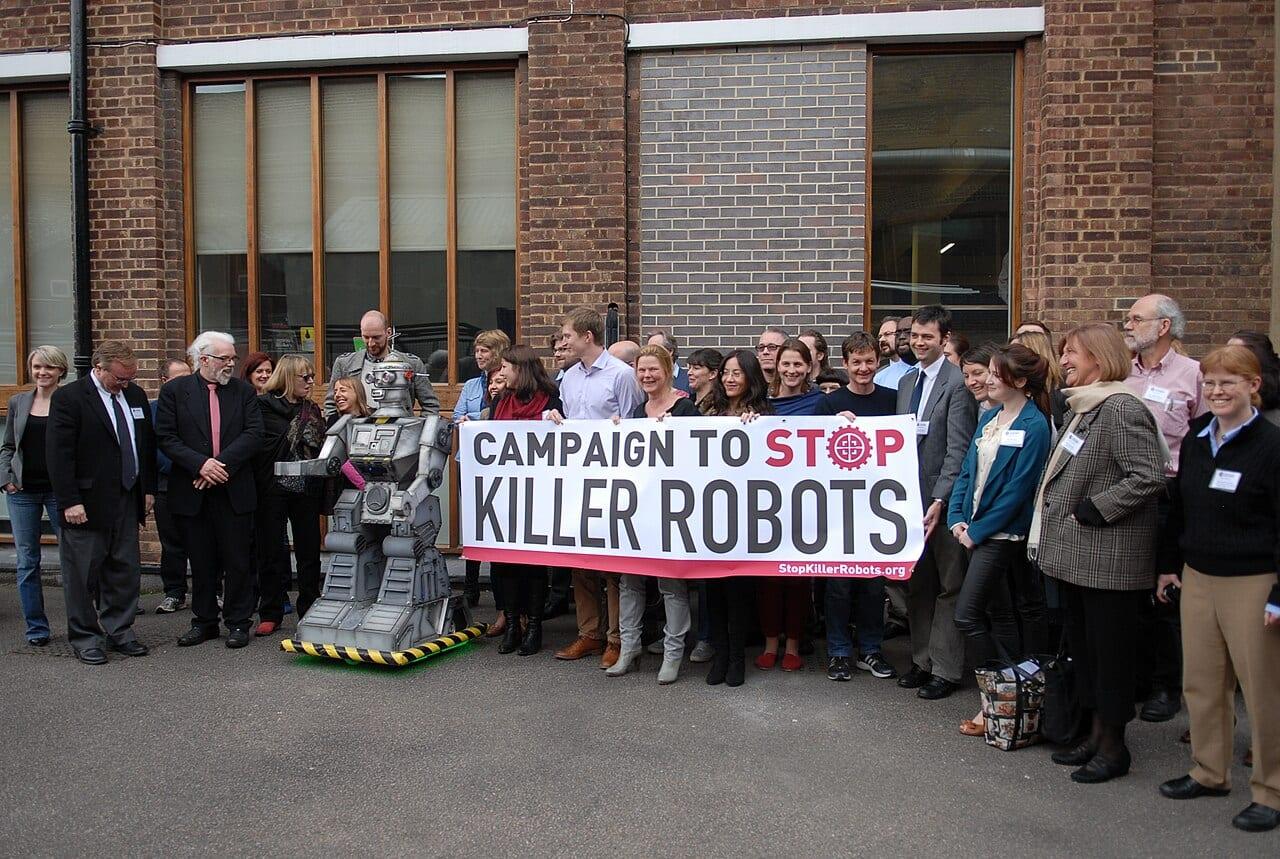
UN talks on fully autonomous weapons, often called "killer robots", ended in Geneva early on Saturday, November 21, without a mandate to negotiate a legally binding ban, even though almost 100 countries had asked for one, the German news agency DPA reported.
The meeting was the Seventh Review Conference of the UN Convention on Certain Conventional Weapons (CCW), whose 128 member states decide by consensus. Fully autonomous weapons are systems that can select and attack targets without a human making the final decision to fire.
delaying the creation of a legally binding instrument puts civilians and humanity at risk
What was agreed instead
After hours of overnight negotiations, the states gave the CCW's Group of Governmental Experts a two-year mandate, covering 2027 and 2028, to "elaborate" an international instrument on these weapons, Jurist and Al Jazeera reported. Whether that text ends up as a binding treaty or a set of voluntary guidelines was left open until the drafting is done.
The conference's Swiss chair, Ambassador Julien Thöni, called the compromise a "significant step forward" after more than ten years of discussion, according to Jurist.
Who said no
Because the CCW works by consensus, a few countries can block a decision. The United States was among those opposing a specific negotiating mandate, DPA reported, and preferred voluntary, non-binding rules, according to Jurist. Israel, Belarus and Britain also opposed negotiations on a binding agreement, DPA said, and Jurist reported that Russia raised objections too, arguing that existing laws of war already cover these weapons.
On the other side, a group led by Austria, Belgium, Brazil, Ireland, Mexico, New Zealand and Panama pushed for a binding protocol. The campaign coalition Stop Killer Robots counted 98 states supporting or open to negotiating one.
What campaigners said
Stop Killer Robots, a coalition of more than 300 organisations, said in a statement on November 21 that states "adopted a watered-down mandate that fails to chart a clear path towards a legally binding instrument."
Nicole van Rooijen, its executive director, said autonomous weapons technology, "including AI in the targeting cycle, is being deployed on the battlefield" and that "delaying the creation of a legally binding instrument puts civilians and humanity at risk." Verity Coyle of Human Rights Watch called the outcome "disappointing." The International Committee of the Red Cross said it regretted that no clear negotiating mandate was agreed.
Why this matters
Autonomous weapons are no longer science fiction. Campaigners say systems that use AI to pick targets are already used in combat, and the technology gets cheaper every year. The worry behind a ban is simple: if a machine decides who to kill, who is responsible when it gets it wrong?
Supporters of a ban want a clear rule that a human must always make the final decision to use lethal force. Opponents generally argue that existing laws of war already apply and that a ban would be hard to define or verify.
For now there is no international law written specifically for these weapons, and the next decision point is the end of 2028.
Sources
- UN talks on autonomous killer robots fall short of legally binding ban (Yahoo News) (yahoo.com)
- Stop Killer Robots: RevCon press release, November 21 (stopkillerrobots.org)
- Jurist: UN arms conference falls short of treaty mandate on autonomous weapons (jurist.org)
- Al Jazeera: Nations agree to 'elaborate' on rules for AI-run 'killer robots' by 2028 (aljazeera.com)
Source: yahoo.com