An Indian startup raised $24 million to put the camera, the processor and AI on one chip
Bharat Semi says its all-in-one AI image sensor could cut system costs by at least 70%. Its chips are still in development, with first production aimed at 2027.
In brief
Bharat Semi says its all-in-one AI image sensor could cut system costs by at least 70%
India's Bharat Semi has raised $24 million for one chip that captures images, processes them and runs AI. It says that could cut system costs by at least 70%. The startup has no revenue yet, and first production is aimed at 2027.
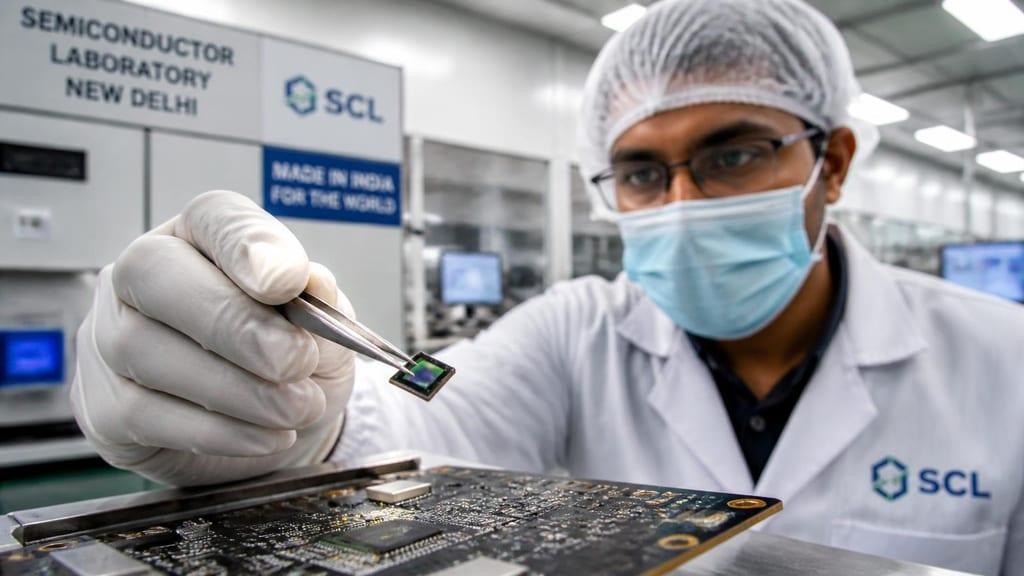
Bharat Semi, a chip startup based in New Delhi, has raised $24 million in seed funding to build image sensors that do their own thinking, TechCrunch reported on November 15.
The company is nearly five years old and does not make money yet. It says it already has design wins with US defence company General Atomics and India's Kaynes Semicon. Its sensors are still in development, and it is aiming for first commercial production in 2027.
Our aim here is to move from sensors to sense-making solutions
What it is building
A typical smart camera uses three separate parts: an image sensor that captures the picture, an image signal processor that cleans it up, and a main chip that runs the AI. Bharat Semi wants to put all three jobs on one programmable chip, so the visual data does not have to travel to other processors.
Co-founder Vrinda Kapoor told TechCrunch this could cut system costs by at least 70% compared with the usual three-part setup. In her words: "Our aim here is to move from sensors to sense-making solutions."
Where you might meet it
The startup is targeting smart homes, factory automation, surveillance and aerospace. Kapoor gave two examples without naming customers: an air conditioner that notices a room is empty and adjusts itself, and a drone that can make sense of what it sees without expensive computing hardware elsewhere on board.
Its first-generation sensors are already being prototyped. The second generation, with more AI built in, should reach prototype stage by mid-2027 and customers by the end of 2027.
The round and the team
- Led by: Info Edge Group, South Park Commons and Indus Bridge Ventures
- Also in: Valour Capital, Micromax, Gaingels and individual investors
- Staff: about 75 people in India and the US, including 10 to 12 in Santa Clara, with plans for around 20 in the US by mid-2027 and new hiring in Europe
The chief technology officer, Boyd Fowler, held the same job at image-sensor maker OmniVision. The company plans to stay fabless, meaning it designs chips and pays others to manufacture them. A separate plan for a chip factory in India, announced in 2024, will not get any of this money.
Why it matters
India has committed billions of dollars to building a chip industry but is not yet a major manufacturing hub. Small, cheap AI that runs inside the camera itself is also good for privacy, since less video has to be sent to the cloud. Still, $24 million is a modest sum in chips, and the hardest part, getting to production on time, is still ahead.
Sources
Source: techcrunch.com