Research of the week: an underwater robot hit 93.3% success in a pool after learning from 1616 demonstrations
Two humanoid studies on the Unitree G1 showed one controller running, hopping, recovering from pushes and sitting on furniture.
In brief
93.3% success for a robot arm working underwater
An underwater robot learned grabbing tasks from 1616 demonstrations. In open sea near a WWII wreck, the best model managed 47.9%. It is lab research, not a product.
Three new robotics papers taught machines to move and grab in hard places, from shipwrecks to living rooms. All of them are lab results posted on arXiv, not products you can buy.
The common thread is doing more with less: one trained brain handling many jobs, instead of a separate model for every task.
The common thread is doing more with less: one trained brain handling many jobs.
Underwater robots learned grabbing tasks from human demonstrations
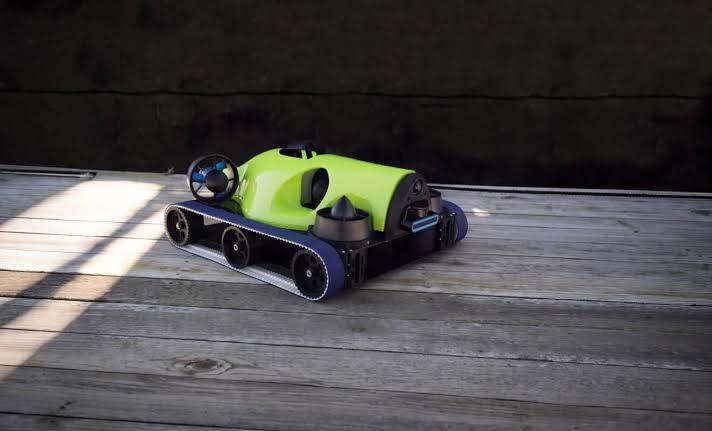
A team recorded 1616 underwater demonstrations in calm and rough water, then trained 14 versions of a vision-language-action model, an AI that looks at a camera feed, takes instructions and outputs arm movements. In a pool, across 1260 graded attempts on real hardware, 10 versions beat the starting baseline, and the best reached 93.3% success, a figure that counts partial successes.
At sea the picture was tougher. On an ROV, a remotely operated underwater vehicle, working near the WWII wreck Coralita X127 and in a marina in Malta, a single-task model called ACT scored 47.9% against 7.9% for the general SmolVLA model, with 66.7% on its best task at the wreck. The team has released its BLUEMBODIED KIT as open source, so others can build on it.
One humanoid controller ran at 2.8 m/s, sidestepped and hopped on one leg
FORGE splits the job in two. A simplified model of the body, treated roughly as one solid block, first plans believable movements. A second policy then makes the full robot follow those plans.
On a Unitree G1 humanoid it walked backward at up to 2.0 m/s, forward at up to 2.8 m/s, sideways at up to 1.0 m/s, and spun fast. It also hopped on one leg and blended smoothly between commands, all with a single pair of policies. The paper reports speeds and skills; it does not describe use outside the lab.
Metatron lets coding agents write new humanoid skills without retraining
Imagine telling a robot "hand here, walk this fast, look relaxed" and letting it work out the rest. Metatron does something similar. A frozen motion model takes rough goals, and small pieces of ordinary code, refined by AI coding agents, decide which goals to send at each moment.
On a real Unitree G1, one fixed model handled walking, getting back up, picking up objects under remote control and sitting on furniture. It reached targets more often and resisted pushes better than the tracking methods it was tested against. Climbing and acrobatics were shown only in simulation, not on the real robot.
If a robot can learn a new trick from a few lines of code, which household chore should it learn first?