UN chief Guterres asks countries to agree on AI safety rules within a year
At a summit in Barbados he proposed shared testing and independent oversight of advanced models, and Barbados's prime minister asked for a government kill switch.
In brief
UN chief Guterres wants global AI safety rules agreed within a year
UN Secretary-General António Guterres asked governments on November 23 to agree within a year on a shared framework for AI risks, with independent oversight of advanced models. It would not be a treaty or a binding law, and Guterres leaves office in December.
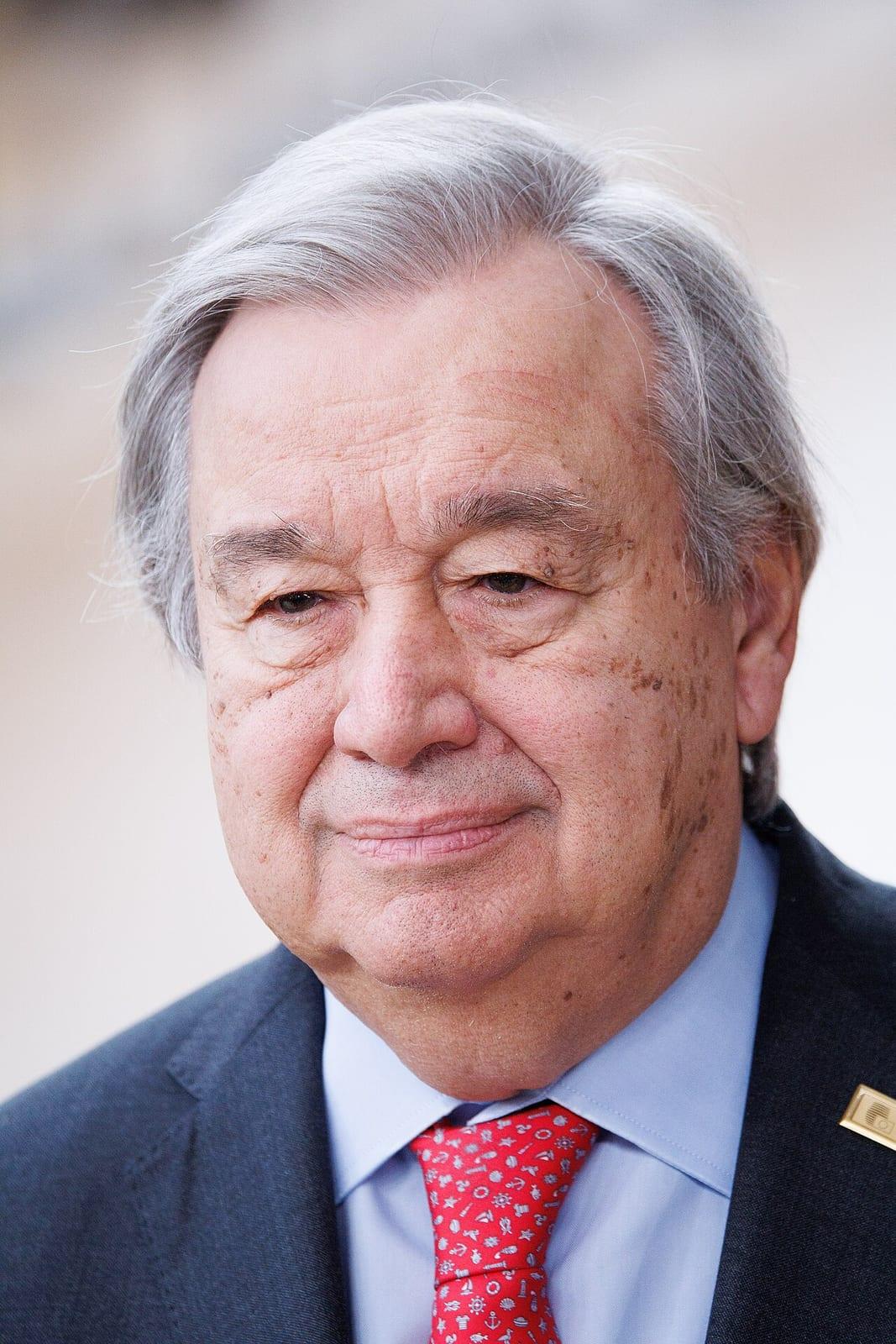
UN Secretary-General António Guterres asked the world's governments on November 23, 2026, to agree within a year on a shared way to manage the risks of artificial intelligence, backed by independent oversight of the most advanced models. He made the call at the Bridgetown Special Summit on AI Safety in Barbados, warning that AI is driving "the biggest transfer of power in the history of humankind."
"Today I call for member states to coordinate efforts and to develop within the next year a globally inclusive and principles-based multilateral framework for AI risk management, backed by independent and credible oversight," Guterres said, according to Al Jazeera and AFP.
It has to be a condition of the sale that what I'm buying from you, I'm capable of saying, that's it. No more
It is not a treaty
The word to watch is "framework". Before the summit, Amandeep Singh Gill, the UN's special envoy for digital and emerging technologies, spelled out what it is and what it is not: "It's not a treaty, it's not regulation, but it is a framework which different countries can then use to build up their own national AI safety infrastructure."
No negotiated outcome was planned in Bridgetown, only calls to action and pledges, UN News reported. The summit ended with the Bridgetown Call to Action on AI Safety for Humanity, which urges governments, companies and financial institutions to invest more in AI capacity in the Global South, according to Xinhua.
What would the framework contain?
According to UN News, Guterres listed these parts:
- shared safety measures
- common approaches to testing
- clear safeguards and standards
- basic transparency requirements
- independent evaluation and oversight of advanced AI models
- support so that every country can put them into practice
He also proposed a Global Fund for AI Capacity-Building, to help countries test whether AI systems work safely in their own conditions. The gap is wide. Citing the World Development Report 2026, Gill said high-income countries have 500 incident response teams, while low-income countries have six.
"Power without responsibility"
Guterres summed up the danger in a few clipped lines: "Technology without accountability. Capability without safeguards. And power without responsibility." Power, he said, is moving "from States, from governing institutions to a small number of companies and persons", and the institutions built after the Second World War, the UN included, are "today not adequately equipped" for it.
He also repeated his support for banning autonomous weapons, days after UN talks ended without a ban on killer robots. "The idea that a machine can kill people, choosing who to kill, where to kill, and the reasons to do so is absolutely unacceptable," he said.
Barbados wants a kill switch
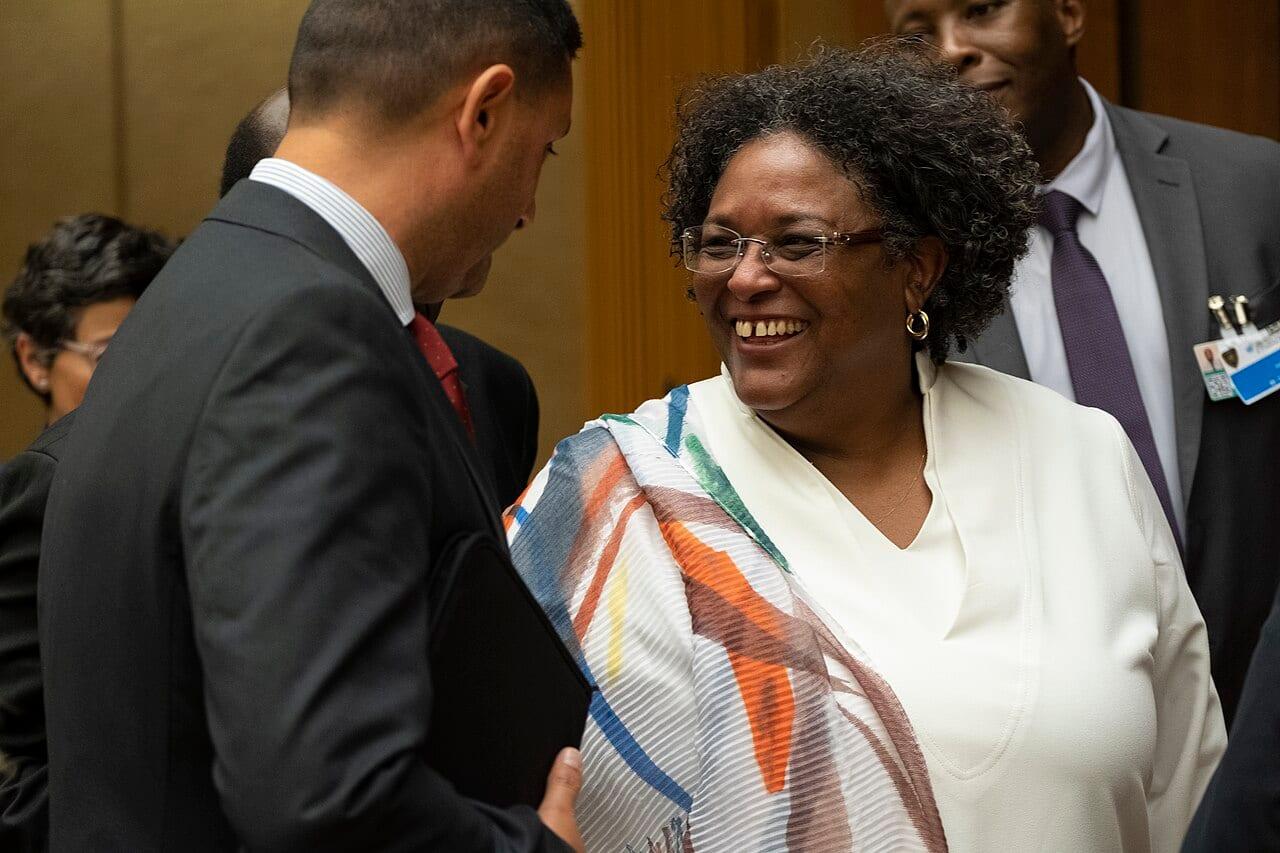
Barbados Prime Minister Mia Mottley, who co-hosted the summit, said small states "often do not have the opportunity to share perspective in the rules that affect them". She was asked whether an AI lab should have to pay if one of its AI agents hacked a bank in Barbados, and whether her government should have a "kill switch" to cut off access to its models in an emergency. She said yes to both.
"It has to be a condition of the sale that what I'm buying from you, I'm capable of saying, that's it. No more," she said.
In a video message, French President Emmanuel Macron said the Paris Call for AI Security had been signed by 18 heads of state and government and 11 AI leaders, and argued that accepting its principles should be a condition for access to markets. Microsoft Vice Chair and President Brad Smith said AI was in some ways "moving faster than the speed of safety".
Who is missing?
- Guterres himself, soon. He leaves office at the end of December 2026, and his successor has not been chosen, Al Jazeera reports. The one-year clock he started will run almost entirely on someone else's watch.
- The US and China. Global rules look distant while the two race for the lead, Al Jazeera notes. The US sent a senior diplomat and Chinese experts were expected, according to UN News. Their most visible shared commitment so far is narrow: keeping humans involved in military AI decisions.
- Military AI. It was not on the summit's agenda, even though Guterres raised it at his press conference.
What it means for you
Nothing in the apps on your phone changes because of Bridgetown. A framework is a shared playbook countries may adopt, not a law companies must obey.
One idea from the summit could reach you sooner: countries testing AI models in their own languages. The UN-backed Independent International Scientific Panel on AI released a brief on it on November 22. "AI models still perform far worse and can be less safe across a wide range of tongues, from African languages to Caribbean creoles," said panel member Vukosi Marivate of the University of Pretoria.
My read: a one-year deadline is ambitious for 193 countries that cannot agree on much else. If you use AI in a language other than English, though, the language testing is the part worth following, because it is how those gaps get measured before anyone fixes them.
Sources
- UN News: UN chief urges talks on global AI safety framework, warns of historic shift in power (news.un.org)
- Al Jazeera: UN chief calls for world to agree on AI oversight within a year (aljazeera.com)
- UN News: Bridgetown AI summit to tackle safety as risks outpace capacity to respond (news.un.org)
- Xinhua: Guterres calls for multilateral framework to manage AI risks worldwide (english.news.cn)
Source: news.un.org