England's regulator wants university exams back after AI made coursework hard to grade
England's Office for Students says AI has made some coursework close to impossible to grade fairly, and warns universities they could face sanctions if they don't change how they test students.
In brief
England's Office for Students tells universities to change how they test or risk sanctions
Students told England's Office for Students that classmates finished AI-written work in minutes and got similar grades. The regulator wants more in-person exams and oral tests, and warns universities could face sanctions.
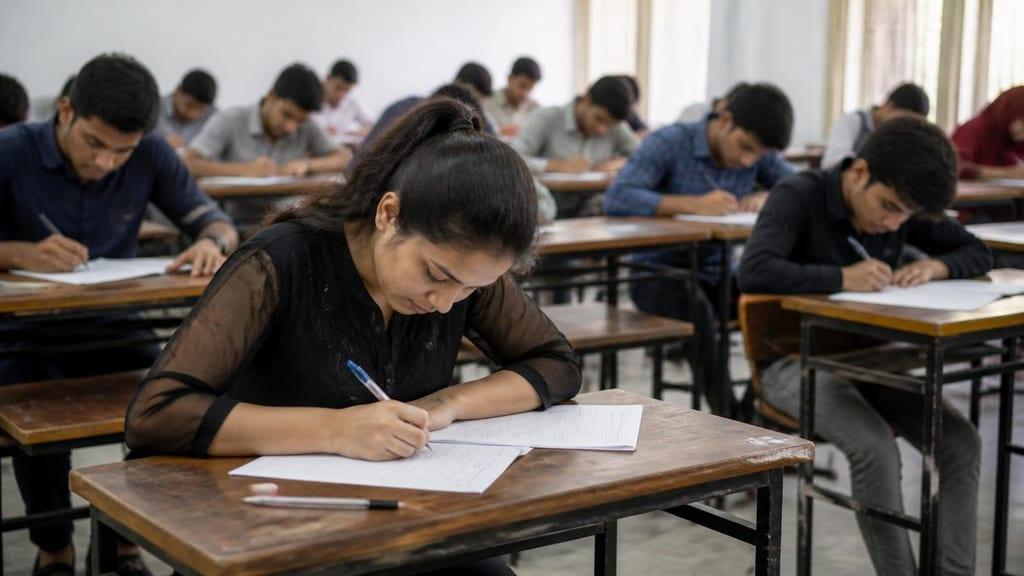
England's higher education regulator, the Office for Students (OfS), says AI has made some university coursework "close to impossible" to assess. Its answer is a return to older methods: in-person exams, presentations and oral exams.
What the investigation found
We need to see far greater efforts to tackle these risks, including far greater use of AI-free assessment.
The OfS and Advance HE, a charity that works on university teaching, interviewed more than 300 students and staff at 127 universities and colleges this year. The report, Making AI Work for Students, was published on November 11.
Among the findings:
- Students said peers completed assessments with AI "sometimes in just a few minutes" and received grades similar to students who did the work themselves.
- Some students could not recall basic details of work they had just submitted.
- Staff described piles of submissions that looked alike, cited the same sources and were written in the same style.
- The report says AI-detection tools "do not consistently and reliably identify AI use."
One academic told the researchers that "coursework is now overwhelmingly written in part, or exclusively, with the help of AI." A student described classmates admitting they wrote whole essays with ChatGPT, didn't get caught, and did it again.
What the regulator wants
Josh Fleming, the OfS director of strategy and delivery, called AI a "generational risk to the system as it stands."
We need to see far greater efforts to tackle these risks, including far greater use of AI-free assessment.
The OfS warned that universities that fail to design "valid and reliable measures of students' knowledge and skills" could breach their conditions of registration and face sanctions. The Department for Education said it expects universities "to take this issue seriously."
Universities UK, which represents 147 institutions, said many have already changed how they assess students, with more in-person exams, presentations, vivas, and assessments that use AI in a controlled way.
What this means if you're a student
Expect fewer take-home essays to count on their own, and more of these:
- in-person written exams without devices
- vivas, short oral exams where you explain your own work
- process-based assessment, where you show how you researched and built your work, step by step
- tasks where you critique or fix AI-written text
A practical habit, whatever your university: keep your notes, drafts and sources. If you're asked to show how you reached your answer, a clear trail of your own work is the best evidence you have. And if AI wrote the essay, an oral exam will expose it in minutes.
The report covers England only, but the problem it describes, coursework that AI can complete and detectors can't catch, is the same one universities everywhere are dealing with.
Sources
Source: theguardian.com