Goldman Sachs says the AI layoff wave feared in 2026 is waiting for the next recession
Job losses stayed near record lows this year, but Goldman's economists think up to 9% of US workers could be pushed out of their jobs once the economy turns.
In brief
Goldman Sachs warns AI could push up to 9% of US workers out of jobs once a recession hits
Layoffs stayed near record lows in 2026. Goldman Sachs expects that to hold through 2027, then warns up to 9% of US workers could be displaced, mostly when a recession hits. For now the pain shows up as slow hiring.
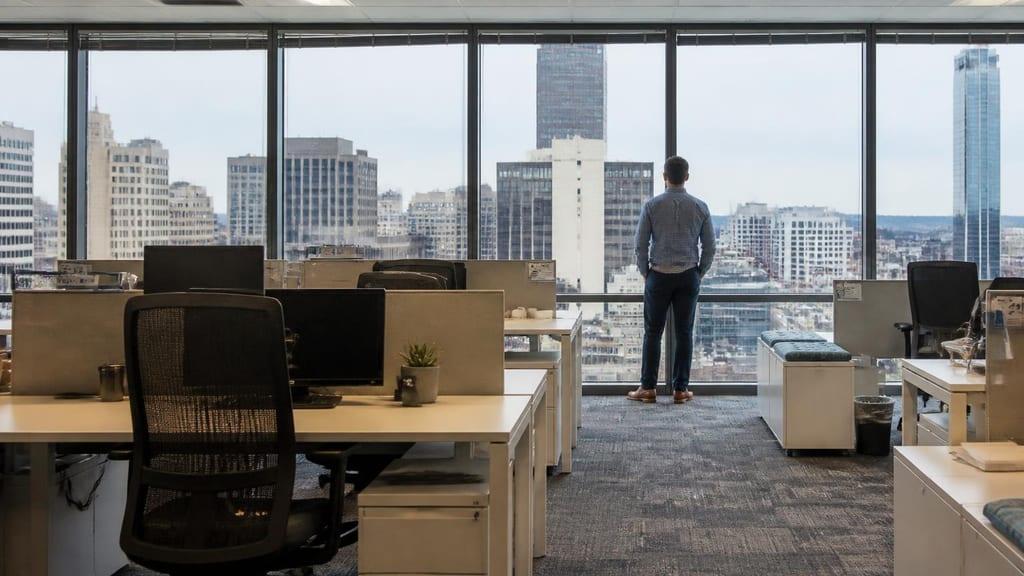
At the start of 2026, a lot of people expected AI to set off mass layoffs. It did not happen. Americans are filing for unemployment benefits at the slowest four-week pace on record. Goldman Sachs now says the wave is late, not cancelled.
What Goldman says
This year began with fears of a looming AI-driven layoff wave, but the layoff rate instead remained historically low
"This year began with fears of a looming AI-driven layoff wave, but the layoff rate instead remained historically low," Goldman's economists wrote in their outlook for 2027, published on Sunday night.
They expect this calm, which they describe as a "slightly softer low-hire, low-fire form of full employment," to last one more year. After that, they write, AI displacement will begin "to have a larger impact in subsequent years."
The reason is history. Last month Goldman economist Joseph Briggs estimated that up to 9% of workers, about one in 11, could be displaced during the move to AI. He found that machines replace people slowly when the economy is healthy and much faster in a downturn. Routine jobs such as clerks, secretaries and machine operators fell in steps during the recessions of the early 1980s, 2001, 2008 and 2020, and never came back.
Goldman does not forecast a recession for 2027. It expects the US economy to grow 2.4% next year, which is why it pushes the bigger job hit further out.
What is happening now
For workers, the effect so far is not firing but slow hiring. US employers made 5.4 million hires in September, a rate of 3.4%. Layoffs held at 1.6 million, about 1% of payrolls. New jobless claims stood at 200,000 in the week ended November 7, and the four-week average of 195,000 is the lowest in the series' history, Goldman says. Wages are growing about 3.5% a year, which Goldman calls "a subdued pace."
In other words, if you have a job, you are fairly safe for now. If you are looking for one, especially your first one, companies are taking fewer people on.
Not everyone agrees
Some researchers think the fears are overblown. Princeton computer scientist Arvind Narayanan argues AI is a "normal technology," useful for every office worker, but more likely to change jobs than erase them. His picture of work is a sandwich: the core tasks shrink, but more checking and supervising grows around them. Others point to Anthropic chief executive Dario Amodei, who warned in 2025 that AI could wipe out half of entry-level office jobs within one to five years.
What to take from it
Goldman's forecast is a forecast, built on how past technology shifts played out. The useful part for ordinary workers is the pattern it describes: AI job losses tend to arrive all at once, in a bad year. A calm job market is a good time to learn to use the AI tools in your field and to build skills that are hard to automate, before the pressure arrives rather than after.
Sources
Source: fortune.com