BrightAI raises $97 million to replace pipeline and power-pole inspections with AI sensors
BrightAI says two out of three scheduled inspection trips find nothing to fix. Investors including GE Vernova just put in $97 million, at a reported $750 million valuation.
In brief
BrightAI says two in three inspection trips find nothing, and raised $97 million to fix it
BrightAI puts AI sensors on power poles, pipelines and pumps so crews go out only when something is wrong. It says two out of three scheduled inspection trips find nothing to fix. It raised $97 million, led by Keith Block's Smith Point Capital, with customer GE Vernova also investing.
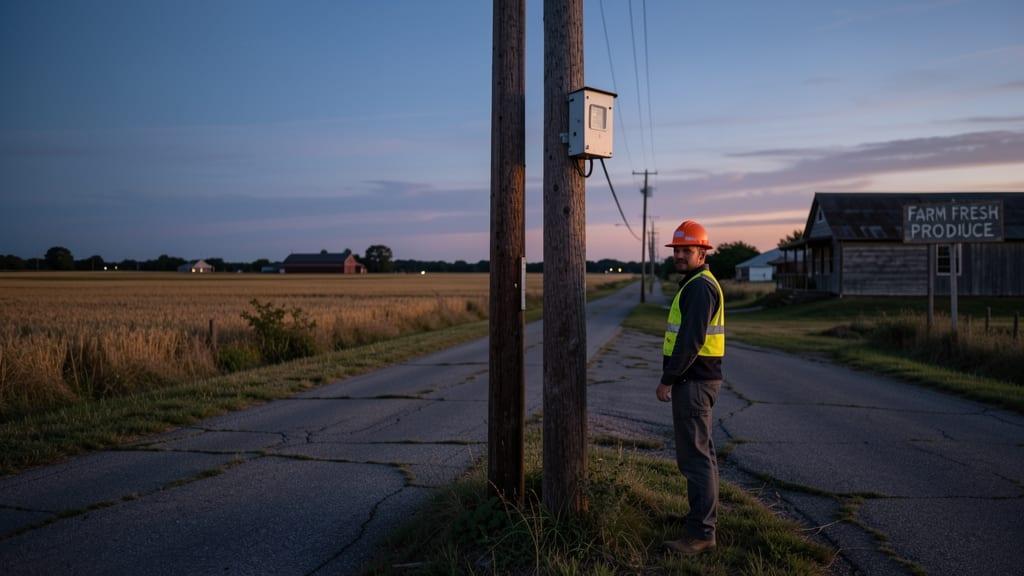
Power companies, water utilities and pipeline operators still check much of their equipment the way the Romans checked their roads: by sending crews out on a schedule. BrightAI, a California startup, wants sensors and AI to watch that equipment all the time instead, and it just raised $97 million to do it.
The round was led by Smith Point Capital, the firm started by former Salesforce co-CEO Keith Block, the company said on November 18. GE Vernova, already a customer, also invested, along with Cobalt Capital, Marlinspike Partners and Zero Infinity Partners. Existing backers Khosla Ventures, Inspired Capital and Upfront Ventures joined too.
The Romans are laughing at us.
The round brings BrightAI's total funding to $184 million. Fortune, citing a person familiar with the matter, reported that it values the company at $750 million.
The problem it is chasing
Founder and CEO Alex Hawkinson keeps Roman artifacts at the company's robot demo center, and has a line to go with them: "The Romans are laughing at us."
He told Fortune that frontline technicians kept telling him 50% to 70% of their scheduled trips found nothing to fix. The company's own release puts it more cautiously, at more than half of scheduled inspections. Meanwhile, failures still happen between visits. His favorite example is the wooden power pole: the US has about 150 million of them, and each is checked by a person roughly once every eight to 10 years.
What BrightAI sells
Its platform, called Stateful, puts small sensors on poles, pipelines, compressors and tanks, and adds robots, drones and wearable AI assistants for field crews. BrightAI says it runs at more than 50,000 locations. Customers named include GE Vernova, Reworld, Osmose Utilities Services, Azuria Water Solutions and Kodiak Gas Services.
Hawkinson said customers on average see trouble coming 51 days before what would have been a serious failure. In one case, he said, sensor data showed about half of a customer's spark plug replacements were premature.
The founder
This is not Hawkinson's first sensor company. In 2011 his family's mountain cabin lost power and the pipes froze and burst before anyone knew. He built a connected sensor hub in his garage, launched it as SmartThings and sold it to Samsung in 2014. He founded BrightAI in 2019 and paid for it himself for the first four years.
What to keep in mind
Some of the biggest numbers are the company's own. BrightAI estimates more than $7 trillion a year in waste worldwide, based on its survey of 12,158 operators. The 51-day warning figure also comes from the company.
Most of the new money will go to growing outside North America, where BrightAI says nearly 60% of its market is. Hawkinson said signing a new customer used to take two to three years and now takes under six months. The coming year, he said, is about moving from proven concept to large rollouts with the biggest utilities.
Sources
Source: fortune.com