AdaTempo makes robot manipulation policies run 3.57 times faster
A new method resamples training data to fix the slow timing inherited from human demonstrations.
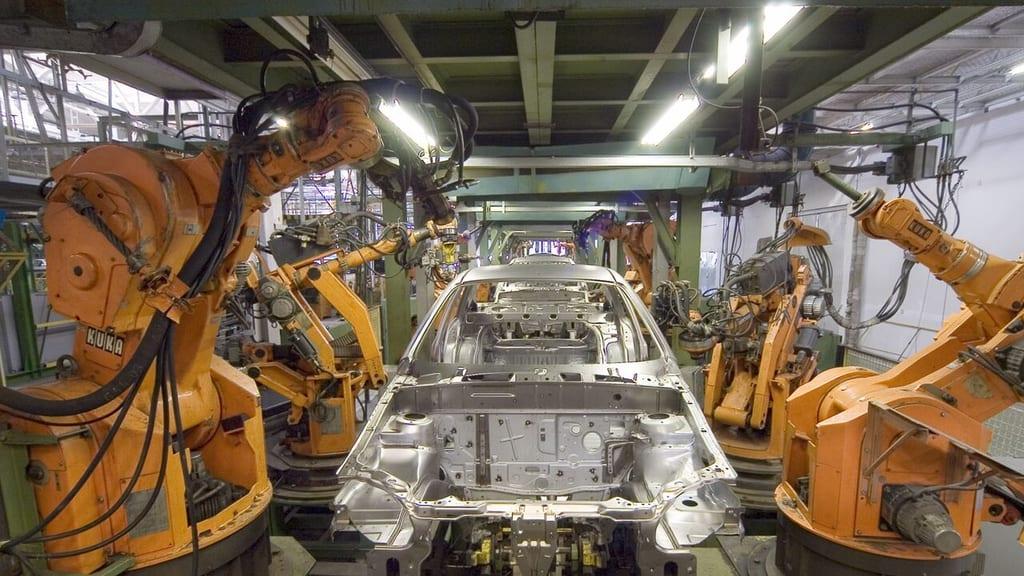
Researchers introduced a method called AdaTempo to solve a common problem in robot learning. Most robots trained by watching humans move copy the human's slow pace. This happens because the training data comes from teleoperated demonstrations. The result is a robot that works accurately but unnecessarily slowly.
The new approach looks at how different parts of a task relate to each other in time. It finds a shared rhythm across multiple demonstrations. This rhythm is called relative tempo. By identifying this structure, the system can figure out which parts of a movement can be sped up safely.
AdaTempo creates a consensus speed profile from these demonstrations. It then uses this profile to resample the training data. The resampled data contains accelerated trajectories. When a robot learns from this new data, it naturally moves faster. No special speed controls are needed during operation.
The method works with standard robot learning policies. These include ACT and Diffusion Policy. The researchers tested the approach on various manipulation tasks. The robots performed the same tasks as before but at a higher speed.
The results showed a significant improvement in efficiency. The robots achieved a speedup of up to 3.57 times. This means a task that took ten seconds now takes under three. The success rate remained strong compared to the original slower policies.
Imagine a robot arm picking up a cup. In the old way, it moves slowly to ensure it does not drop the cup. With AdaTempo, the arm learns that the approach phase can be faster, while the grip phase stays careful. It balances speed and safety based on the task structure.
The study compared AdaTempo with other acceleration techniques. It showed a better trade-off between speed and success. The method does not require online adjustments. The speed is baked into the learned behavior during training.
This work addresses a specific issue in imitation learning. It does not change what the robot can do, only how fast it does it. The method relies on having multiple demonstrations of the same task. It extracts the timing patterns from these examples.
The paper was published on arXiv on October 5, 2026. It provides a clear path to making existing robot policies more efficient. The technique is self-supervised, meaning it does not need extra labels. It uses the structure of the data itself to find the right pace.
However, the method requires consistent demonstrations. If the human demonstrations are too varied in timing, the consensus might be weak. The study focuses on manipulation tasks. It does not claim to work for all types of robot movement. The speedup depends on the nature of the task and the quality of the training data.
Source: arXiv cs.RO