AI agent doubles polarization control speed in nuclear physics
Research from arXiv shows a reinforcement learning system outperformed manual tuning on the APOLLO target.
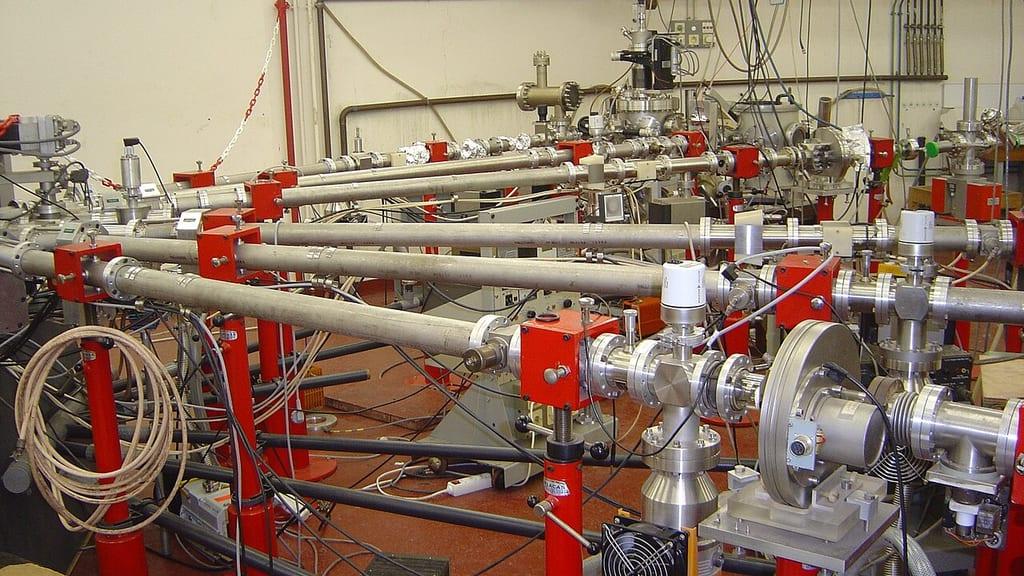
A reinforcement learning agent now tunes nuclear physics targets faster than human experts. The system was tested on the APOLLO cryogenic target system. This work is documented in a new paper on arXiv.
In these experiments, targets need constant adjustment to stay polarized. Radiation damage and material changes force operators to tweak microwave frequencies manually. This process is slow and relies on trial and error.
The researchers built a data-driven framework to automate this. They used operational data to train surrogate models. These models predict polarization based on frequency, beam current, and radiation dose.
Two types of models were evaluated: multilayer perceptrons and Gaussian process regression. The Gaussian process models proved more reliable. They provided calibrated uncertainty estimates and detected when data fell outside the training range.
The reinforcement learning agent used a lower-confidence-bound reward formulation. This approach balances maximizing performance with managing uncertainty. The agent learned to act across multiple target samples.
The results showed an almost 2x improvement over the actions of human operators. The AI system found optimal settings more efficiently than manual tuning. This suggests a significant gain in experimental efficiency.
The study highlights the value of uncertainty estimation in control tasks. Gaussian process models were key to identifying safe operating regions. This allowed the agent to explore without breaking the system.
The framework was standardized for simulation environments. This makes it easier to apply the method to other target types. The work demonstrates a practical application of AI in high-precision physics.
The source does not specify the exact duration of the experiments. It also does not detail the specific hardware costs involved. The improvement is measured relative to operator actions, not absolute time.
Source: arXiv cs.AI