NVIDIA and Google DeepMind released 3D structures for 2,800 viral protein complexes
The new open dataset aims to help scientists understand viral structures to accelerate drug and vaccine research for future pandemics.
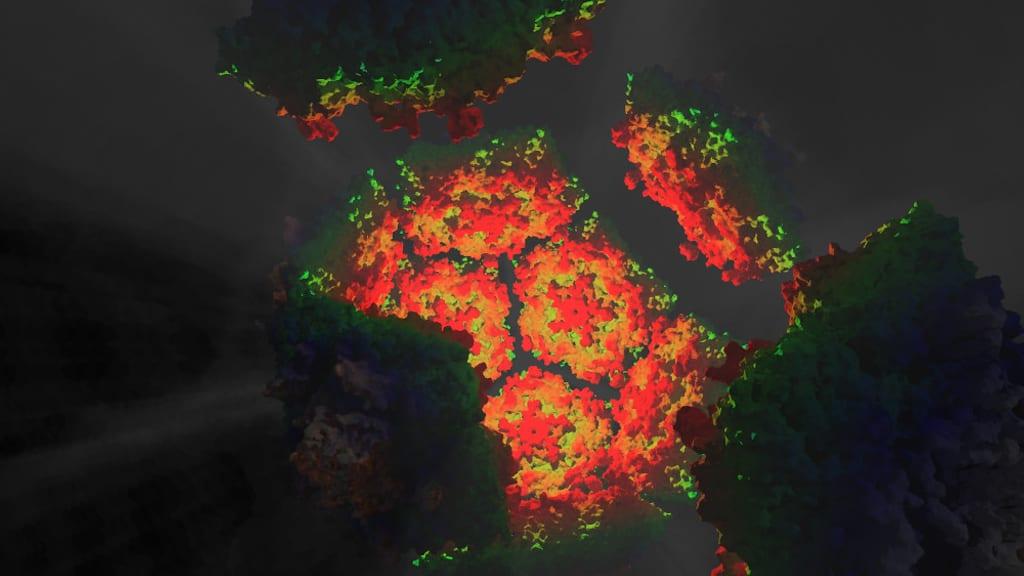
NVIDIA, in collaboration with Google DeepMind and various research organizations, has published 3D structural predictions for over 2,800 viral protein complexes. This release aims to provide researchers with vital biological information to better prepare for potential future health crises.
The project utilized AlphaFold2, an AI model designed to predict how proteins fold into specific 3D shapes. By integrating the NVIDIA BioNeMo Inference Runtime, the team managed to scale the prediction process across thousands of viral proteomes. This approach allows researchers to study how groups of proteins interact, rather than just examining single molecules in isolation.
This database is an engine for hypothesis generation.
Traditional methods of determining these structures, such as X-ray crystallography, often require years of physical laboratory work. AI-powered predictions can now be generated in minutes, significantly reducing the initial time needed to identify potential targets for vaccines or antiviral drugs.
- The AlphaFold Database now hosts over 260 million protein predictions.
- Approximately 30% of the newly added interactions are entirely new to scientific literature.
- NVIDIA is also releasing its BioNeMo Structure Prediction Pipeline to allow labs to perform their own structural predictions.
While this dataset serves as a powerful tool for generating scientific hypotheses, it does not replace experimental validation. High-confidence predictions provide a starting point, but scientists must still conduct physical lab tests to confirm these structural models before they can be used for clinical drug development.
Source: NVIDIA Blog