Researchers created RoboChemGym to teach robots how to perform chemical experiments
A new simulation framework helps embodied agents master the complex, multi-step tasks required in modern wet-labs.
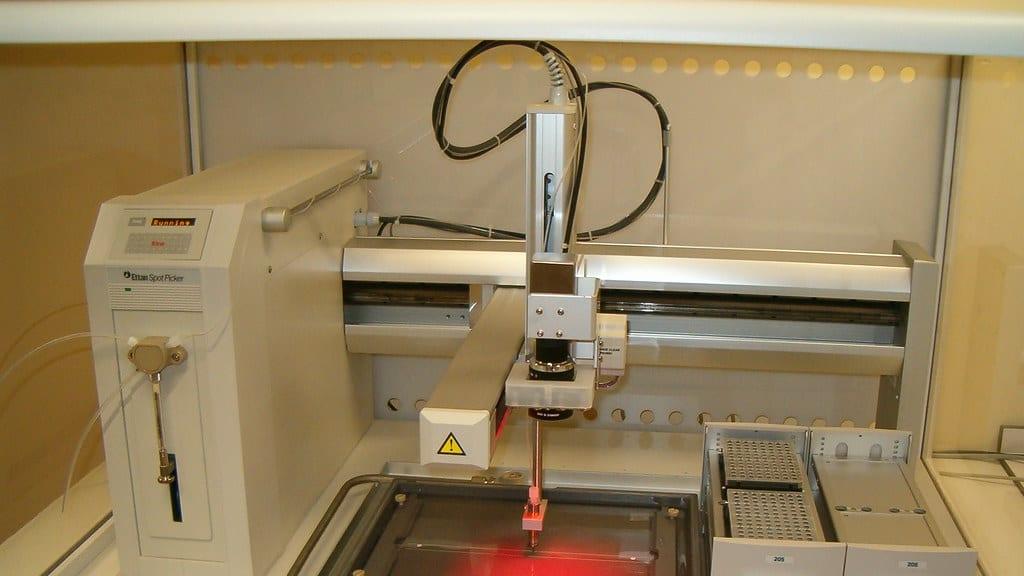
Scientific discovery in wet-labs is usually slow because it requires a lot of manual labor. Robots could change this, but they struggle to learn because there is not enough data on how to handle precise chemical protocols. A new academic paper introduces RoboChemGym to solve this problem.
RoboChemGym is a simulation framework that generates high-fidelity data for training robots. It focuses on long-horizon tasks, which means activities that require more than 10 individual interaction steps. Imagine a robot that must carefully pour, mix, and heat substances in a specific order without spilling a drop.
RoboChemGym sets a scalable paradigm for the automated data synthesis and capability evaluation of embodied agents in intricate chemical tasks.
This framework includes a self-improving mechanism. It iteratively refines how the robot performs tasks and sets up the simulated environment to make the training more effective. The researchers also added a hierarchical benchmark to test performance, ranging from simple atomic movements to full experimental workflows.
By providing a scalable way to create expert demonstrations, the tool aims to support the development of fully automated intelligent laboratories. Could this finally give human scientists more time to focus on complex theory instead of repetitive bench work?
The current version of the framework is limited to simulated environments. The research paper does not provide results from testing these agents in physical, real-world laboratory settings, and it does not demonstrate the robot's ability to handle hazardous substances safely.
Source: arXiv cs.RO