Trump and Xi agreed humans stay involved in military AI decisions, Bessent says
No text, definition or way to check it has been published, so for now it is a spoken commitment between two rivals, not a rule.
In brief
Bessent says Trump and Xi agreed AI won't run major military actions alone
US Treasury Secretary Scott Bessent says Donald Trump and Xi Jinping agreed on November 19 that humans must always be involved in military decisions made with AI. No text has been published, and nothing yet defines or checks the promise.
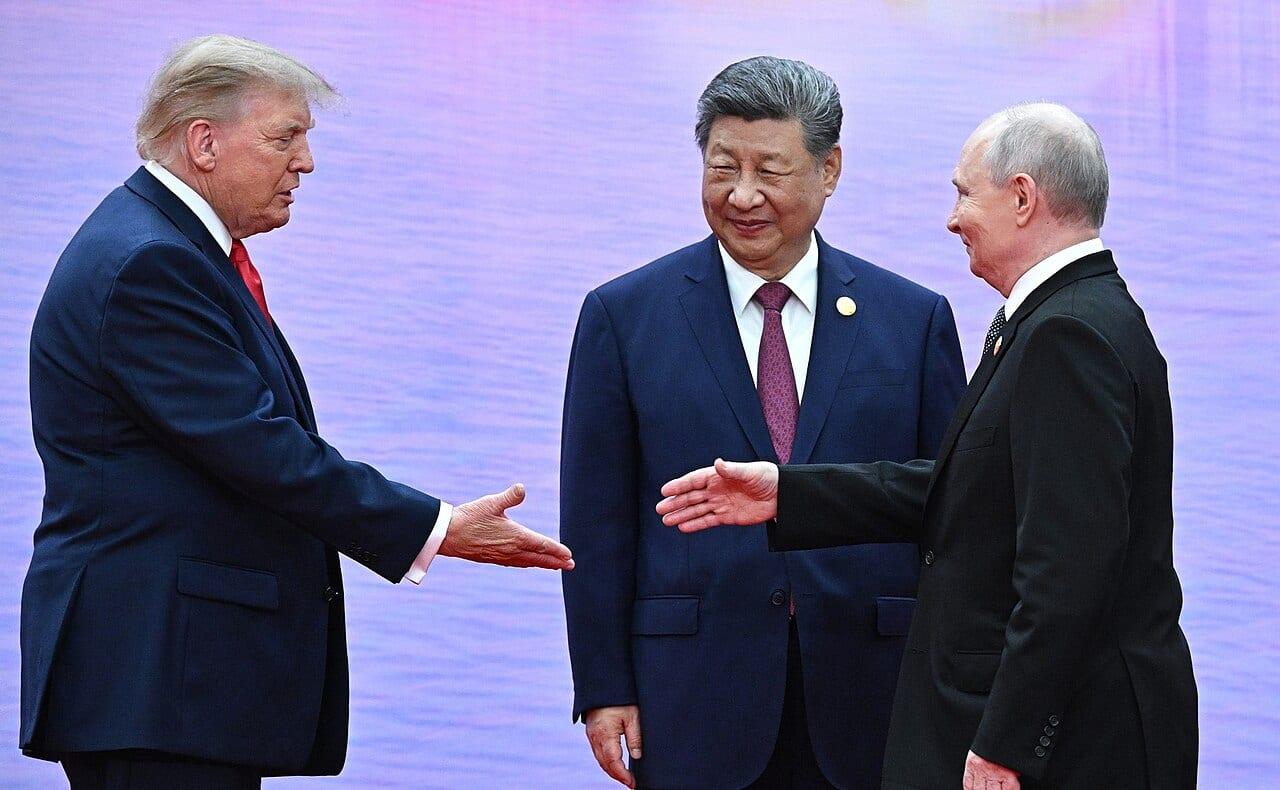
The leaders of the world's two biggest AI powers have agreed that artificial intelligence should not launch a major military action on its own, according to US Treasury Secretary Scott Bessent. He told the US business channel CNBC on November 20, 2026 that Donald Trump and Xi Jinping reached that understanding when they met in Shenzhen, China, the day before.
Bessent called it one of the main results of Trump's trip to Asia. In his words, the two presidents agreed that "humans should always be involved in any military decisions that SI makes, and the SI should not be allowed to be autonomous for major military actions". SI stands for "superintelligence", the Trump administration's preferred word for AI, Reuters noted.
there's nothing to do with competition when it says that both sides agree that no major military operation should be launched without a human being involved
What exactly was said
The meeting took place on November 19 on the sidelines of the Asia-Pacific Economic Cooperation (APEC) leaders' meeting, a yearly summit of Asia-Pacific economies, held this year in Shenzhen. Asked by CNBC's Sara Eisen how the US can agree on anything with its biggest technology rival, Bessent separated the two questions. The race for AI is one thing, he said, and the US "must stay ahead". The military rule is another:
"But, you know, there's nothing to do with competition when it says that both sides agree that no major military operation should be launched without a human being involved."
According to the CNBC transcript, he also said there was "very robust discussion" on containing the growth of nuclear weapons. Trump, Xi and Russia's Vladimir Putin, who held a three-way meeting in Shenzhen the same day, said in a joint declaration that "a nuclear war cannot be won and must never be fought", Anadolu Agency reported.
China's account is broader and says nothing about the military
China's own readout of the meeting, published by its embassy in Washington, has Xi saying that the two countries "should strengthen communication and coordination, prevent the security risks of AI, and ensure that AI is always under human control." It does not mention weapons or military decisions.
The two accounts point the same way but are not the same promise. "Under human control" is a general principle. Bessent's version is narrower and more concrete: a human involved before a major military operation. Neither government has published a joint statement on AI, and we could not find a White House readout that describes the military point.
The tone around it was not all warm. At the APEC meeting, Trump said the US opposes "any form of globalist regulation or anything to control and stifle SI", Euronews and the French news agency AFP reported. The two leaders had already agreed in September to set up a channel for urgent contact about AI incidents, according to the same report.
What is missing
A promise like this is only as useful as its details, and so far there are none in public:
- Who counts as "involved". A soldier approving a target list once a day and a soldier approving every single strike are both "involved".
- What is "major". Bessent's words cover "major military actions". Smaller ones, such as a drone defending itself, may fall outside.
- How anyone would check. There is no inspection, no reporting and no text to hold either side to.
This matters because the world just failed to agree on anything firmer. As Cyberttak reported on November 22, United Nations talks on so-called killer robots, weapons that pick and attack targets without a human decision, ended without the ban that nearly 100 countries wanted.
What it means for you
In practical terms, nothing changes yet. My read: a spoken commitment between the US and China on keeping humans in charge of military AI is better than none, especially while the US president rejects binding global rules on AI. But it is not a treaty and not a law, and it rests on one official's description in a TV interview.
The next chance to firm it up is already on the calendar. Bessent said the two leaders will hold their fourth meeting of the year at the Group of 20 summit in Doral, Florida. A written text, even a short one, with a definition of "human involvement" would turn this from a talking point into something other countries could sign up to and check.
Sources
- CNBC transcript: Treasury Secretary Scott Bessent on Squawk on the Street, November 20, 2026 (cnbc.com)
- Chinese readout: President Xi Jinping Meets with U.S. President Donald J. Trump (us.china-embassy.gov.cn)
- Reuters via Navy Times: Trump, Xi agreed that military AI decisions should involve humans, Bessent says (navytimes.com)
- Anadolu Agency: Trump, Xi agreed humans must stay in charge of AI military decisions, Bessent says (aa.com.tr)
- Euronews: Trump rejects global AI regulation as Xi calls for safety cooperation (euronews.com)
Source: cnbc.com