A droplet learned to navigate an open surface with 50 episodes
The system used model-based reinforcement learning to move liquid on a tilted board and transfer to unseen layouts.
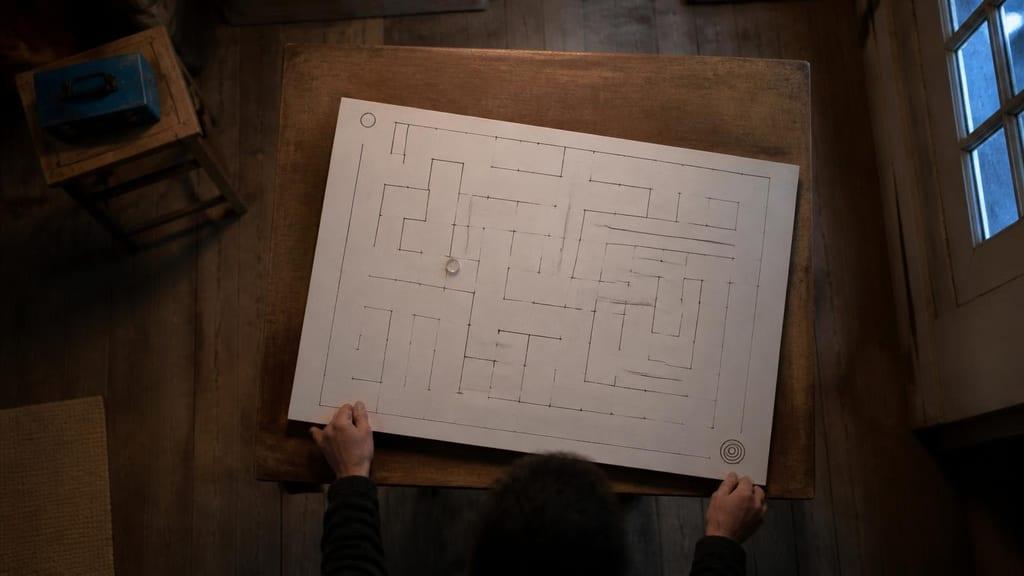
A robotic setup learned to move a liquid droplet across an open surface using model-based reinforcement learning, according to an arXiv paper in robotics.
The platform uses a two-axis tilting board with a thin silicone oil film, and an overhead camera watches the droplet in real time.
The platform demonstrates zero-shot transfer to unseen geometries.
The big deal is not just motion. The system was trained on only 50 to 150 physical episodes, depending on how complex the geometry was.
No simulation was used, and the method did not rely on an analytical model of the droplet physics.
It also transferred zero-shot to unseen geometries. In plain terms, it handled new layouts without extra training first.
The droplet system showed another useful trick: when the liquid stuck, the policy found an oscillatory depinning strategy to free it.
That kind of behavior matters for self-driving laboratories, where robots need to handle soft, deformable matter, not just rigid objects. Imagine trying to slide a drop of syrup across a tilted tray without letting it freeze in place.
The full training pipeline finished in under 90 minutes.
The source does not say how the platform performs on other liquids, larger scales, or outside the tested geometries. It also does not show a broader industrial deployment yet.
Source: arXiv cs.RO