ProWAM robot control model improved task success by 27 percent in novel settings
Researchers developed a new visual planning method that helps robots complete complex tasks without needing to generate full video sequences.
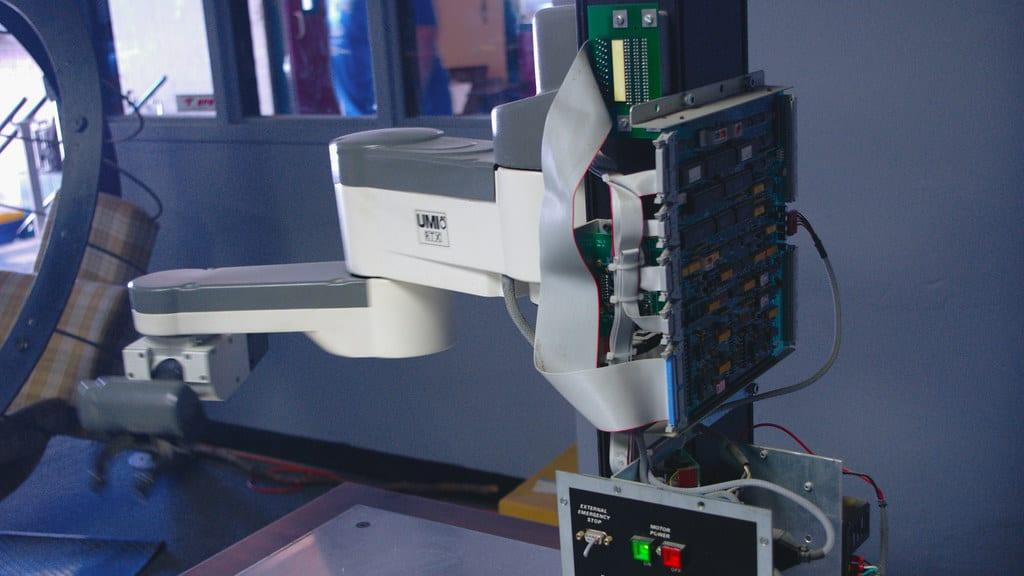
A new research paper introduces ProWAM, a system designed to help robots navigate complex tasks by predicting visual sub-goals instead of entire video sequences. The method was evaluated across various simulation benchmarks and in real-world scenarios.
Traditionally, robots using world models attempt to generate dense video rollouts to plan their next moves. This process is computationally heavy and often inefficient for long tasks. ProWAM changes this by focusing on sparse, ordered visual targets to guide the robot's actions.
These results demonstrate the value of progress-indexed visual foresight for closed-loop control.
By caching features of these sub-goals, the model avoids the need for constant, heavy video generation. This approach allows the robot to handle the complexities of the physical world more effectively, especially when encountering unfamiliar environments.
In testing, ProWAM showed significant improvements over existing methods. On simulation benchmarks like LIBERO-Plus, it achieved an 85.8 percent success rate. Its performance on the challenging RoboCasa365 set also ranked it among the top systems.
Perhaps most importantly, in real-world experiments, the model achieved a 70 percent success rate in novel scenes. This was a 15 percentage point increase compared to the strongest baseline tested, representing a 27.3 percent relative gain.
Can visual foresight alone solve the problem of complex robotic manipulation? The study notes that while ProWAM shows strong results in out-of-distribution environments, it relies on specific visual planning methods that may still struggle with extreme task variations not covered in the training phase.
Source: arXiv cs.AI