Researchers developed a way to spot dishonest robots on the moon
A new method identifies rovers that share false location data, ensuring safety in busy lunar zones.
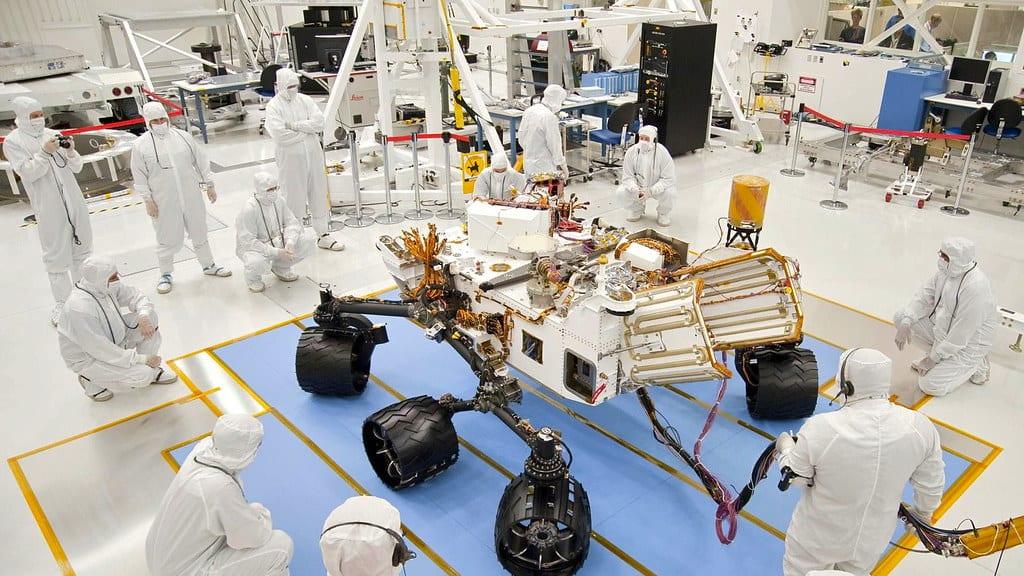
As multiple space agencies and companies send rovers to the moon, the risk of robots providing incorrect information increases. Scientists recently addressed this challenge by creating a forensic technique that identifies Byzantine rovers—machines that broadcast falsified or miscalibrated data to suggest an inaccurate path.
Standard methods for checking robot paths often fail in these situations. They rely on identifying outliers, but if a group of faulty rovers acts together, they can create enough false data to make the accurate, truthful measurements look like the errors. This can cause the entire navigation map to become unreliable.
The proposed method evaluates candidate credible rover subsets by comparing the statistical consistency of their internal and boundary relative detections.
To solve this, the new research focuses on rover credibility. Instead of analyzing every single measurement, the system evaluates the behavior of the robots themselves. It compares the statistical consistency of internal sensors against boundary detections and provided priors to build a map of which machines can be trusted.
By filtering out data from untrusted agents, the method reconstructs accurate trajectories even when some rovers are actively misleading the control center. The team successfully tested this approach using both synthetic simulations and real-world planetary-analogue data.
Have you ever wondered how we might handle a digital argument between machines on a distant planet?
This method is designed for post-hoc analysis rather than real-time prevention. It currently relies on having enough telemetry data to perform these comparisons, meaning it may not work effectively if a robot provides too little information to establish a pattern of credibility.
Source: arXiv cs.RO