Researchers taught quadruped robots to slide objects instead of carrying them
A new motion planning method reduces payload sliding by up to 50 percent during transport.
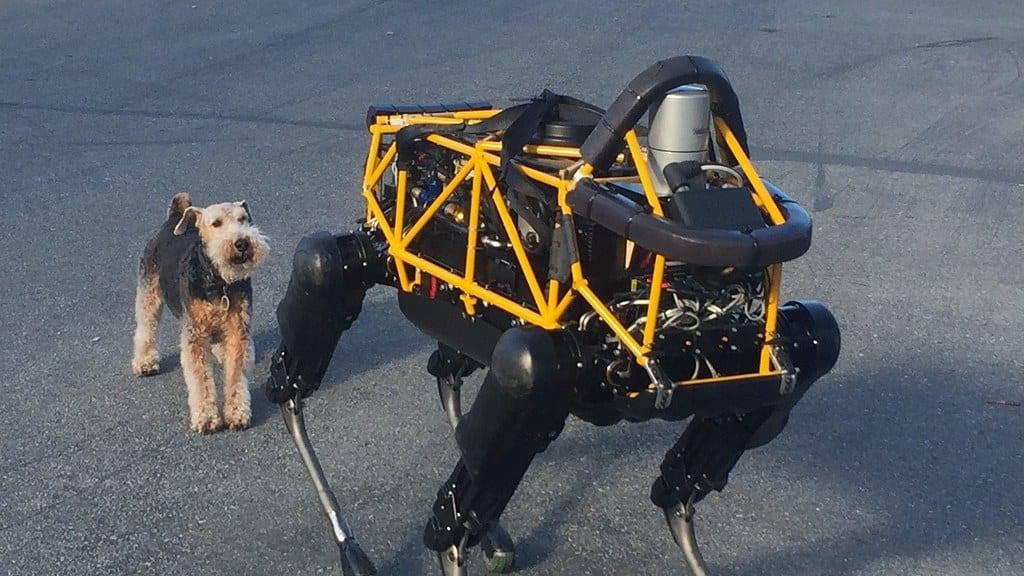
Researchers have developed a way for four-legged robots to push objects across a floor without needing to grab them. This is known as nonprehensile transport.
Moving an object without gripping it is tricky. If the robot moves too fast or changes direction abruptly, the payload can easily slide out of place. The team tackled this by creating a framework that anticipates these shifts before they happen.
The optimized object motion reduces the sliding by approximately 50% compared with the fixed-orientation baseline.
They used a technique called uncertainty-aware trajectory optimization. Instead of just moving in a straight line, the system calculates a path that accounts for potential slips in the object's position. This ensures the robot remains stable even if it does not know the exact weight or friction of the item it is pushing.
Tests showed this approach is quite effective. By optimizing the motion path, the robots reduced sliding by 50 percent compared to basic turning and 30 percent compared to simple straight-line movement.
Imagine trying to slide a heavy box across a slippery floor without dropping anything; that is essentially the coordination challenge these robots now solve with math.
These tests were conducted in both controlled simulated environments and real-world trials. The robots performed well despite variations in the weight and balance of the objects.
However, this research is limited to the specific tasks and parameters tested. The system has not been evaluated on highly irregular terrains or with extremely fragile materials that require delicate handling. Would you trust a robot to push your coffee across the room?
Source: arXiv cs.RO